Blog
Race vs Ethnicity | Definition and Key Differences Explained Simply

Race vs ethnicity – two terms that sound similar but mean completely different things. You’ve filled out forms asking about both and wondered why they’re separate questions. Or been in conversations where someone uses these words interchangeably, even though something feels off.
These terms get tangled up constantly, but they point at different things. Race and ethnicity both shape how we see ourselves and how others see us, just in different ways. One’s tied to physical traits people decided mattered centuries ago.
The other’s about culture, language, and traditions your family passed down. Getting the difference straight matters for healthcare, census data, and whether people feel seen in their communities.
Table of Contents
What Race Actually Means
Race is a social label based on physical characteristics – skin color, hair texture, facial features. Things you can see. Here’s the weird part: there’s no biological basis for it.
Geneticists figured this out years ago. Humans share about 99.9% of their DNA, and the tiny variations don’t line up neatly with racial categories.
Colonial powers invented race. European colonizers needed justification for slavery and exploitation, so they created a system putting people into boxes based on appearance. Those boxes became race. The categories stuck around even after we figured out they’re scientifically meaningless.
The U.S. Census recognizes categories like White, Black or African American, Asian, Native American, and Pacific Islander. Walk into any room and you’ll see how blurry these lines are. Someone with one Black parent and one White parent has to pick a box that probably doesn’t capture their full story.
Race shapes real experiences despite being made up. It affects how cops treat you, whether you get hired, even how doctors diagnose illness. A fake concept with very real consequences.
Understanding Ethnicity
Ethnicity is about shared culture, not how you look. Language, religion, customs, food traditions, music, stories your grandparents told. You inherit ethnicity through family and community, connecting you to a specific cultural group.
Someone can be racially classified as White but ethnically Italian, Irish, or Polish. Each of those ethnic groups has distinct traditions, histories, cultural practices. Same for someone classified as Asian – they might be ethnically Chinese, Vietnamese, Korean, or Japanese. Huge differences there.
Ethnicity often includes national origin, but it’s bigger than just where your family came from. It’s the festivals you celebrate, the food that smells like home, the inside jokes only people from your background get. Religion frequently plays a part. Jewish identity, for example, can be ethnic even for people who aren’t religious.
You can have multiple ethnicities. Maybe your dad’s Mexican and your mom’s Filipino. You grew up speaking Spanish at home, eating lumpia on holidays, feeling connected to both cultures. That’s just how ethnicity works for millions of people.
The Key Differences That Matter
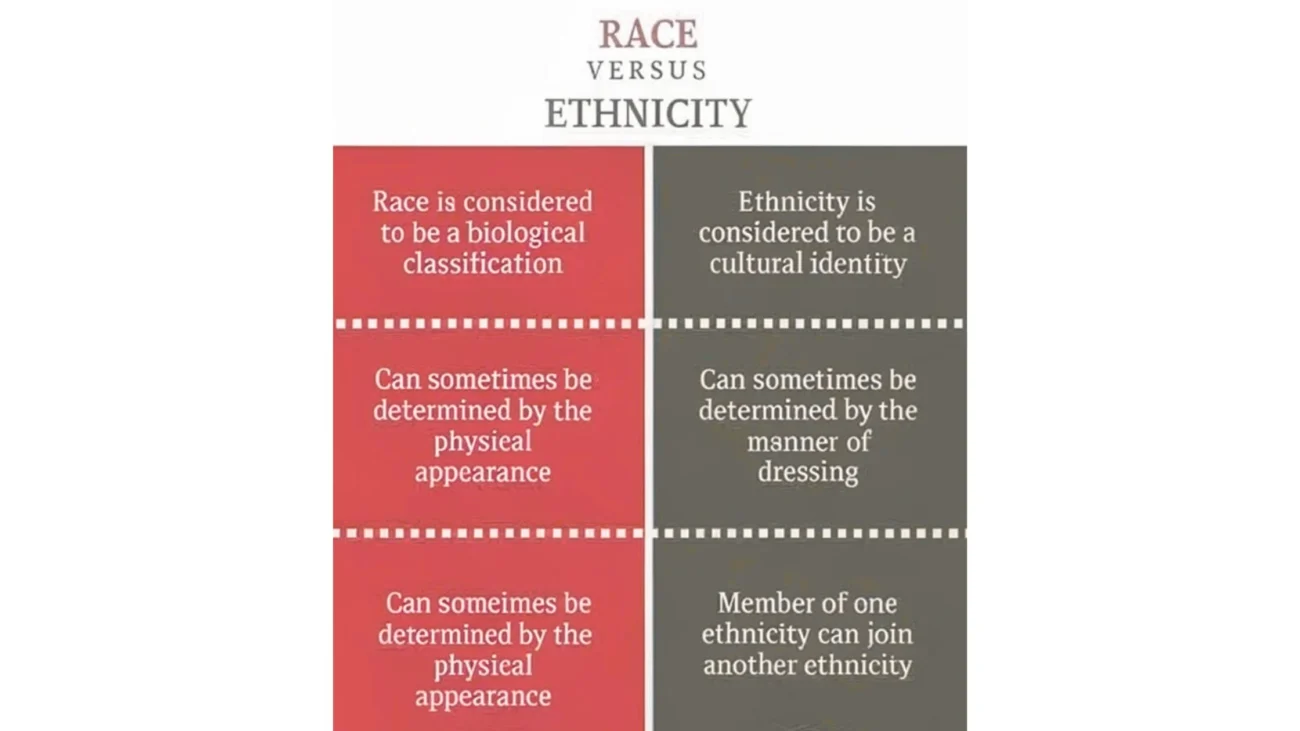
Race gets assigned based on what others see when they look at you. Ethnicity is what you claim based on your cultural background. That’s the first big split.
Race categories are limited and rigid. The census gives you maybe five or six options. Ethnicity? There are thousands of ethnic groups worldwide. You could spend your whole life learning about different ethnic traditions and barely scratch the surface.
Race focuses on physical traits that supposedly make you part of a group. Ethnicity focuses on behaviors, beliefs, and cultural practices that actually connect people. One’s about biology that doesn’t exist. The other’s about culture that does.
Race often gets used to discriminate. Redlining, racial profiling, hiring discrimination – all based on race. Ethnicity can cause discrimination too (anti-Semitism, for instance), but it works differently because ethnic identity isn’t always visible.
People can’t usually change their racial classification, even though it’s arbitrary. Ethnic identity can shift. Second-generation immigrants might feel less connected to their parents’ ethnic traditions. Someone might learn a heritage language as an adult and feel more connected to that ethnicity. More flexible.
Why This Confusion Exists
The English language doesn’t help. We use “ethnic” to mean “not White” sometimes. Ridiculous. Everyone has ethnicity. White Americans have ethnic backgrounds – German, Swedish, Greek, whatever. Casual speech treats ethnicity like it only applies to people of color.
Forms compound the problem. They ask “Race/Ethnicity” with a slash, like they’re interchangeable. Or list “Hispanic/Latino” under race when it’s actually an ethnicity. You can be White and Hispanic. Black and Hispanic. Hispanic isn’t a race.
Media representation makes it worse. Movies and TV shows treat race and ethnicity as the same thing, or ignore ethnicity entirely. A character is just “Asian” without any specific ethnic background, as if all Asian cultures are identical.
Schools don’t teach this well. Most people learn about race in history class (usually slavery and civil rights), but ethnicity barely comes up in moral development or social studies conversations either. We grow up thinking race is the main thing that matters when talking about human differences.
Where It Actually Matters
Healthcare is the big one. Certain genetic conditions run in specific ethnic groups. Sickle cell disease mostly affects people with West African ancestry like Yoruba, Bantu, Mandenka populations. Tay-Sachs shows up more in Ashkenazi Jewish families. But if doctors just look at race, they miss stuff. Not every Black person has West African roots. Not every Jewish person is Ashkenazi.
My friend’s mom got misdiagnosed for years because her doctor made assumptions based on her race instead of asking about her actual ethnic background and family history.. Better questions about ethnicity could’ve caught it earlier.
Census data affects money and representation. If the forms confuse people and they fill them out wrong, communities don’t get accurate counts. That means wrong funding for schools, wrong representation in politics, wrong allocation of resources.
Job diversity programs sometimes miss the point too. A company can hit racial diversity numbers but still have zero ethnic diversity. Having people from different cultural backgrounds brings different perspectives. Just having different skin colors without different cultures? Not the same thing.
How to Actually Use This Knowledge
Stop using the words interchangeably. When you’re talking about cultural background – language, traditions, food, holidays – that’s ethnicity. When you’re talking about the category society assigns based on appearance, that’s race. Ask people instead of guessing. Someone looks racially ambiguous to you?
They know their own story. Let them tell you rather than deciding for them. Both matter, just differently. Race affects how strangers treat you when they don’t know anything else about you. Ethnicity affects your actual lived experience – the culture you grew up in, the traditions you know, the identity you feel connected to.
Be specific when you can. Don’t say “Asian” if you mean Korean. Don’t say “Hispanic” if you mean Puerto Rican. The specificity shows respect for the fact that these are completely different cultures with different histories.
Remember these are human-made categories. Tools for talking about social reality, not facts of nature. Race especially only exists because we keep using it, not because people naturally divide into racial groups.
What’s Changing in Health and Wellness
DNA tests from companies like 23andMe focus on ethnic ancestry – where your family actually came from, what cultures you’re connected to. Not racial categories. People want that specificity now. They want to know their actual background, not just check a box. Mental health professionals are paying more attention to cultural competence.
A good therapist asks about your ethnic background, your family traditions, how your culture views mental wellness. They don’t assume one approach works for everyone. Some people think we should drop racial categories entirely since they’re scientifically meaningless. Others say we need to keep tracking race because it still affects people’s health outcomes and we need data to fight discrimination. No easy answers.
Why It Matters for Daily Life
Next time you fill out a form asking about race and ethnicity separately, you’ll get why. Different questions, different purposes. When someone confuses the two in conversation, you can explain it without being obnoxious about it. “Actually that’s more about ethnicity” or “That sounds like a racial category” – just helping clarify.
Understanding the difference helps you talk about identity, culture, and discrimination more accurately. Makes you better at conversations about diversity, better at understanding census data, better at recognizing when people’s experiences differ based on race versus ethnicity.
It’s not just academic stuff. It’s about seeing people clearly – their cultural background, their lived experience, the full picture of who they are instead of just what box they check on forms. Knowing the difference between race and ethnicity matters.
That’s different from race, which is mostly about how others perceive and treat you based on appearance.
Quick Answers on Race vs Ethnicity
What’s the simplest way to tell them apart?
Race is about how you look to strangers. Ethnicity is about how you actually grew up, the food, language, holidays, all of it.
Can someone have more than one ethnicity?
Yeah. My coworker’s dad is Mexican and her mom is Filipino. She grew up eating lumpia and speaking Spanish. That’s two ethnicities and nobody gets to tell her to pick one.
Is Hispanic a race or ethnicity?
Ethnicity. This one trips everybody up because forms keep listing it under race. You can be White and Hispanic. Black and Hispanic. The census still gets this wrong.
Why does the difference matter?
Because a doctor who only looks at your race might miss something your ethnic background would’ve explained. Same with census funding and workplace diversity programs, wrong terms lead to wrong decisions.