Blog
Two-Factor Theory of Schachter-Singer | How I Use It Daily


The Two-Factor Theory of Emotion is something I learned about during my yoga and wellness training, and it stuck with me because it explained what I was already seeing in my students.
Your body reacts first, racing heart, tight muscles, sweaty palms, and then your brain decides what that reaction means. Schachter and Singer introduced this idea back in 1962. Fear and excitement feel almost identical in the body.
The difference is the label your mind puts on it. As someone who teaches people to connect with their body through yoga and mindfulness, this theory isn’t just academic for me. I use it daily in my practice and in how I manage my own stress.
Table of Contents
How body and mind team up
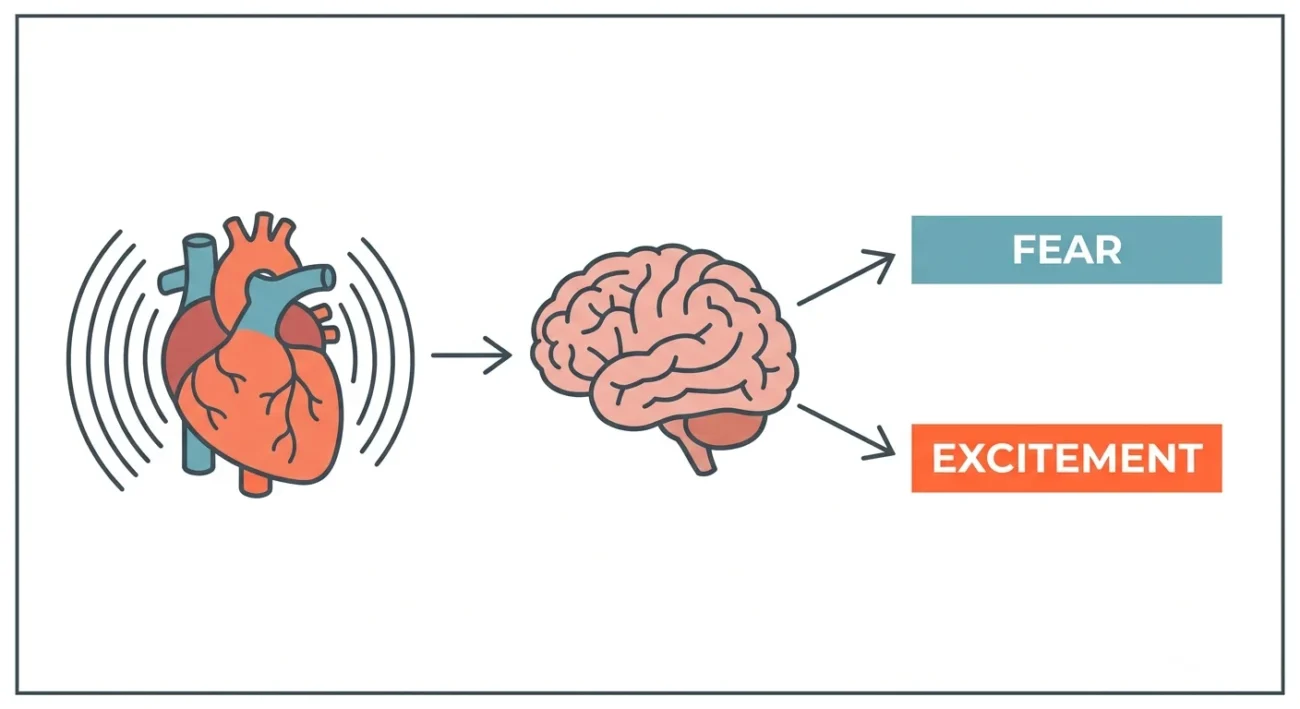
According to the theory, emotions don’t just “happen.” They’re created when your body’s signals, like a racing heart, sweaty palms, or tense muscles, are labeled by your brain.
For example, your pounding heart might mean fear if you’re walking alone at night, or excitement if you’re about to go skydiving. This shows how much your mental health depends on the way you interpret your physical state.
Lessons from the classic experiment

In the original study, people were given adrenaline (which speeds up the body) and then placed with an actor who was either cheerful or irritable.
Those who didn’t know about the drug matched the actor’s mood, they “caught” happiness or anger depending on the situation. Those who did know were less influenced. The takeaway? Context and interpretation shape emotional well-being just as much as raw body signals do.
Everyday health example: the shaky bridge
Another famous test looked at men who met a woman on a shaky bridge. Their hearts raced from fear, but many misread that arousal as attraction, and were more likely to call her later. This is a reminder of how easy it is to mislabel stress as something else, which plays out in daily decisions too. Think about mistaking stress for hunger, or nerves for fatigue, our interpretations can affect both emotional and physical health.
What this means for stress and wellness
Here’s the good news: if emotions depend on interpretation, you can train yourself to reframe stress. A fast heartbeat before a job interview can be relabeled as “my body preparing me” instead of “I’m falling apart.”
Athletes often use this trick to improve performance, while mindfulness practitioners use it to improve emotional balance. In both cases, the key is seeing your body as an ally, not an enemy.
Why This Matters for How You Feel Every Day
- Mindfulness and meditation help you notice body cues without rushing to negative labels.
- Exercise and fitness raise your heart rate, but with a positive label, that energy feels empowering instead of draining.
- Healthy routines like balanced nutrition and sleep give your body more predictable signals, which makes it easier for your brain to interpret them correctly.
- Stress management techniques, like breathing exercises or journaling, help reset body signals so emotions don’t spiral.
What modern science adds
Newer research in neuroscience, like Lisa Feldman Barrett’s Theory of Constructed Emotion, suggests emotions are built from both body sensations and brain predictions. This matches what wellness practitioners recommend: taking care of your physical health, through sleep, diet, exercise, and relaxation, also protects your mental health by shaping how your brain interprets arousal.
How to apply it in your daily life
- Tune in: Notice your physical signals, heart racing, sweaty palms, butterflies in your stomach.
- Check the setting: Ask, “What’s happening around me that could explain this?”
- Reframe positively: If it’s stress, try calling it “energy” or “readiness.”
- Practice balance: Use daily habits, like yoga, mindfulness, or walks in nature, to keep your body calm enough for clearer labeling.
What I Tell My Students About This
Someone in my class once told me she was having anxiety attacks every morning before work. I asked her to describe what her body was doing. Fast heartbeat, tight chest.
Then I asked what thought came with it. “I’m going to fail today.” Her body wasn’t telling her she was failing. It was just waking up and getting ready. The story her brain attached was the problem. We worked on catching that moment, the gap between the body signal and the brain’s label.
Took a few weeks but she stopped calling it anxiety and started calling it “my body warming up.” Same heartbeat. Completely different experience. That’s the Two-Factor Theory. Not a textbook concept. Something I see play out on the mat every single week.