
Blog
Ashtanga Yoga Path 2 Strength, Discipline, and Inner Peace
How Ashtanga Pulls You Into Its Orbit
Wander into an Ashtanga class not the airbrushed version online, the real sweaty room where people breathe like the tide you’ll probably notice something curious. Everyone looks like they’re doing their own thing, but somehow it’s all synced at the level you can’t quite explain. There’s heat, effort, quiet determination, and that strange sense of calm tucked inside the chaos. And that’s usually where people get hooked. Not because the poses look cool, or because they want to brag about balancing on their hands, but because something about the repetition, the breath, the structure… it clicks. Ashtanga has this way of giving you strength, sure, but also discipline, and oddly enough a kind of peace you don’t expect from a practice that leaves sweat marks shaped like continents on your mat.
That’s basically the spirit behind Ashtanga Yoga Path to Strength, Discipline, and Inner Peace. It doesn’t try to impress you with mysticism. It just meets you where you are, pushes you a bit, steadies you a lot, and shows you some things about yourself you didn’t even know you were avoiding. And since most beginner guides gloss over half the stuff that actually matters, this one gets into the parts you feel not the parts that sound poetic.
What Ashtanga Yoga Actually Is
People love to make yoga sound complicated. Ashtanga isn’t. It’s a sequence. A set of poses. Same order every time. Sun salutations, standing, seated, a few deeper shapes, backbends, then your cool-down. Everything is tied to breath, but not in a mystical way more like in a “if your breath goes weird, you’re pushing too hard” way. There’s something reassuring about knowing exactly what’s coming next. You don’t have to guess. You don’t have to wait for the teacher to invent a flow on the spot. You just breathe, move, repeat, and eventually your body stops fighting the rhythm.
A lot of vinyasa classes feel like choreography. Ashtanga feels like a conversation. Same words every day, but you hear them differently depending on how much sleep you got or how loudly life is yelling in your ear that morning.
Where the Method Comes From
The name itself nods to the eight-limbed philosophy in the Yoga Sutra, but you don’t need to decode ancient Sanskrit to practice. The physical side the one we talk about here was grouped into six series. Primary, Intermediate, and then the Advanced ones most people only see on posters because real life rarely hands you enough free mornings to get there.
Most people stay in the Primary Series for a long time. Years, literally. And there’s nothing wrong with that. The idea is that the sequence gradually untangles your stiff parts, strengthens your wobbly bits, and gives you the kind of foundation that sticks around even if you skip practice for a week. Primary feels deceptively simple, but it knows exactly which corners of your body you’ve been ignoring for too long. If you ask someone why they feel stronger from Ashtanga, they usually start describing things that don’t even sound like yoga. Their wrists don’t buckle anymore when they hold themselves up. Their core stopped being decorative and actually started working. They can step forward without wobbling like a baby giraffe. Nothing flashy just quiet, steady strength.
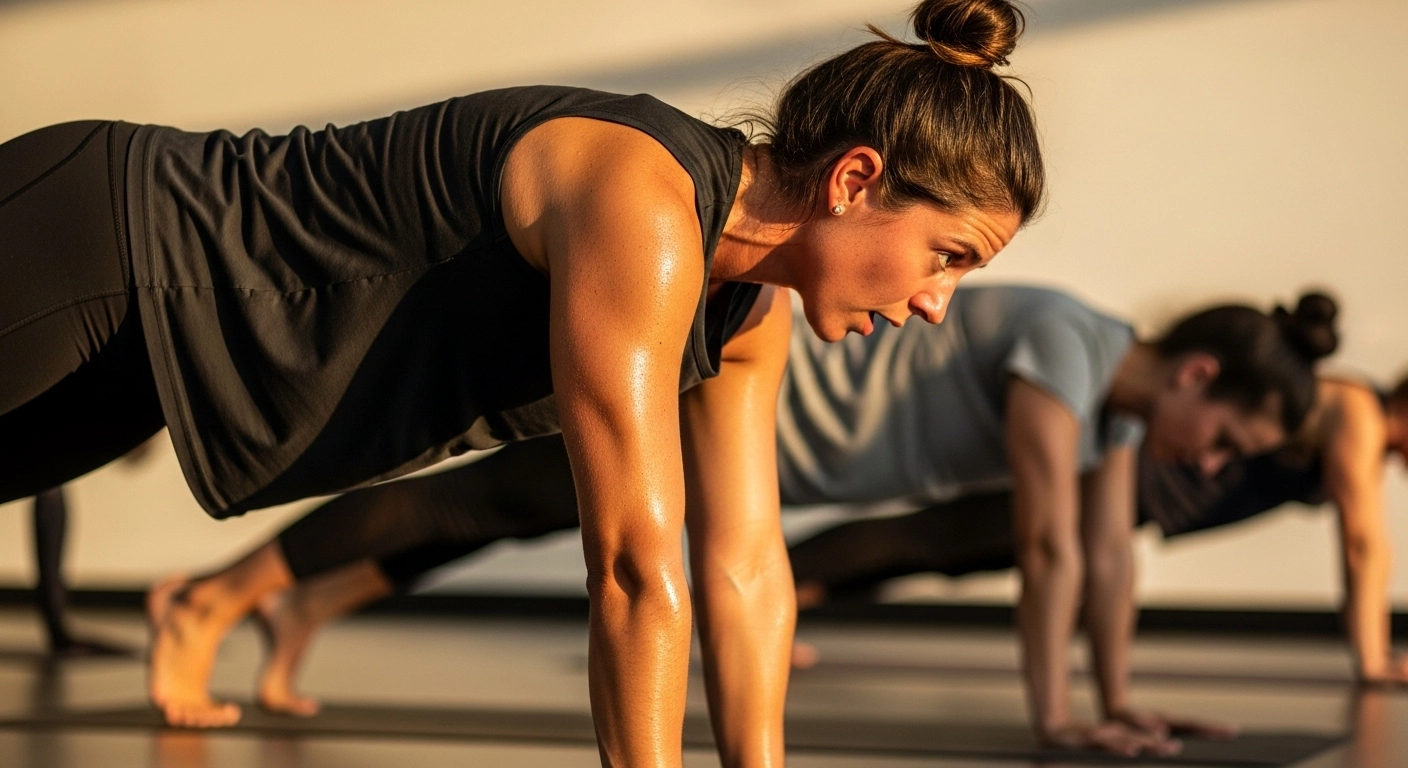
That’s because Ashtanga sneaks it in. Chaturanga after chaturanga until your shoulders finally learn the difference between collapsing and supporting you. Jump-backs and jump-throughs that feel impossible until one day you land lighter than you thought you could. Standing poses that seem basic until you realize your legs are shaking like you’ve been carrying furniture all morning. And it’s all functional strength stuff that translates into regular wellness, not just Instagram poses. What makes the strength part especially satisfying is that it doesn’t depend on how flexible you are. Honestly, some of the strongest Ashtanga practitioners you’ll meet can barely fold forward, but they can hold a plank longer than anyone else in the room.
The Discipline Part Nobody Warns You About
There’s a kind of discipline that comes from doing something over and over, even when it’s the last thing you feel like doing. Ashtanga is built on that. Not in a military way, not in a guilt-based way more in that quiet sense of “okay, I’ll show up today, even if the best I can do is half the sun salutations.”
Traditionally, it’s a six-days-a-week practice. Most people with jobs, families, and actual responsibilities do three to four. What matters isn’t the number. It’s the willingness to keep coming back, even when the mat looks like a place you’d rather avoid. You start noticing how this discipline leaks into small things: waking up earlier without being angry about it, being kinder to your own body, catching yourself before reacting to something that normally sets you off. And no one tells you this, but discipline sometimes shows up in the opposite direction too: knowing when to rest, when to stop, when today’s body isn’t yesterday’s body.
Where Inner Peace Shows Up (Usually When You Least Expect It)
Ashtanga looks fiery from the outside sweat flying, deep breaths, limbs everywhere. But there’s this quiet undercurrent inside the repetition. Every inhale and exhale repeats like a metronome. Every movement follows the breath. Every gaze point anchors you. And after twenty or thirty minutes of that, your nervous system starts getting the message: “Oh, we’re doing that calm-under-pressure thing again.”
People talk about inner peace like it’s this big slow-motion enlightenment moment. With Ashtanga, it’s much smaller. It’s how you feel walking home afterward. It’s the weirdly soft mental space you drop into while rolling up your mat. It’s the way your mind slows down before bed because your body already used up the extra noise earlier. The peace isn’t the poses. It’s the state your mind slips into from the repetition of breath and movement. Slow, steady, enough.
Mysore vs Led Class
Two Ways Into the Same World
Led Class
Structured, rhythmic practice with everyone moving together
- Teacher calls out poses from the front
- Everyone moves in sync together
- Good for learning the sequence flow
- You don’t have to think, just follow
- Structured and predictable rhythm
Mysore Style
Quiet room, individual practice, personalized guidance
- Everyone practices at their own pace
- Teacher gives individual adjustments
- Room is quiet and meditative
- Surprisingly beginner-friendly approach
- Practice becomes personal, not performative
Mysore is the Heart of the Method
This is where Ashtanga becomes personal instead of performative. Mysore is the heart of the method its messy, human, patient heart. Your sequence can be ten minutes or ninety. You can spend five minutes figuring out a transition. Nobody cares. Nobody’s watching. It’s just you, your breath, and a teacher who sees exactly where you are.
Starting Ashtanga Without Breaking Yourself in Week One
This part matters more than people admit: it’s incredibly easy to overdo Ashtanga when you’re excited. Most beginners jump straight into full Primary and then wonder why their wrists are grumpy and their hamstrings feel like guitar strings about to snap. The safe version is slower. Half sun salutations first. A few standing poses. Maybe some seated shapes. Stop when your breath goes shaky.
Practicing at home is fine if you’re honest with yourself. But getting feedback from a trained teacher even once or twice is worth it. They’ll catch the little habits: collapsing shoulders, twisting knees, skipping breath, pushing into joints instead of muscles. Those small adjustments make the difference between a long-term practice and a few months of enthusiasm followed by burnout.
The Myths, the Ego, and the Bits Nobody Puts on Posters
There’s an old myth that Ashtanga is for young, bendy people who can toss their legs behind their head like it’s nothing. Real Ashtanga rooms will snap you out of that quickly. People of all ages practice. People with stiff backs practice. People who can’t touch their toes practice. Your sequence grows with you, not the other way around.
The ego trap is real, though. When you see someone float through their transitions while you’re trying not to fall forward like a sack of potatoes, it’s easy to push harder than your body wants. That’s where injuries usually start not from the sequence itself, but from ignoring the quiet signals your body sends. The moment your breath changes, you’re done for that day. The moment pain feels sharp instead of muscular, you back off. No pose is worth sacrificing your knees or shoulders for. Ever.
Why This Guide Isn’t Like the Usual “What Is Ashtanga?” Posts
Most Ashtanga guides feel the same little history, little structure, benefits list, call it a day. They read more like pamphlets than experience. This one doesn’t try to convince you or recruit you. It just tells you what the practice actually feels like when you’re inside it. The discipline. The ego checks. The weird moments of clarity. The fact that real practitioners don’t all look like yoga models. The practice is gritty, grounding, and oddly comforting. And that’s what people deserve to know before diving in.
Closing Thought’s
Ashtanga Yoga Path to Strength, Discipline, and Inner Peace isn’t a slogan. It’s something that unfolds slowly, unevenly, and in ways that surprise you. Your version might involve three days a week, or two, or all six, depending on the season of your lifestyle. What matters is that you keep showing up with the body you have that day. The practice is less about achieving anything dramatic and more about learning to pay attention to breath, to movement, to your reactions, to the small shifts that build over time.