
Blog
Tingling in Feet & More Hands Causes, symptoms, & treatment
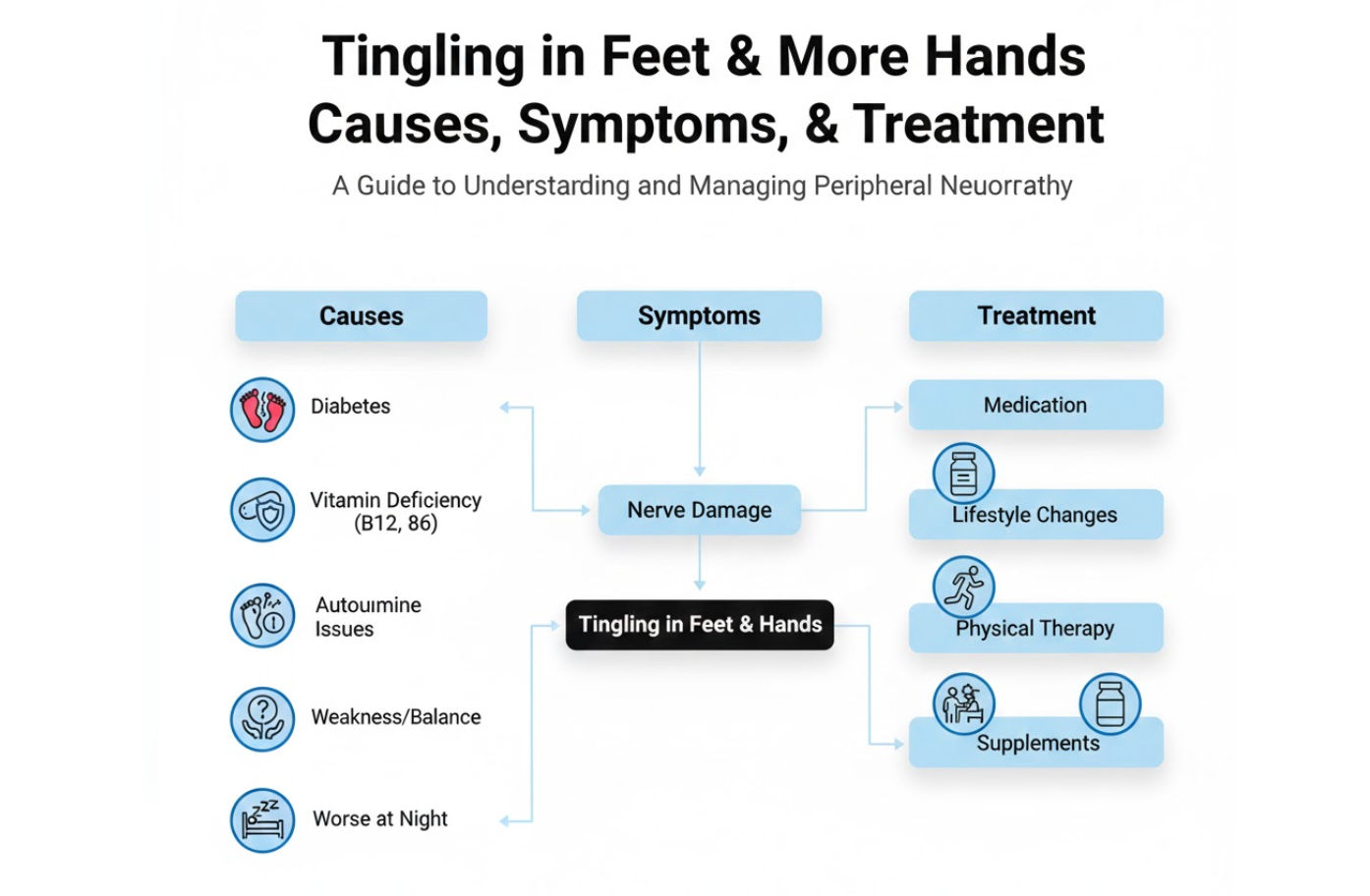
Tingling feet is a common problem that many people experience at some point in life. The feeling may be mild or strong. Some describe it as pins and needles, buzzing, burning, or numbness. It can come and go or stay for a long time. Sometimes it is harmless, but in other cases, it may point to an underlying health issue that needs care.
This guide explains the main causes of tingling feet and how to treat them using clear, simple language. Each section includes explanations, examples, tips, and practical steps you can take. The aim is to help you understand your body better and know when to act.
Pressure on Nerves From Sitting or Posture Issues
Tingling feet often start because nerves are under pressure. This happens when you sit or stand in one position for too long. Sitting cross-legged, kneeling, or resting your feet on hard surfaces can press on nerves and slow blood flow.
When nerves do not get enough oxygen-rich blood, they send odd signals. This creates tingling, numbness, or a “falling asleep” feeling in the feet.
Many office workers feel this after long hours at a desk. Gamers, drivers, and people who work from home are also at risk. The good news is that this type of tingling usually fades quickly once you move.
Common signs that posture is the cause include
- Tingling that improves after standing or walking
- No pain or weakness once circulation returns
- Tingling linked to specific sitting positions
Helpful actions to reduce posture-related tingling
- Stand up and stretch every 30 to 60 minutes
- Keep both feet flat on the floor while sitting
- Avoid crossing legs for long periods
- Use a chair with proper back and foot support
- Shift weight often if standing for long hours
Real-life example
A delivery driver noticed tingling in both feet during long routes. After adding short walking breaks and adjusting seat height, the problem stopped without medical treatment.
Nerve Damage Linked to Diabetes
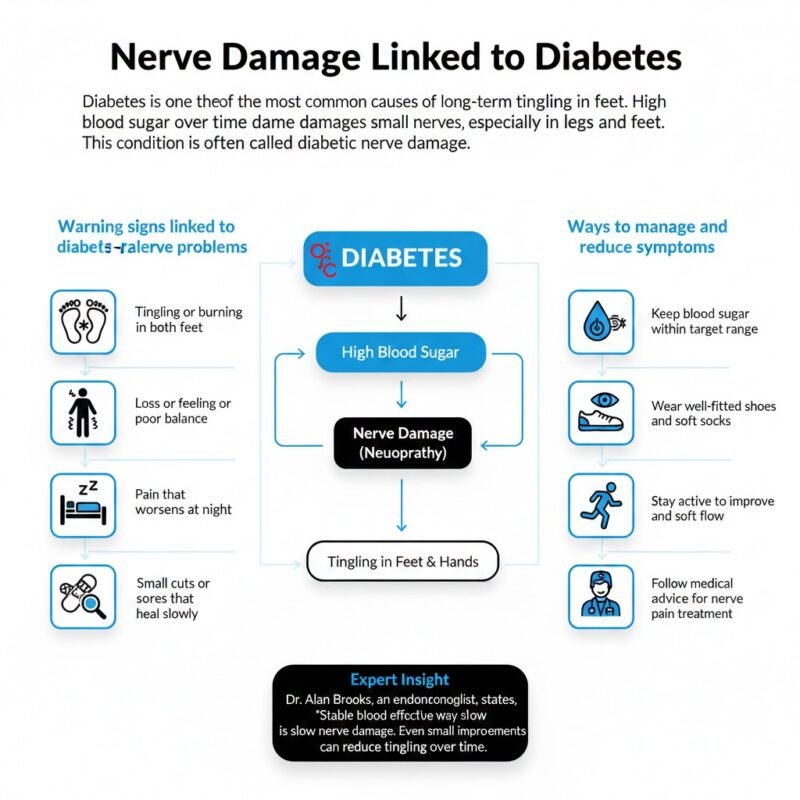
Diabetes is one of the most common causes of long-term tingling in the feet. High blood sugar over time damages small nerves, especially in the legs and feet. This condition is often called diabetic nerve damage.
The tingling may start slowly and worsen over months or years. Many people feel burning, stabbing pain, or numbness along with tingling. Symptoms are often worse at night.
Early detection matters because nerve damage can become permanent if blood sugar stays uncontrolled.
Warning signs linked to diabetes-related nerve problems
- Tingling or burning in both feet
- Loss of feeling or poor balance
- Pain that worsens at night
- Small cuts or sores that heal slowly
Ways to manage and reduce symptoms
- Keep blood sugar within target range
- Check feet daily for cuts or color changes
- Wear well-fitted shoes and soft socks
- Stay active to improve blood flow
- Follow medical advice for nerve pain treatment
Expert insight
Dr. Alan Brooks, an endocrinologist, states, “Stable blood sugar is the most effective way to slow nerve damage. Even small improvements can reduce tingling over time.”
Poor Blood Flow to the Lower Limbs
Healthy blood flow is vital for nerve health. When circulation slows, feet may tingle or feel cold. Poor blood flow can happen due to narrowed blood vessels, heart issues, or long periods of inactivity.
People who smoke, have high cholesterol, or lead a sedentary lifestyle face a higher risk. Cold weather can also make symptoms worse.
Signs that blood flow may be the issue
- Cold or pale feet
- Tingling during walking that improves with rest
- Shiny skin or slow nail growth
- Weak or absent pulse in the feet
Steps to improve circulation naturally
- Walk daily, even for short periods
- Elevate feet when resting
- Stop smoking to protect blood vessels
- Maintain healthy cholesterol levels
- Wear warm socks in cold conditions
Lifestyle tip
A simple habit like ankle circles while seated can keep blood moving and lower tingling episodes.
Vitamin Deficiency Affecting Nerve Signals

Vitamins play a key role in nerve function. A lack of certain vitamins can lead to tingling feet. The most common ones involved are vitamin B12, B6, and vitamin E.
Vitamin B12 helps protect nerve coverings. When levels drop, nerves misfire, leading to tingling, numbness, or weakness. This is more common in older adults, vegetarians, and people with stomach conditions.
Signs that a vitamin issue may be present
- Tingling in feet and hands
- Fatigue or weakness
- Memory or focus problems
- Pale skin or shortness of breath
Ways to restore healthy vitamin levels
- Eat foods rich in B vitamins like eggs, fish, and dairy
- Include leafy greens, nuts, and seeds
- Take supplements only if advised by a doctor
- Address absorption issues with medical guidance
Helpful reminder
Do not take high-dose supplements without advice, as too much vitamin B6 can also cause nerve problems.
Nerve Compression in the Lower Back

Sometimes tingling in the feet starts in the spine. Nerves that travel from the lower back to the feet can become compressed due to disc problems, arthritis, or injuries.
This type of tingling often affects one foot more than the other. It may worsen with sitting, bending, or lifting.
Clues that the lower back is involved
- Tingling with back pain
- Pain shooting down the leg
- Symptoms worse with certain movements
- Relief when lying down
Ways to reduce nerve pressure
- Practice gentle back stretches daily
- Use proper lifting techniques
- Maintain a healthy weight
- Avoid long periods of poor posture
- Seek physical therapy if advised
A warehouse worker with mild disc issues noticed tingling in the right foot. After guided exercises and posture changes, symptoms improved without surgery.
Anxiety and Stress Effects on Nerves

Stress and anxiety can cause physical symptoms, including tingling feet. When anxious, the body releases stress hormones that affect breathing and blood flow. Rapid breathing may lower carbon dioxide levels, leading to tingling sensations.
This type of tingling often comes and goes and may appear during panic episodes.
Signs stress may be the cause
- Tingling during anxious moments
- Symptoms fade when calm
- No physical nerve damage found
- Associated chest tightness or dizziness
Ways to calm the nervous system
- Practice slow breathing techniques
- Limit caffeine intake
- Get enough sleep
- Try mindfulness or relaxation exercises
- Seek mental health support if needed
Mental health note
Addressing stress early can prevent long-term physical discomfort linked to anxiety.
Side Effects From Medications
Some medications list tingling feet as a side effect. These may include certain chemotherapy drugs, antibiotics, and medicines used for seizures.
Medication-related tingling often starts after beginning a new drug or changing dosage.
Warning signs related to medication
- Tingling starts soon after new medication
- Symptoms affect both feet evenly
- No prior history of nerve issues
What to do if medication is suspected
- Do not stop medication suddenly
- Report symptoms to your doctor
- Ask about alternative options
- Monitor changes closely
Safety reminder
Never adjust prescribed medication without professional advice.
Causes and Common Clues
| Cause Type | Common Clues | General Approach |
|---|---|---|
| Posture-related pressure | Improves with movement | Adjust posture and take breaks |
| Diabetes-related nerve damage | Burning, numbness, night pain | Control blood sugar and foot care |
| Poor circulation | Cold feet, color changes | Improve activity and blood flow |
| Vitamin deficiency | Fatigue, numbness | Correct diet or supplements |
| Back-related nerve compression | Back pain with tingling | Exercises and posture care |
Footwear That Irritates Nerves
Tight or poorly designed shoes can compress nerves in the feet. High heels, narrow shoes, or stiff soles can irritate nerves over time.
This cause is common among people who stand for long hours or wear fashion footwear regularly.
Signs shoes may be the problem
- Tingling after wearing certain shoes
- Relief when barefoot
- Redness or pressure marks
Better footwear choices
- Choose shoes with wide toe boxes
- Use cushioned insoles
- Avoid long-term high heel use
- Replace worn-out shoes regularly
Foot care tip
Try shoes in the evening when feet are slightly swollen to ensure proper fit.
Alcohol Use and Nerve Health
Long-term alcohol use can damage nerves by affecting nutrient absorption and nerve tissue directly. Tingling often starts in the feet and moves upward.
This condition may improve with reduced alcohol intake and better nutrition.
Signs alcohol may be contributing
- Tingling in both feet
- Balance problems
- Muscle weakness
Steps to support nerve recovery
- Reduce or stop alcohol use
- Improve diet with nutrient-rich foods
- Follow medical advice for supplements
- Stay hydrated
Infections or Autoimmune Conditions
Certain infections and immune-related conditions can cause tingling feet by inflaming nerves. Examples include shingles, lupus, or other inflammatory disorders.
Symptoms vary widely and may include pain, weakness, or skin changes.
Red flags to watch for
- Sudden or worsening tingling
- Fever or rash
- Muscle weakness
- Tingling spreading quickly
When to seek medical care
- Symptoms appear suddenly
- Tingling worsens rapidly
- Loss of strength or coordination
Treatment Approaches Based on Cause
| Treatment Focus | Helpful Methods | Notes |
|---|---|---|
| Lifestyle changes | Activity, posture, footwear | Often first step |
| Medical management | Blood sugar control, medication | Needed for chronic causes |
| Nutritional support | Balanced diet, supplements | Avoid excess dosing |
| Stress care | Breathing, mental support | Helps physical symptoms too |
Final Thoughts
Tingling feet can range from a temporary nuisance to a sign of a deeper issue. Paying attention to when it starts, how long it lasts, and what improves it can guide the next steps. Many causes are manageable with simple changes, while others need medical care.
Listening to your body and acting early can protect nerve health and improve comfort. If tingling is persistent, painful, or spreading, professional advice is essential.