
Blog
Wollmatten: Crafting Tradition in Wool Yoga Mats
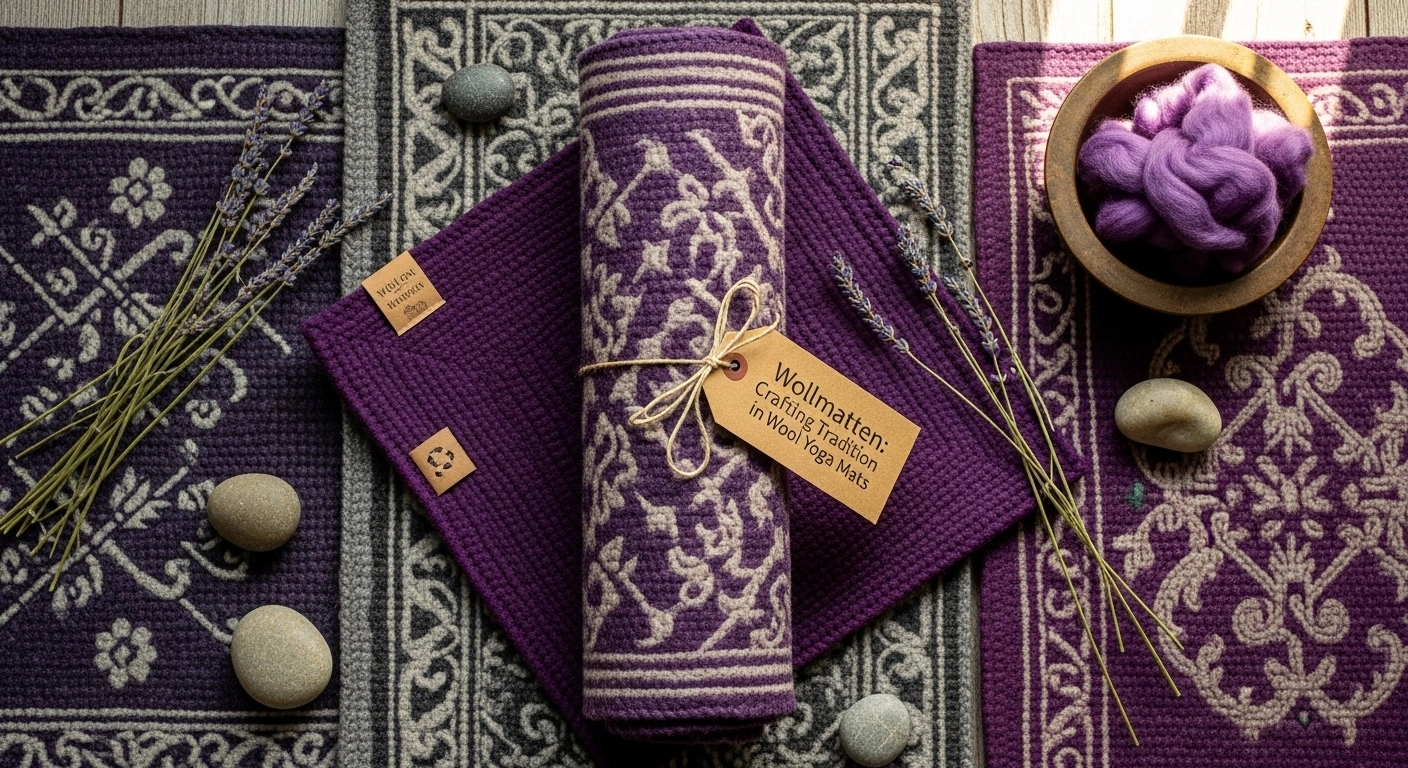
There is something deeply wrong with most yoga mats. You roll one out, press your palms down, and that cold rubbery smell hits you right away. Your knees start aching. Your skin sticks to the surface. And somewhere in the back of your mind you know that slab of PVC will sit in a landfill for centuries.
Now imagine the opposite. A mat that feels like stepping barefoot onto a meadow. One that keeps you warm in January and cool in July, soaks up your sweat without getting slippery, and breaks down naturally when its long life finally ends. That is what a Wollmatte offers.
What Exactly Are Wollmatten
The word Wollmatten comes from German. Woll means wool and Matten means mats. Simple enough, right?
But the product itself is anything but simple. Wollmatten are mats that makers craft from natural sheep wool through felting, pressing, or dense weaving. Unlike mass-produced foam and rubber mats from big-box stores, these come from a renewable biodegradable material that humans have relied on for thousands of years.
What sets Wollmatten apart is not just the material. It is the way wool behaves. The fibers contain lanolin, a natural waxy coating that repels moisture, resists bacteria, and fights odors. The structure creates tiny air pockets that trap warmth. And unlike cotton or jute, wool springs back after compression and maintains its shape for years.
The History and Cultural Roots Behind Wool Mats
Wool mats are not a trend. They carry forward something ancient.
Communities across Europe, the Middle East, and Central Asia have used felted wool for flooring, bedding, and protective coverings for well over two thousand years. In Mongolia and Turkey, families crafted thick mats from local sheep wool to line the floors of yurts. These created warm durable surfaces that could withstand harsh winters.
In the German-speaking world, wool craftsmanship grew alongside industrialization. Small workshops began producing specialized mats for homes, schools, and eventually yoga studios. Bausinger, a family-run German manufacturer that has operated since 1975, started making wool yoga mats in the late 1970s when barely anyone in Germany knew what yoga was.
Today that heritage gives Wollmatten a depth of quality that newer brands struggle to match. When you buy a well-made wool yoga mat you are getting the benefit of centuries of material knowledge.
Key Benefits of Wollmatten
So why are so many people switching from synthetic mats to Wollmatten? Here are the reasons that matter most:
- Natural Temperature Regulation. Wool fibers contain millions of tiny air pockets that trap body heat in cold conditions and release it when things warm up. No synthetic material matches this balance.
- Superior Moisture Management. Wool absorbs up to 30 percent of its weight in moisture before it even feels damp. Your mat quietly wicks sweat away while the surface stays dry and grippy.
- Built-In Antibacterial Protection. Lanolin acts as a natural barrier against bacteria, mold, and dust mites. No funky gym-mat smell and no need for constant cleaning sprays.
- Joint-Friendly Cushioning. Quality wool mats offer 15 to 20mm pile height. That is far more padding than the standard 4 to 6mm of rubber or PVC mats. Your knees and hips will thank you.
- Eco-Friendly From Start to Finish. Wool is renewable, biodegradable, and compostable. At the end of its life your Wollmatte returns to the earth with zero microplastics left behind.
- Hypoallergenic Surface. Lanolin naturally repels dust mites and common allergens. This makes Wollmatten a great choice for people with sensitive skin or breathing issues.
- Impressive Durability. A well-made Wollmatte lasts 10 to 15 years with basic care. Most synthetic mats need replacing every 1 to 5 years.
- Natural Grip Without Stickiness. Wool texture provides steady traction in poses without that unpleasant sticky feeling that rubber mats create.
Wollmatten vs Synthetic Yoga Mats
One of the most common questions people ask is why they should choose a wool mat over a regular yoga mat. The answer becomes clear when you look at the two side by side.
| Feature | Wollmatten (Wool Yoga Mats) | Synthetic Yoga Mats (PVC/TPE/Rubber) |
|---|---|---|
| Material | 100 percent natural sheep wool | PVC, TPE, natural rubber, or foam |
| Cushioning | Firm yet soft, 15 to 20mm pile height | Varies, typically 4 to 8mm |
| Temperature Regulation | Naturally insulating and breathable | No temperature regulation |
| Moisture Management | Absorbs up to 30 percent of weight without feeling wet | Becomes slippery when wet |
| Odor Resistance | Lanolin fights bacteria and odors naturally | Develops smell over time |
| Grip | Natural wool texture provides steady grip | Can get slippery depending on material |
| Eco-Friendliness | Biodegradable, renewable, compostable | PVC takes over 500 years to decompose |
| Lifespan | 10 to 15 years with proper care | 1 to 5 years depending on use |
| Allergen Resistance | Repels dust mites and mold | Can harbor bacteria and allergens |
| Best For | Yin, restorative, meditation, Hatha, Kundalini | Hot yoga, power yoga, high-intensity flows |
| Price Range | 60 to 200 euros and above | 15 to 120 euros |
| Certifications | Oeko-Tex Standard 100, GOTS | Varies widely |
This comparison tells a clear story. For slower grounded yoga styles a Wollmatte is not just as good as a synthetic mat. It is significantly better.
How Wollmatten Are Made: The Craft Behind the Mat
Understanding how a Wollmatte comes to life helps explain why it performs so differently from factory-made alternatives.
The process starts with raw sheep wool. Makers prefer virgin wool or merino wool because it is softer and finer than recycled blends. Workers shear the wool, clean it, and sort it by quality.
In traditional felting the fibers are layered, moistened, and then pressed using heat and pressure. This causes the scales on individual wool fibers to interlock. The result is a dense springy mat that holds together without any adhesives or synthetic binding agents.
Higher-end manufacturers like Bausinger use a woven technique instead. They weave wool densely onto a backing material, often natural PU foam for non-slip performance. Their professional mats feature a 20mm pile height that creates a pillowy yet stable feel.
Here is what to look for in terms of quality markers.
- Oeko-Tex Standard 100 Certification. This means every component has gone through testing for harmful substances.
- GOTS Certification. The wool comes from farms that follow responsible animal care and environmental practices.
- 100 Percent Virgin or Merino Wool. This avoids synthetic blends that reduce performance and cut the lifespan short.
- Pile Height of 15 to 20mm. This is the sweet spot for cushioning and stability during yoga.
- Dense Weave or Tight Felting. This prevents excessive shedding and keeps the mat durable over time.
A well-crafted Wollmatte gets softer with age while holding its structure. Think of it like a quality wool sweater that only improves over time.
Who Should Use a Wollmatte
Wollmatten are not for everyone and being honest about that actually helps you make a better choice.
Ideal Users:
Wollmatten work best for people who practice Yin yoga, restorative yoga, Hatha, Kundalini, or meditation. The warmth, cushioning, and grounding feel of natural wool create a sense of connection that plastic simply cannot match.
Parents often use them as safe play surfaces for babies and toddlers. Pet owners love the warmth and odor resistance. And people with allergies or sensitive skin switch to wool after they experience irritation from synthetic materials.
When a Synthetic Mat Might Work Better:
If your main practice is Bikram or hot yoga or Ashtanga power flows that generate extreme sweat then a synthetic mat with a microfiber or rubber grip surface will likely serve you better. Wool absorbs moisture well but it is not built for drenching-wet conditions.
Also if you need an ultra-thin lightweight travel mat then a Wollmatte might feel too thick and heavy for your suitcase.
How to Choose the Right Wollmatte
Picking a wool yoga mat is a lot like choosing a good pair of shoes. It needs to fit your body, your practice, and your lifestyle. Here is what to consider.
- Thickness and Pile Height. For yoga and meditation look for 15 to 20mm. Anything thinner works better as a floor covering than a practice surface.
- Size. Standard is 180 by 61 centimeters. Taller practitioners or those who want extra room should look for 200 by 75 or 200 by 90 centimeter options.
- Certifications. Always check for Oeko-Tex Standard 100 or GOTS labels. If a wool mat carries no third-party certification then be cautious before buying.
- Backing Material. Some Wollmatten have non-slip PU foam or latex backing for hard floors. Pure wool without backing works well on carpet but may slide around on tile or hardwood.
- Budget. Quality Wollmatten range from 60 to 200 euros and above. That is more upfront than a foam mat. But when a wool mat lasts 10 to 15 years versus 1 to 5 years for synthetic the cost per use actually favors wool.
Caring for Your Wollmatte for a Long Life
One of the best things about Wollmatten is how easy they are to maintain. Here are the basics.
- After Each Use. Give the mat a good shake to remove loose dust and fibers. New mats shed a bit during the first few weeks and this is completely normal.
- Monthly. Run a vacuum on low suction over the surface. You can also brush it lightly with a soft-bristle brush to keep the wool fluffy.
- Spot Cleaning. Blot spills right away with a cloth dampened in cold water and a tiny drop of mild soap. Never rub because blotting lifts the stain while rubbing pushes it deeper.
- Drying. Always air dry in the shade. Direct sunlight fades natural colors. Never machine wash or wring a wool mat.
- Storage. Roll the mat loosely and never fold it. Keep it in a breathable cotton or linen bag. A few cedar balls or lavender sachets nearby will keep moths away.
Final Thoughts
Wollmatten bring together centuries of material wisdom, real environmental responsibility, and a hands-on experience that no synthetic mat can copy. They cost more upfront but they pay you back with years of comfort and quality that cheap foam mats simply cannot deliver. If you have spent years practicing on plastic and something always felt off then a Wollmatte might just be the missing piece your practice needs.