
Blog
Tantra Yoga | A Transformative Path To Mind–Body Awakening
Let’s be honest when most people hear the word “Tantra,” their minds jump straight to the bedroom. I get it. The internet has done a fantastic job of turning a 5,000-year-old spiritual tradition into clickbait. But real Tantra Yoga? It’s so much deeper than that. It’s a complete system that wakes up every part of you your body, your breath, your emotions, your energy, and yes, eventually your sex life too (if you want). The difference is that nothing is forced, nothing is performed, and nothing is separate from the rest of your lifestyle.
Here’s what we’ll cover today: what Tantra Yoga actually is (and what it isn’t), how it’s different from the yoga you see on Instagram, the science that’s starting to back it up, and simple practices you can try tonight. By the time you finish reading, you’ll understand why so many people call this path life-changing.
This isn’t another fluffy “feel-good” yoga style. Tantra Yoga hands you practical tools to stop feeling disconnected, numb, or stuck. Thousands of modern practitioners (doctors, therapists, CEOs, parents, artists) quietly use it to feel more alive in their skin than they have in years. And the best part? You don’t need to move to an ashram or wear orange robes. You can start right now, exactly where you are.
What Tantra Yoga Really Means
The word “Tantra” comes from two Sanskrit roots: tanoti (to expand) and trayati (to liberate). Put together, it literally means “the practice that expands and liberates.” That’s it. No secret handshakes required. Classical Tantra isn’t a type of yoga class it’s a whole philosophy that says everything in the universe is made of the same conscious energy (sometimes called Shakti). Your body isn’t an obstacle to spirituality; it’s the vehicle. Your breath isn’t just air; it’s the bridge. Your emotions aren’t problems to fix; they’re energy to ride. Unlike many spiritual traditions that teach you to escape the world, Tantra says: stay here, feel everything, and discover that nothing was ever separate from the sacred in the first place.
How Tantra Yoga Is Different from Regular Yoga Classes
You’ve probably rolled out a mat, flowed through sun salutations, and heard “let it go” a hundred times. That’s beautiful, but it’s usually rooted in classical Hatha or Ashtanga systems designed to quiet the mind and prepare for meditation.
Tantra Yoga flips the script. Instead of trying to calm everything down, it invites you to turn the volume up safely and feel what’s already moving inside you. Where mainstream yoga often says “transcend the body,” Tantra says “descend into the body and meet the divine there.”
The poses look similar sometimes (yes, there are downward dogs), but the intention is completely different. One posture can be practiced to burn off energy, or the same posture can be practiced to awaken energy. That shift in intention changes everything.
The Real Role of Intimacy in Tantra
Here’s the part everyone wants to know about. Yes, some branches of Tantra (especially left-hand Tantra) include conscious sexual practice. But here’s what 99% of articles get wrong: sex is not the goal, and it’s definitely not required.
In authentic Tantra, sexual energy is simply one of the strongest energies we have access to. You can work with it solo, with a partner, or never touch the topic and still have a complete practice. Many of the greatest Tantric masters in history were celibate monks who used breath and visualization to move the same energy. Think of it like electricity. You can plug in a lamp, a blender, or a guitar amp. Same current, different expression. Tantra teaches you how to work with the current instead of letting it run (or fry) the system.
The Science That’s Starting to Catch Up
Researchers are finally paying attention. Studies from places like Harvard and the Kinsey Institute show that practices central to Tantra slow breathing, prolonged eye contact, mindful touch, and moving sexual energy without immediate release massively lower cortisol, balance hormones, and increase oxytocin and dopamine in ways that last for days.
One 2023 pilot study out of Sweden followed 42 adults doing a 10-week non-sexual Tantra Yoga program (breathwork, sound, gentle movement, meditation). After ten weeks they reported 68% less anxiety, 54% better sleep, and get this 41% said they felt more in love with their life, even the ones who were single.
Your nervous system doesn’t care if you call it “Tantra” or “Tuesday.” It just knows when it finally gets to relax and open at the same time.
Core Practices You Can Start Tonight
You don’t need a partner, special clothes, or a weekend workshop. Here are five foundational practices that form the backbone of modern Tantra Yoga. Do even one of them for ten minutes and you’ll feel the difference.
Breath of Fire
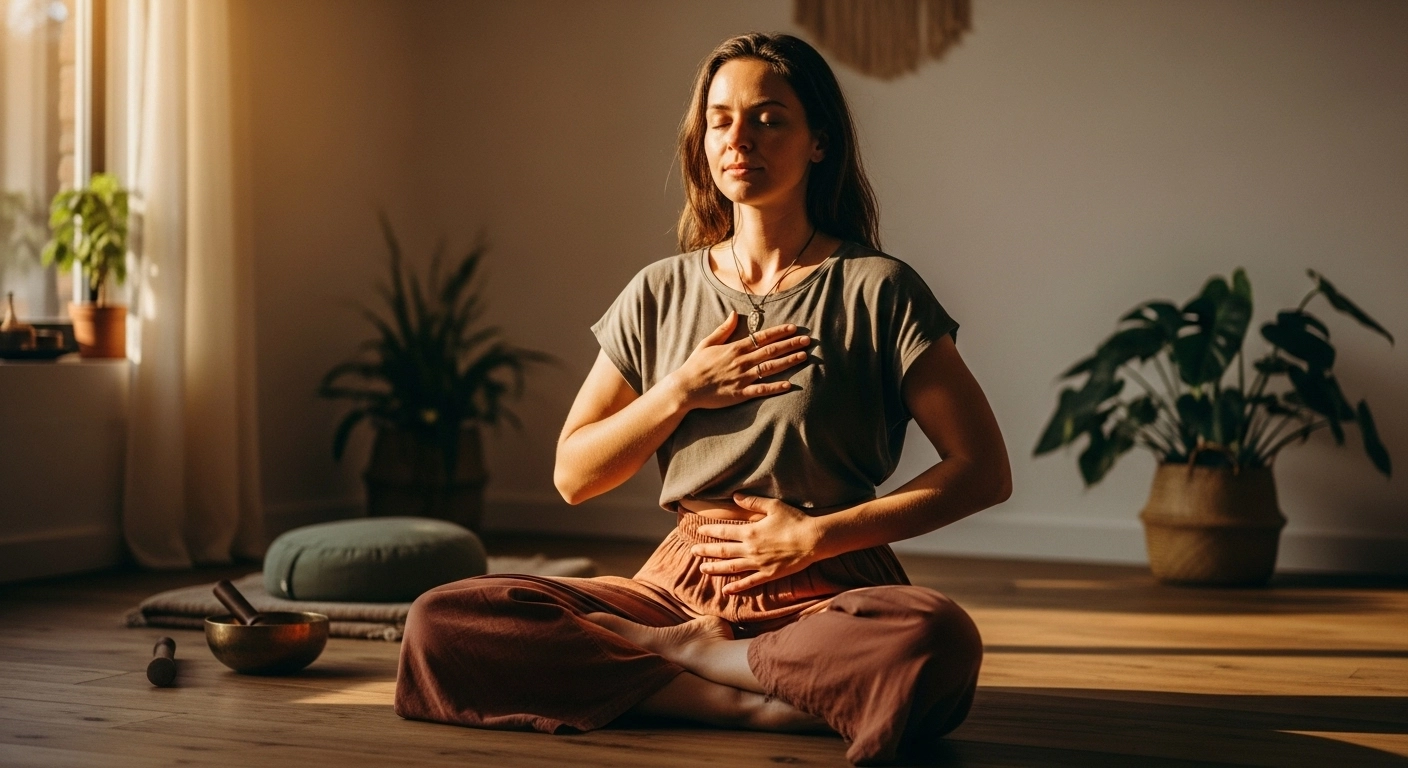
Sit comfortably. Breathe in and out through your nose rapidly, letting your belly pump like a bellows. Start with 30 seconds. This isn’t about hyperventilation it’s about waking up dormant energy in the pelvis and lower spine. Most people feel tingling or warmth within a minute.
The Microcosmic Orbit
Close your eyes and imagine a warm golden light moving up your spine as you inhale, over the crown of your head, and down the front of your body as you exhale. Ten slow rounds. This simple circuit is one of the oldest Tantric techniques for circulating energy instead of letting it get stuck.
Sounding
Sit tall, inhale deeply, and on the exhale let out a deep “VAM” (pronounced like “vum”). Feel the vibration in your pelvis. Repeat 7–21 times. In Tantra, sound is considered the fastest way to shift stuck emotion.
Full-Body Yes
Stand with feet hip-width apart. On each inhale, open your arms wide and slightly arch back, saying silently or aloud, “Yes.” On the exhale, bring palms together at the heart and bow forward, whispering “Thank you.” Do it for three minutes and try to stay grumpy. I dare you.
Eye Gazing
Sit in front of a mirror in soft light. Look gently into your own eyes without blinking as long as comfortable. Soften your gaze. Most people cry, laugh, or feel an enormous wave of self-love within two minutes. It’s one of the most powerful practices I’ve ever taught.
Common Misconceptions People Still Believe
Let’s clear the air.
#1: Tantra is only for couples.
Reality: Most classical Tantric texts were written for solo practitioners.
#2: You have to be flexible.
Reality: I’ve taught 70-year-olds with arthritis who feel more flexible in their energy than most 25-year-old yogis.
#3: It’s a quick fix for a boring bedroom.
Reality: If you treat it like a sex hack, you’ll miss the whole point and probably quit after two weeks.
#4: It’s culturally appropriative.
Reality: When taught with respect and proper lineage, it’s the opposite honoring a tradition that’s been misrepresented for decades.
A Gentle Word of Caution
Tantra Yoga will bring up emotions sometimes big ones. That’s the point. If you’ve experienced trauma (especially sexual trauma), go slow and consider working with a trauma-informed teacher or therapist alongside your practice. Awakening energy is powerful; having support makes it safe and sustainable.
The Bottom Line
Tantra Yoga isn’t about becoming someone else. It’s about remembering who you already are underneath the stress, the stories, and the should. When you practice it honestly, life stops feeling like a checklist and starts feeling like… well, lifestyle. You don’t have to believe any of this right now. Just try one of the practices above tonight. Set a timer for ten minutes. See what happens when you stop trying to escape your body and start listening to it instead.