
Blog
How Many Calories Should You Eat to Lose Weight?


Many people want to start losing weight but are unsure how to approach it with so many diets and strategies available. One of the things to start with in order to make a realistic and healthy weight loss plan is to figure out how many calories you should eat in a day. This guide will describe how to calculate the right number of calories and explain the role of calories in weight loss so you can make a plan and stick to it.
Understanding Calories and Weight Loss
Calories are the units used to determine the energy that foods give the body. Your body uses calories to do everything from breathing to digestion to movement. Staying alive and being active requires calories to be burned and food to be consumed. In order to achieve any weight loss, you will need to be in a meeting point with the amount of money you’re spending and the food you’re putting in.
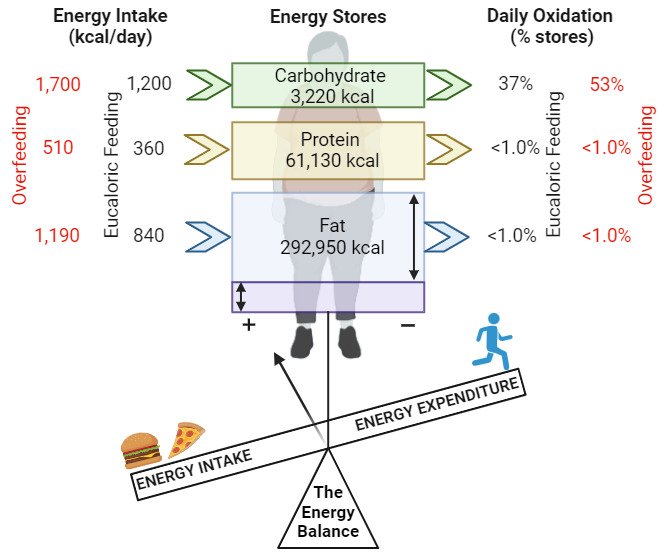
In order to lose weight, you have to create a calorie deficit, meaning you have to burn more calories than you eat. But how many fewer calories do you actually have to eat to see real change? Well that’s going to be different for everyone based on their age, gender, activity level, and metabolism.
What Does This Idea Even Mean?
Creating a calorie deficit is the basis of weight loss. Simply put, it means your body has to use stored \”fuel\” (in this case, fat) to power itself. The general idea is that to lose a pound of body weight, you have to be in a deficit of about 3,500 calories. This is just an average, and in real life, people’s bodies may react differently for a million reasons.
What Affects How Many Calories You Burn A Day?
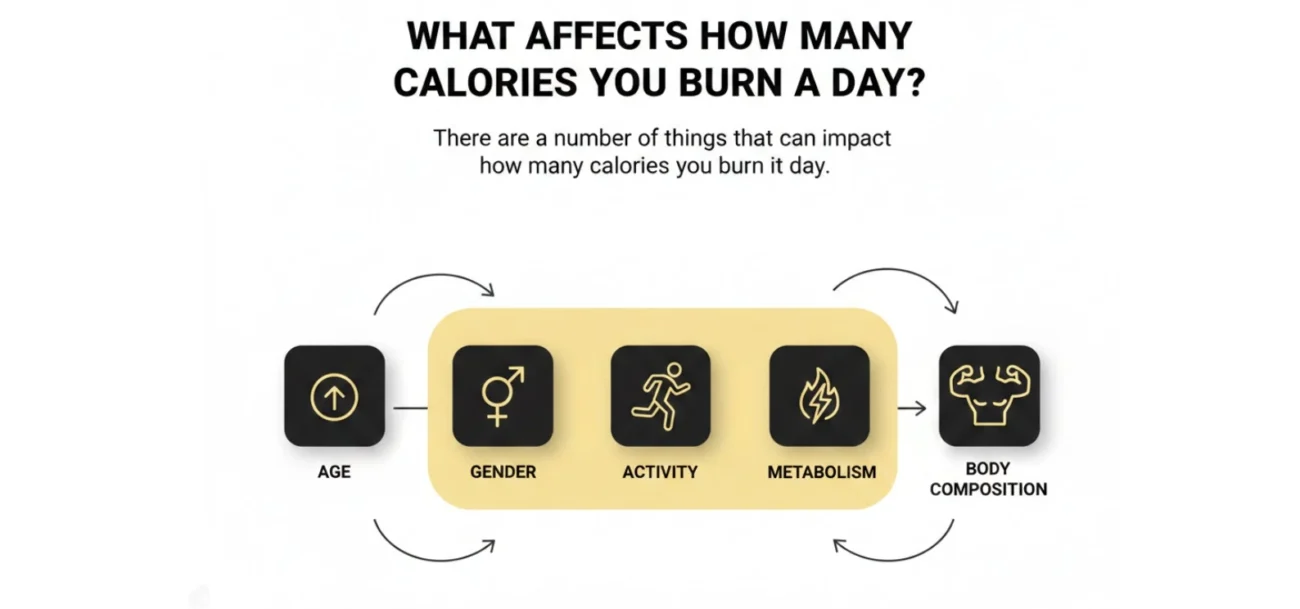
There are a number of things that can impact how many calories you burn a day.
Age: Typically, the younger someone is, the more calories they will need, and the more their body will burn just from existing.
Gender: On average, men have more muscles than women, and will have a higher metabolism, meaning they need more calories.
Activity: If someone is more active, they will burn more calories, meaning they will need to eat more.
Metabolism: Some individuals are blessed with faster metabolisms, which means they are able to burn calories with greater efficiency while others have slower metabolisms that are able to burn a smaller amount of calories.
Body Composition: Individuals that have a higher muscle mass also tend to burn a greater amount of calories, even when they are not active.
How to Calculate Your Calorie Needs
There are a multitude of ways to calculate how many calories you are supposed to eat in one day. One of the most basic ways is using your Total Daily Energy Expenditure (TDEE). This is the amount of calories that you expend in one day, inclusive of the calories that are burned in a state of rest (your Basal Metabolic Rate, or BMR) and the calories that are burned as a result of movement.
How to Calculate Your Calorie Needs
There are many ways to calculate how many calories you should eat each day. One of the simplest methods is using your Total Daily Energy Expenditure (TDEE). This is the number of calories you burn in a day, including both the calories burned at rest (your Basal Metabolic Rate, or BMR) and the calories burned through activity.
To calculate your TDEE, follow these steps:
- Calculate Your BMR: The Mifflin-St Jeor equation is one of the most accurate methods for estimating BMR. For women:
- BMR = 10 × weight (kg) + 6.25 × height (cm) – 5 × age (years) – 161
- BMR = 10 × weight (kg) + 6.25 × height (cm) – 5 × age (years) + 5
- Estimate Your Activity Level: Multiply your BMR by an activity factor based on your typical daily activity:
- Sedentary (little or no exercise): BMR × 1.2
- Lightly active (light exercise or sports 1-3 days a week): BMR × 1.375
- Moderately active (moderate exercise or sports 3-5 days a week): BMR × 1.55
- Very active (hard exercise or sports 6-7 days a week): BMR × 1.725
- Super active (very intense exercise or physical job): BMR × 1.9
- Adjust for Weight Loss: To create a calorie deficit for weight loss, reduce your TDEE by 10-20%. A 500-calorie deficit per day is a typical recommendation for steady, sustainable weight loss.
Example:
Let’s say you are a 30-year-old woman who weighs 70 kg, is 165 cm tall, and is moderately active.
- Calculate BMR:
BMR = 10 × 70 + 6.25 × 165 – 5 × 30 – 161 = 1,398 calories - Multiply by activity factor (Moderately active):
TDEE = 1,398 × 1.55 = 2,167 calories - For weight loss, reduce by 500 calories:
Daily intake = 2,167 – 500 = 1,667 calories
This person would need to eat about 1,667 calories per day to lose weight.
Establishing Realistic Calorie Objectives in the weight reduction.

When establishing a calorie goal, one should be realistic with regard to the amount of weight loss, and over what period of time you wish to lose it. Ending up losing weight is a wrong move as it may cause the loss of muscle, lack of nutrients and low metabolic rate, hence it is best to have gradual weight loss.
Healthy Weight Loss Rate
The safe and healthy rate of weight loss is usually approximately 0.5 to 1 kg (1 to 2 pounds) every week. This is usually done through the deficit of 500-1000 calories a day. Exceeding low calories can result in your body dipping into starvation condition that can slow down your metabolism and result in the loss of muscles.
Significance of having a nutritional balance.
Although attention is paid to the amount of calories consumed, at the same time, the balance of the diet is crucial and makes sure that it includes all the nutrients your body requires. Losing calories should not imply loss of essential vitamins, minerals, protein, fats as well as carbohydrates.
Guidelines on How to Control your calories.
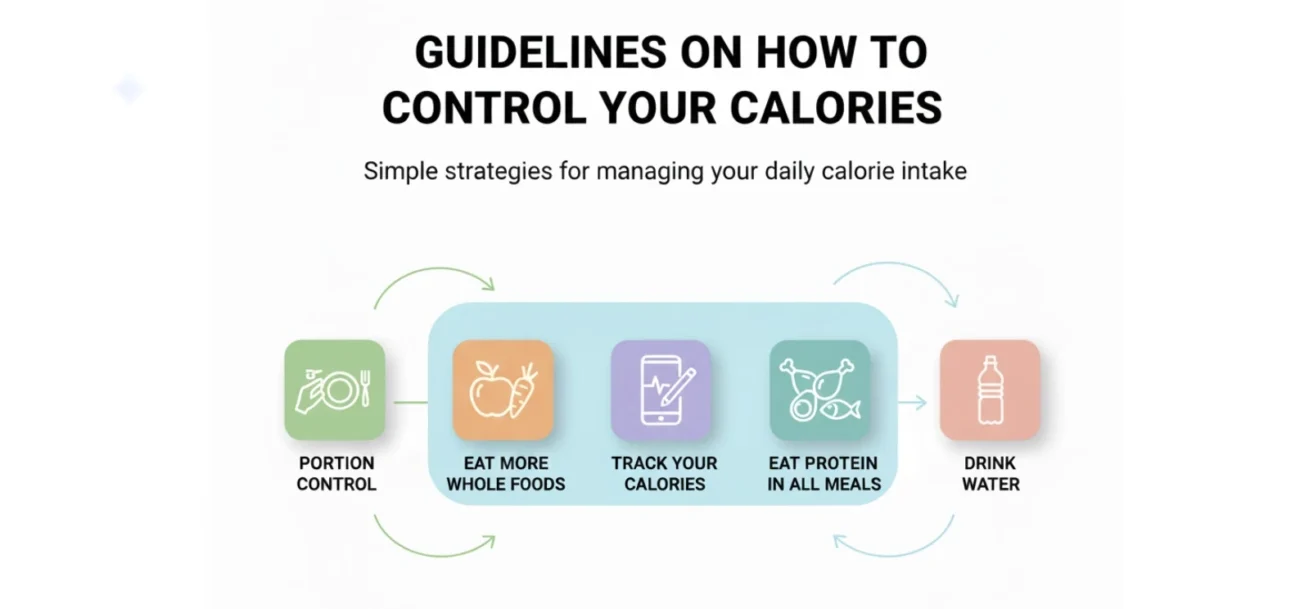
Calorie management does not require living with a strict diet. You can employ realistic plans that will help you be on your calorie limit and not feel like you are starving.
Portion Control
One of the best methods through which calorie consumption can be controlled is by controlling the size of portions. You do not need to weigh or measure it all, but it is possible to notice the portions and it could have a significant impact on them. Smaller plates, bowls and glasses can be used to lessen the urge to eat a lot.
Eat More Whole Foods
Fruits, vegetables, lean proteins, and whole grains are also generally low-calorie and nutrient-dense foods as opposed to processed foods. These foods will be able to keep you fuller and you will also be supplying your body with the necessary nutrients that it requires to perform optimally.
Track Your Calories
You can use apps or journals to keep yourself responsible towards your calorie intake. It is important to note that, by merely writing down what they consume, many people will be able to make better choices.
Eat Protein in All Meals.
Protein is also necessary in the growth and maintenance of muscle as well as in keeping you satisfied between meals. Add protein-rich products such as lean meats, eggs, beans, tofu in all your meals to help in weight loss.
Drink Water
By drinking enough water during the day, it will be possible to control hunger and overeating. The thirst can be confused with the hunger at times and thus by being well hydrated, you will be able to avoid snacking unnecessarily.
Sample Diets of the various calorie requirements.
1,500-Calorie Meal Plan
Breakfast: 2 scrambled eggs and spinach, 1 slice whole-grain toast and 1 small apple.
Lunch: Grilled chicken breast and quinoa and a piece of steamed broccoli.
Dinner: Salmon that was roasted and baked with sweet potatoes and a mixed green salad.
Snack: Several whole almonds or low fat yogurt.
1,800-Calorie Meal Plan
Breakfast: Fresh-berried Oatmeal with a tablespoon of peanut butter.
Lunch: Turkey and avocado wrap, whole-wheat tortilla, carrot sticks on the side.
Dinner: Stir fried tofu and vegetables and brown rice.
Snack: Pineapple and cottage cheese or protein shake.
The Question of Remaining on Track with Your Calorie Intake.
Regularity is the major component to weight loss and its maintenance. The following are a few tips that can make you stay on track:
Make a Plan and Stick to It
A meal plan can also keep you on track with your calories because it helps to have a meal plan throughout the week, preventing your impulsive eats. It is best to take time every week to plan what you will be eating or at least have a rough idea in your mind what you will eat.
Shun Averate Seductions.
Stock the food in the house with unhealthy food to avoid temptation to exceed on calories. Unless you have access to tempting snacks, you will be less inclined to eat.
Practice Mindful Eating
Eat gradually and monitor the physical conditions of the body. This will assist you to know when you are really full and will avoid over eating. One should not be distracted by watching the TV or playing on the phone during meals.
Get Support
A friend, family member, or an online community can make you motivate and hold you accountable, having somebody to support your goals.
Conclusion
How many calories one should intake to lose weight is one of the most essential steps to losing weight. You can lose weight in a healthy, sustainable way by learning about the way calories work, computing your TDEE, making realistic calorie intake goals and putting in practice workable solutions.
This is important to remember there is no such thing as weight loss; it is a matter of finding a balance which fits into your body, your lifestyle and your health in the long-term. Always stick to it, always have patience and always remember that slow weight loss is the best way to achieve a permanent result.