
Blog
A Guide to Edamame Nutrition Facts and Benefits

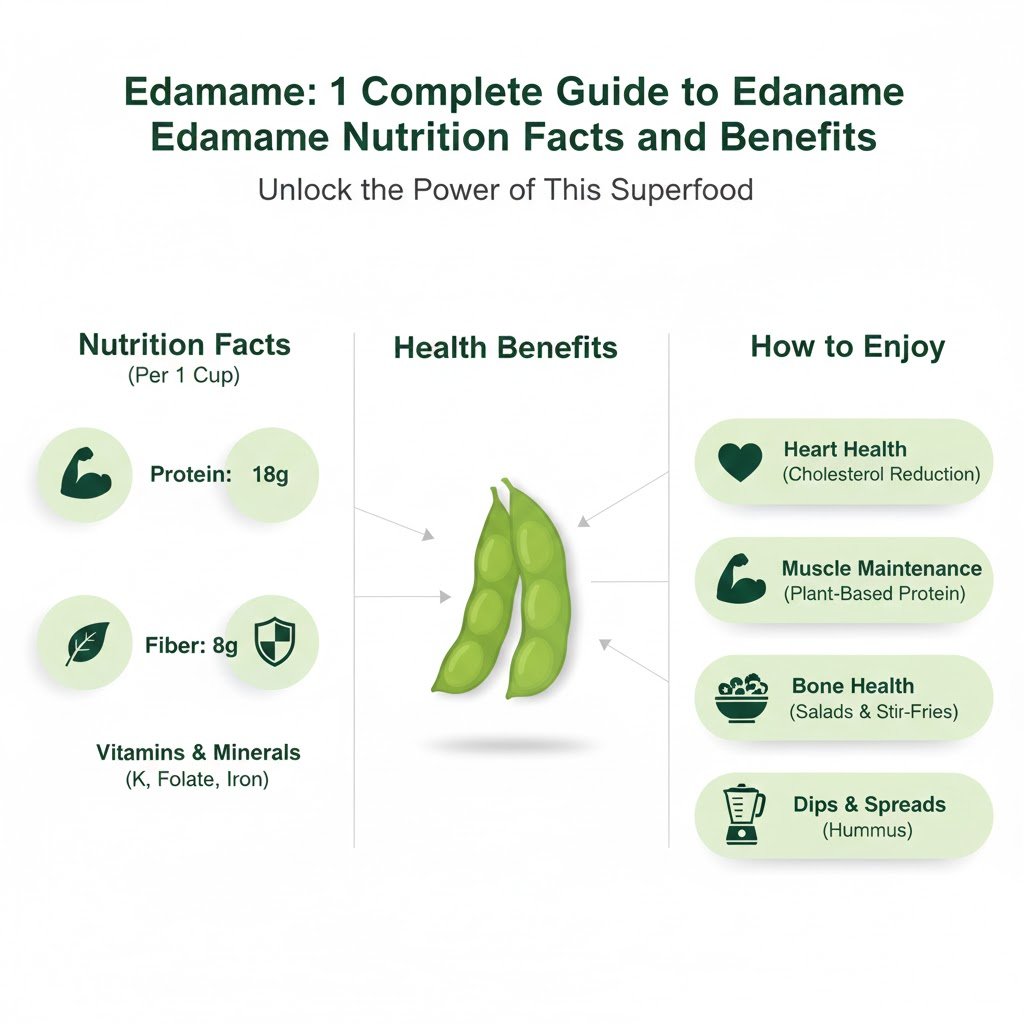
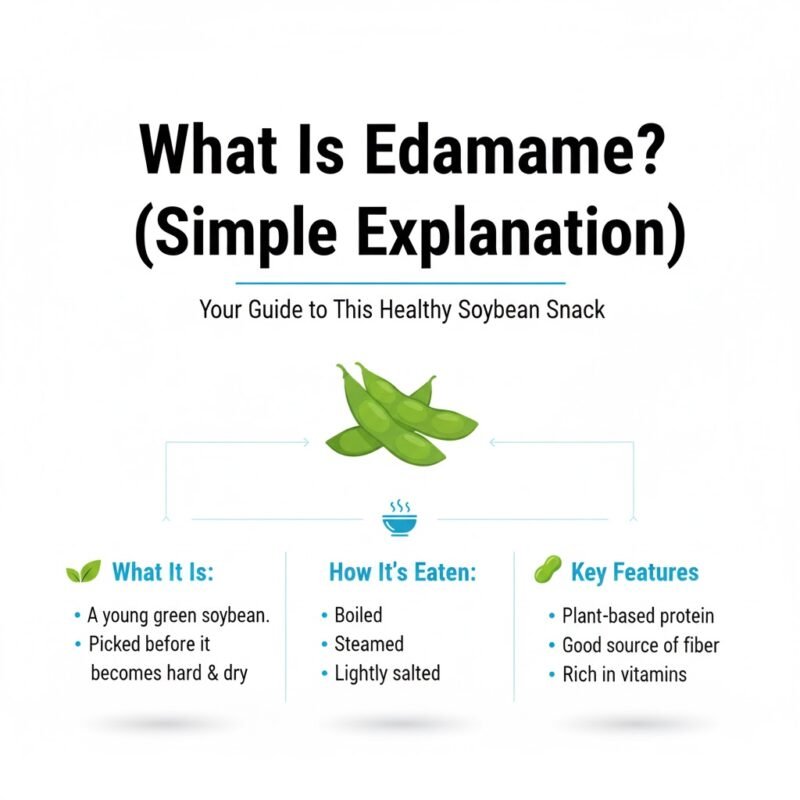
Edamame is a young green soybean.
It is picked before it becomes hard and dry.
Most people eat it:
- Boiled
- Steamed
- Lightly salted
What Is Edamame? (Simple Explanation)
You pop the beans out of the pod and eat the beans, not the pod.
I first ate edamame regularly while working with a hospital nutrition team. We used it because:
- Kids liked the taste
- Adults felt full after eating it
- It was easy to digest when cooked properly
What Edamame Is Made Of
Edamame is mostly:
- Protein
- Fiber
- Water
- Healthy fats
- Vitamins
- Minerals
It contains:
- No cholesterol
- Very little natural sugar
- No additives when eaten plain
Edamame Nutrition Facts (1 Cup Cooked)
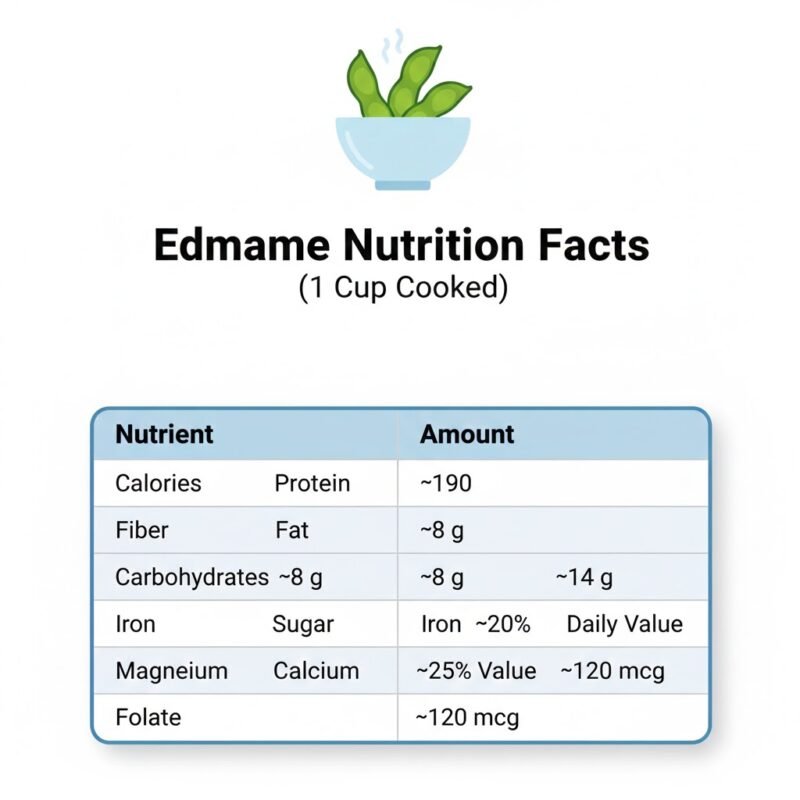
| Nutrient | Amount |
|---|---|
| Calories | ~190 |
| Protein | ~18 g |
| Fiber | ~8 g |
| Fat | ~8 g |
| Carbohydrates | ~14 g |
| Sugar | ~3 g |
| Iron | ~20% Daily Value |
| Calcium | ~10% Daily Value |
| Magnesium | ~25% Daily Value |
| Folate | ~120 mcg |
This balance of nutrients is why nutrition professionals often recommend edamame.
Why Edamame Is a Complete Protein
A complete protein contains all nine essential amino acids.
Most plant foods do not meet this standard.
Edamame does.
This matters because:
- The body cannot make these amino acids
- Children need them for growth
- Adults need them to maintain muscle
I often suggest edamame to families who reduce meat intake.
Edamame and Children’s Health
Edamame is safe for children when:
- Fully cooked
- Chewed properly
- Served in small portions
Benefits for children include:
- Supports growth
- Helps prevent constipation
- Keeps energy steady during the school day
In my experience, picky eaters accept edamame more easily than many vegetables because it is soft and mildly sweet.
Edamame for Adults and Older People
For adults, edamame supports:
- Muscle strength
- Bone health
- Digestive function
For older adults:
- Soft texture makes it easier to chew
- Protein helps slow muscle loss
- Minerals support heart and nerve function
I often recommend mashed or lightly seasoned edamame for people with dental issues.
How Edamame Supports Gut Health
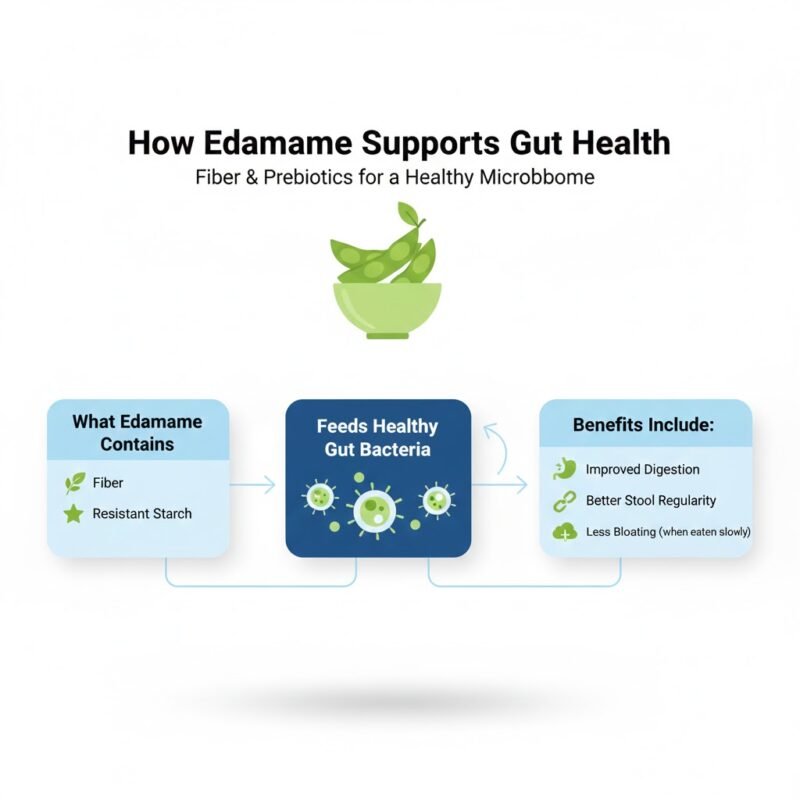
Edamame contains fiber and resistant starch.
These help feed healthy gut bacteria.
Benefits include:
- Improved digestion
- Better stool regularity
- Less bloating when eaten slowly
Expert tip:
Soaking or fully cooking edamame reduces gas and discomfort.
Edamame and Heart Health
Edamame supports heart health because it:
- Contains no cholesterol
- Provides potassium and magnesium
- Can help lower LDL cholesterol
I have seen patients improve cholesterol levels by replacing processed snacks with edamame.
Edamame and Blood Sugar Control
Edamame:
- Digests slowly
- Has a low glycemic load
- Helps prevent blood sugar spikes
This is helpful for people with:
- Type 2 diabetes
- Insulin resistance
- Energy crashes
Always eat edamame plain, without sugary sauces.
Edamame and Weight Control
Edamame supports healthy weight control because:
- Protein increases fullness
- Fiber slows digestion
- Chewing beans takes time
People who snack on edamame often eat less later in the day.
Edamame and Hormones (Expert Explanation)

Edamame contains isoflavones.
These are plant compounds that:
- Act very weakly like estrogen
- Do not behave the same as human hormones
Expert consensus:
- Normal intake is safe
- No strong evidence shows harm in healthy people
I have worked with hormone specialists who regularly allow edamame in balanced diets.
Is It Safe to Eat Edamame Every Day?
For most people, yes.
A reasonable daily amount:
- ½ to 1 cup cooked
Avoid excessive intake if:
- You have a soy allergy
- You rely only on soy for protein
Balance is important.
Common About Edamame
Myth: Edamame lowers testosterone
Fact: No strong evidence supports this in normal amounts
Myth: Soy causes cancer
Fact: Whole soy foods are linked to lower cancer risk in population studies
Myth: Edamame is highly processed
Fact: It is a whole food
Best Ways to Cook Edamame
Recommended methods:
- Steam for 5–7 minutes
- Boil in lightly salted water for 4–5 minutes
Avoid:
- Frying
- Heavy sauces
- Excess salt
Simple cooking keeps nutrients intact.
Frozen Edamame vs Fresh Edamame
Frozen edamame:
- Picked at peak freshness
- Nutrients preserved
- Available year-round
Fresh edamame:
- Seasonal
- Short shelf life
In most cases, frozen edamame is the better option.
How Much Edamame Is Too Much?
Eating too much may cause:
- Bloating
- Mild stomach discomfort
This usually happens when:
- Eating very large portions
- Eating too quickly
Start with small servings.
Edamame and Special Diets
Edamame works well for:
- Vegetarian diets
- Vegan diets
- Gluten-free diets
- Dairy-free diets
It is not suitable for people with soy allergies.
Our Expert Guide More Know About Edamame
A Professional Introduction
I have worked in nutrition and food science for more than two decades. Edamame is one of the most reliable plant foods I recommend. It works for children, adults, athletes, and older people. It is simple, filling, and backed by nutrition science.
How Edamame Grows
Edamame grows on soybean plants and is harvested early while the beans are still soft and green. If left longer, they dry and harden into mature soybeans.
Early harvesting:
- Preserves nutrients
- Improves taste
- Keeps texture soft
Protein Quality Explained Simply
Protein is made of amino acids. Edamame contains all essential amino acids.
This helps:
- Repair tissues
- Maintain muscle
- Support immune health
Children and adults both benefit from this balance.
Fiber Content Explained
Edamame contains:
- Soluble fiber
- Insoluble fiber
Together, they help:
- Improve digestion
- Control appetite
- Support gut bacteria
Fat Content Explained Clearly
The fat in edamame is mostly unsaturated fat.
This supports:
- Brain health
- Cell structure
- Hormone balance
It is not the same as fried or processed fats.
Vitamins Found in Edamame
Edamame provides:
- Vitamin K for blood health
- Folate for cell growth
- Vitamin C for immune support
Light cooking helps preserve these vitamins.
Mineral Content and Absorption
Key minerals include:
- Iron
- Magnesium
- Potassium
Plant-based iron absorbs better when eaten with vitamin C–rich foods.
Edamame for Athletes
Athletes benefit because:
- Protein supports recovery
- Carbohydrates restore energy
- Minerals help prevent cramps
I have seen athletes replace protein bars with edamame successfully.
Edamame for Older Adults
Edamame helps slow muscle loss and is easy to chew when cooked properly.
It also supports:
- Bone health
- Heart function
- Digestion
Food Safety and Storage Tips
Always:
- Cook thoroughly
- Store leftovers in the refrigerator
- Eat within three days
Never eat raw edamame.
Long-Term Health Patterns
People who regularly eat whole soy foods often show:
- Better heart health
- Stable weight
- Improved digestion
This pattern appears consistently in long-term studies.
Frequently Asked Questions About Edamame
Is edamame the same as soybeans?
Yes. Edamame is an immature soybean.
Can children eat edamame?
Yes, when fully cooked and served in small amounts.
Is canned edamame a good option?
Frozen edamame is usually better.
Final Thoughts From an Expert
Edamame is one of the most balanced plant foods available. It is affordable, easy to prepare, and supported by strong nutrition evidence. I have seen it help families improve their diets without stress.
Keep it simple. Eat it slowly. Use it as part of a balanced diet.
That is how edamame works best.