
Blog
How to Grow Beautiful Crape Myrtle Trees | A Backwoods Guide

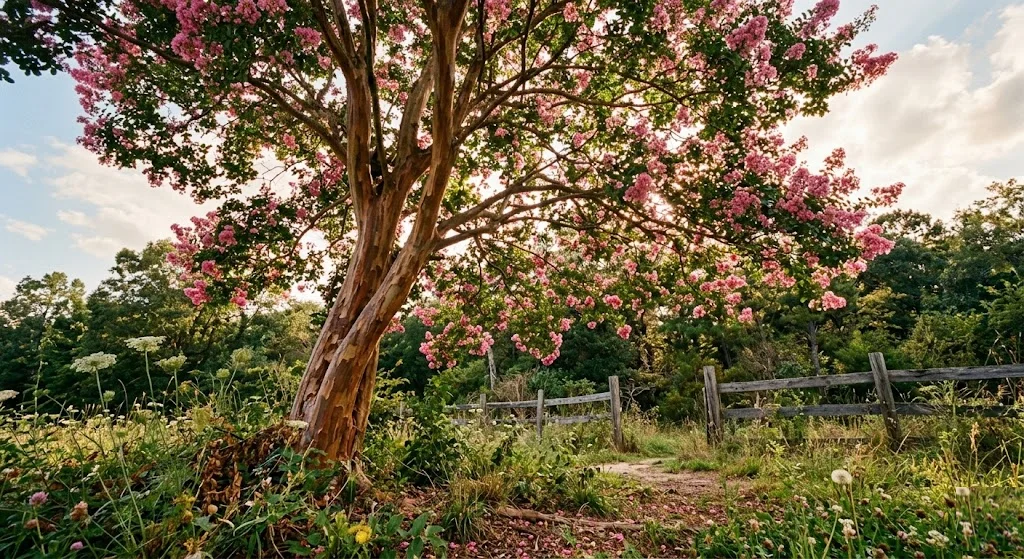
Fifteen years with crape myrtles and I still think about the first one I killed. Stuck it in shade, soggy ground, the works. Thing didn’t stand a chance and I had no clue why. No garden center down the road to ask, so I just tried again somewhere sunnier. Now the yard’s full of them, pinks, whites, reds, purples all summer long. Then winter hits and the bark starts peeling like old paint off a barn door. That part might be better than the blooms if I’m being honest.
These trees are as much a part of this place as the oaks my granddaddy put in the ground. And all those hours spent digging, pruning, hauling dirt, keeps me outside and moving well, which does more for my head than sitting around ever could.
Everything in this guide comes from fifteen years of hands-on growing in backwoods soil. No textbook advice here, just what worked, what didn’t, and what killed a few trees along the way.
Table of Contents

Finding the Right Spot on Your Land
Out here in the backwoods, we don’t have a lot of places to choose from, but crape myrtles will let you know real quick if you picked wrong. These trees love sun. I messed up early on by planting one in the shade of an old hickory tree, thinking it would be okay. That poor tree had a hard time for three years before I finally moved it to a sunny spot. Now it blooms like crazy. You need at least six hours of full sun – more if you can get it. In the backwoods, we’ve got plenty of sun once you clear a spot, but don’t plant too close to the woods where shadows come in during the day.
Air moving around is just as important as sunshine. I’ve seen folks plant these trees right up against their houses or barns, and those trees always seem to have problems. Out here where the wind can move around, plant diseases don’t get much of a start. But if you crowd your crape myrtle or plant it in a low spot where air just sits there, you’re asking for trouble. The dirt is pretty easy to work with, which is good because backwoods soil isn’t always great. These trees handle clay, sand, even that rocky ground we get on hillsides. But they can’t stand having wet roots – learned that when I planted one in a low spot that stayed muddy after every rain. Root rot killed that tree faster than a late frost. If your dirt holds water, work in some old compost or dead leaves before you plant.
Getting Them in the Ground
Fall is the best time to plant around here, though early spring works too. I don’t plant in summer unless I have to – the heat is just too much for new trees. When I dig the hole, I make it wide instead of deep. The hole should be as deep as the root ball but two or three times wider. This loose dirt gives those roots plenty of room to spread out. Don’t skip loosening up the roots when you take the tree out of its pot. I use my hands to pull apart any roots that are wrapped around in circles. Sometimes I even make small cuts with my pruning shears if they’re really tangled up. It might look rough, but it stops the tree from staying root-bound later on. Once the tree’s sitting right with the top of the roots level with the ground, I fill back in with the same dirt I dug out and water it good. Don’t need any special soil – that can actually cause problems with water not draining right.
Taking Care of Them
The first couple years matter most. I water my new crape myrtles deep once or twice a week when it’s dry, making sure the water soaks down to the roots instead of just getting the top wet. After they get going, they handle dry weather pretty well, though they still like regular water during hot summers.
For feeding them, I keep it simple. Some balanced plant food in early spring works fine – the kind with equal numbers like 10-10-10. Sometimes I give them another light feeding in early summer if I want more blooms. But here’s something I learned the hard way: too much nitrogen creates lots of leaves but not many flowers.. Less is better with crape myrtles.
The Cutting Back Problem
This is where folks get into arguments. You’ve probably seen those sad crape myrtles that look like telephone poles with a few branches sticking out the top. We call that “crape murder,” and you don’t need to do it. Real pruning means working with how the tree wants to grow. In late winter, I take out any dead wood, branches that rub against each other, and shoots growing toward the middle of the tree. What I’m trying to do is open up the middle so light and air can get through. On older trees, I sometimes cut off lower branches to show off that pretty bark that peels off – it’s one of the best things about these trees.
Fixing Common Problems
White powdery stuff on the leaves shows up sometimes. It looks like someone dusted the leaves with flour. It’s mostly just ugly, but it tells you the tree needs better air moving around it or more sun. I’ve found that picking the right kinds and putting them in good spots stops most problems. Lately, we’ve been dealing with something called crape myrtle bark scale, nasty little white or gray bumps- nasty little white or gray bumps that stick to the bark like barnacles. If you see these, oil spray put on several times can help, or you might need stronger treatment if it’s really bad.
What Growers Usually Ask Me
When is the best time to plant crape myrtles?
Fall. Roots get settled before summer heat hits. Early spring works too but fall gives you a head start around here.
How much sun do crape myrtles need?
Six hours minimum. More is better. I’ve never seen one get too much sun but I’ve watched plenty die in shade.
What is crape murder?
Chopping the top off every winter like it’s a telephone pole. People think it helps. It doesn’t. Just prune the dead stuff and crossing branches and leave the rest alone.
What Fifteen Years Taught Me About These Trees
They’re not complicated. Sun, decent drainage, don’t go crazy with the pruning shears. That’s really most of it. I’ve killed a few, saved a few more, and moved more than I should’ve had to because I didn’t listen to what the tree was telling me. My old neighbor used to say crape myrtles are like good dogs, treat them right and they’ll stick around. Took me a few dead trees to understand what he meant but he had it right all along.