
Blog
The Athletic Connection: Why Certain Sports Increase Spondylolisthesis Risk by 300%

For young athletes and weekend warriors alike, the benefits of sports participation are well-documented: improved cardiovascular health, stronger muscles, better mental well-being, and enhanced social connections. However, certain sports carry a hidden risk that many athletes and coaches remain unaware of: the increased chance of developing spondylolisthesis, a condition where one vertebra slips forward over another. Research shows that athletes in specific sports face up to 300% higher risk compared to non-athletes.
In this article, we’ll explain how this connection is crucial for prevention, early detection, and informed decision-making about athletic participation, as well as outlining the different spondylolisthesis treatment options.
Why Certain Sports Increase The Risk of Spondylolisthesis
The lower lumbar spine, particularly the L5-S1 junction, bears tremendous force during physical activity. When athletes repeatedly hyperextend their backs, arching backward beyond the normal range of motion, they place exceptional stress on the pars interarticularis, a small bridge of bone connecting the vertebral joints.
This repetitive hyperextension creates microscopic stress fractures, leading to a condition called spondylolysis. Over time, these stress fractures can weaken the vertebral structure enough that it can no longer hold the vertebra in place, leading to spondylolisthesis. The process is similar to repeatedly bending a paperclip back and forth until it eventually breaks.
Young athletes are particularly vulnerable because their spines are still developing. During adolescent growth spurts, the spine experiences rapid changes that can make it more susceptible to stress injuries. The bones may grow faster than the surrounding muscles and ligaments can adapt, creating temporary instability.
The High-Risk Sports
Gymnastics: The Highest Risk
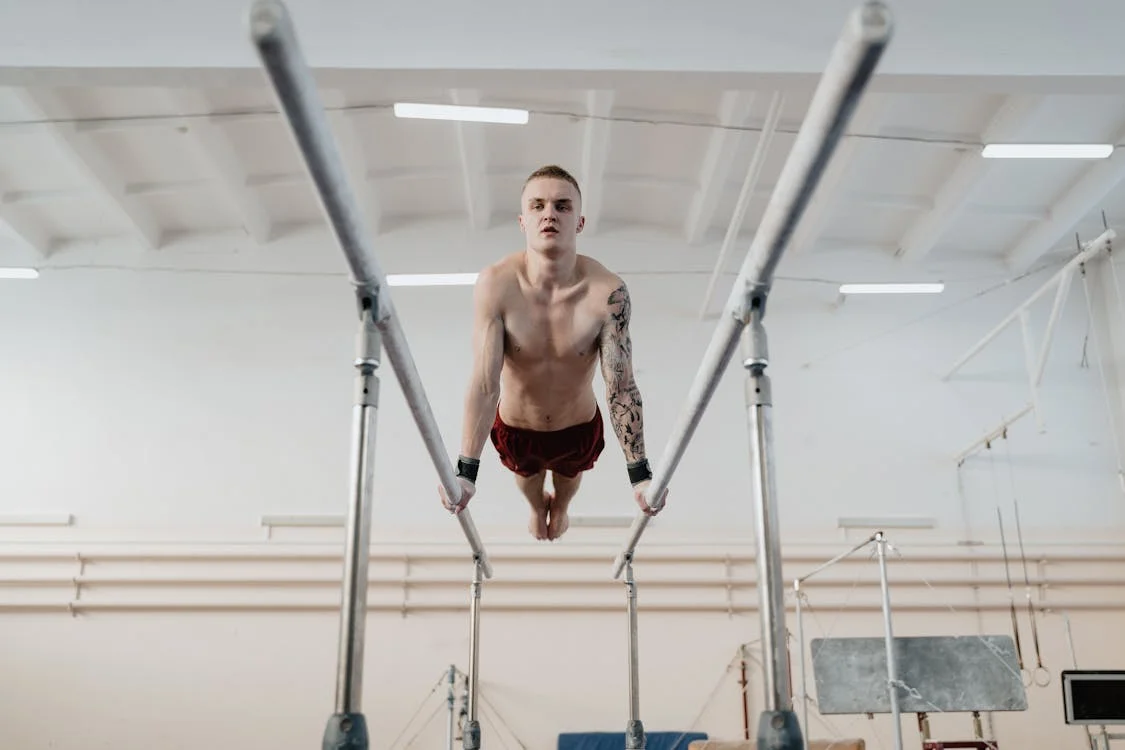
Gymnasts face the most substantial risk, with some studies indicating rates of spondylolysis and spondylolisthesis as high as 40% among elite competitors. The sport demands extreme spinal hyperextension during virtually every skill – back handsprings, walkovers, back tucks, and dismounts all require aggressive arching of the lower back.
For example, female gymnasts performing beam routines and floor exercises repeatedly load their spines in hyperextension while also managing rotational forces and impact landings. Male gymnasts on rings and high bar experience similar stresses.
American Football
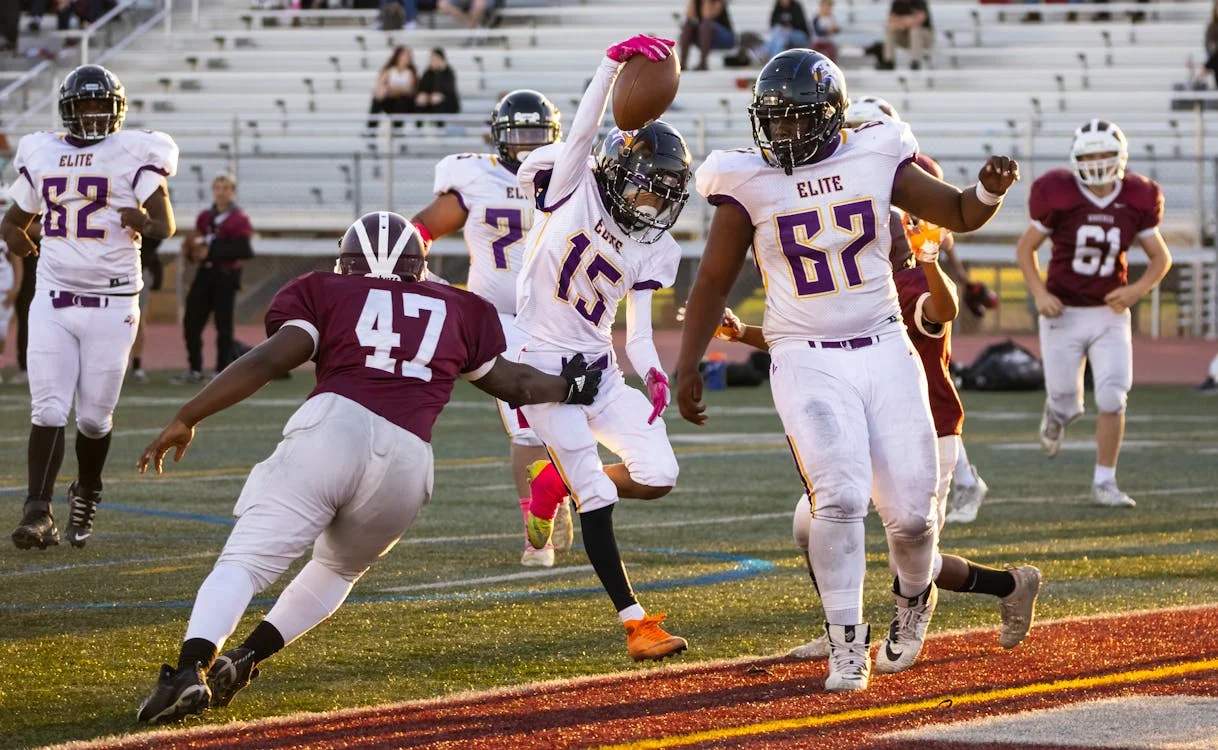
Football players, particularly offensive and defensive linemen, show significantly elevated rates of spondylolisthesis. The blocking and tackling positions require linemen to maintain a hyperextended posture while generating explosive force and absorbing violent collisions.
The three-point stance common in football places the lower back in extension, and the explosive movement from this position to engage opponents creates tremendous shear forces on the lumbar spine. Studies of high school and college football players have found spondylolysis rates approaching 15-20% among linemen, compared to just 5-6% in the general adolescent population.
Diving
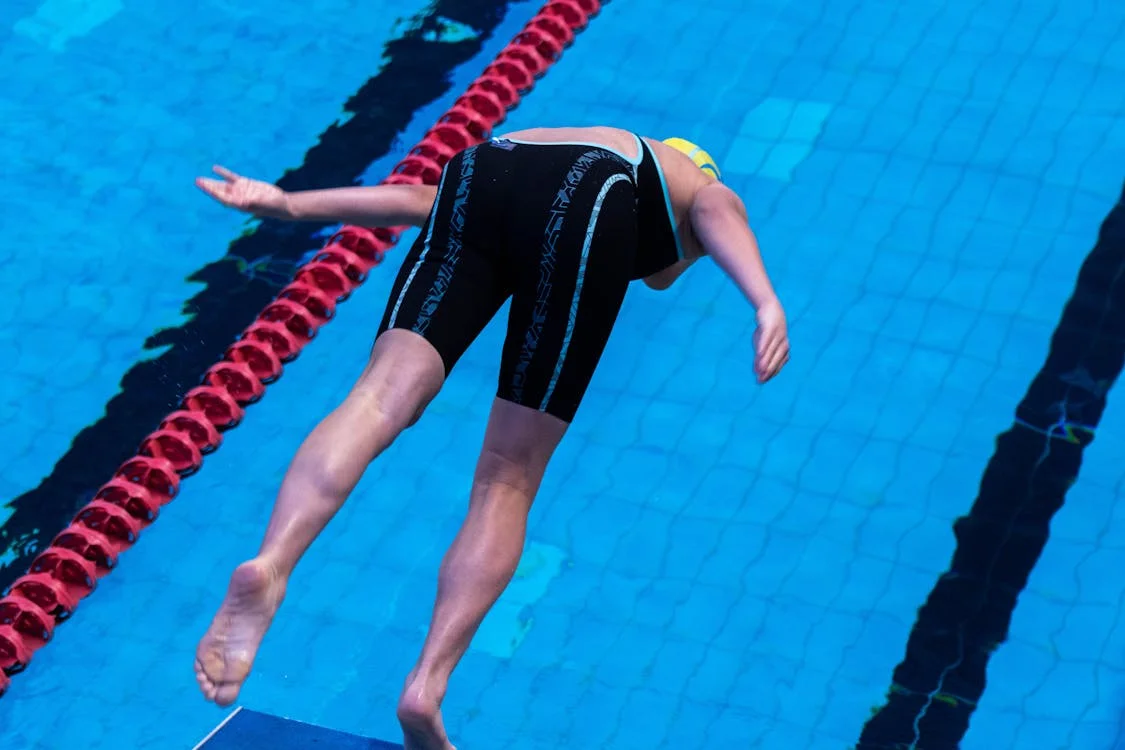
Competitive divers execute complex maneuvers requiring extreme spinal flexibility and control. The arching motions during entries, the hyperextension during twisting dives, and the repetitive impact of water entry all contribute to increased risk.
Platform divers face additional challenges as they enter the water from greater heights, increasing impact forces on the spine.
The sport’s emphasis on aesthetic form often encourages maximum hyperextension, further elevating risk.
Weightlifting and CrossFit
Olympic weightlifters, powerlifters, and CrossFit athletes performing overhead movements face elevated risk, particularly when performing clean and jerks, snatches, and overhead squats. These movements require the athlete to support heavy loads while the spine is in hyperextension.
Poor technique amplifies this risk significantly. When athletes fail to maintain proper core engagement or compensate for a lack of shoulder or hip mobility by overextending the lumbar spine, the forces on the pars interarticularis multiply.
Other At-Risk Sports
Wrestling, figure skating, volleyball, dance, rowing, and tennis all show elevated rates of spondylolisthesis compared to the general population, though typically lower than the highest-risk sports. Each involves repetitive spinal loading, hyperextension, or rotational forces that can stress the pars interarticularis over time.
Why the 300% Increase?
The staggering 300% increase in risk among athletes in these sports results from a combination of factors. The sheer volume of repetitions is crucial – a gymnast might perform hundreds of hyperextension movements per week, while a football lineman executes thousands of explosive blocks throughout a season. This repetitive loading doesn’t allow adequate time for bone healing and remodeling.
Furthermore, athletic movements generate forces far exceeding those of daily activities.
A gymnast landing a tumbling pass can experience impact forces of 10 times body weight or more, all directed through a hyperextended spine. The young age at which many athletes begin intensive training also compounds the problem.
Starting competitive gymnastics, diving, or football before skeletal maturity increases vulnerability to stress fractures that can lead to spondylolisthesis.
Finally, the culture of many competitive sports encourages athletes to push through pain and fatigue, when technique deteriorates and injury risk soars. The pressure to perform and fear of losing playing time often prevent athletes from reporting symptoms until damage has progressed significantly.
Recognition and Prevention
Early recognition of spondylolisthesis in athletes is challenging because initial symptoms can be vague. Young athletes may dismiss lower back pain as normal soreness, and the gradual onset means they may not recognize a problem until it becomes severe.
Warning signs include persistent lower back pain that worsens with activity, especially with hyperextension movements; pain that improves with rest; tight hamstrings; a change in athletic performance; and pain that radiates into the buttocks or legs.
Prevention strategies should focus on several key areas. Proper technique is paramount, and coaches must emphasize neutral spine positions and teach athletes to generate power from the hips and core rather than excessive spinal motion. Adequate core strengthening creates a natural stabilizing brace for the spine. Gradual progression of training intensity and volume allows bones to adapt to increasing loads. Scheduled rest and recovery periods give the spine time to heal from accumulated microtrauma.
Continuing Athletic Participation
A diagnosis of spondylolysis or low-grade spondylolisthesis doesn’t necessarily end an athletic career. Many athletes successfully continue participating with appropriate modifications, rehabilitation, and monitoring. The key is working with healthcare providers who understand both the condition and the demands of the specific sport.
Thank you for reading. We hope this article has highlighted the potential risk of spondylolisthesis for young athletes, and we urge you to consult a medical professional if you are experiencing any back pain as a result of sports.