
Blog
Useful Advice Jalbitehealth: Sleep Habits and Health Connection

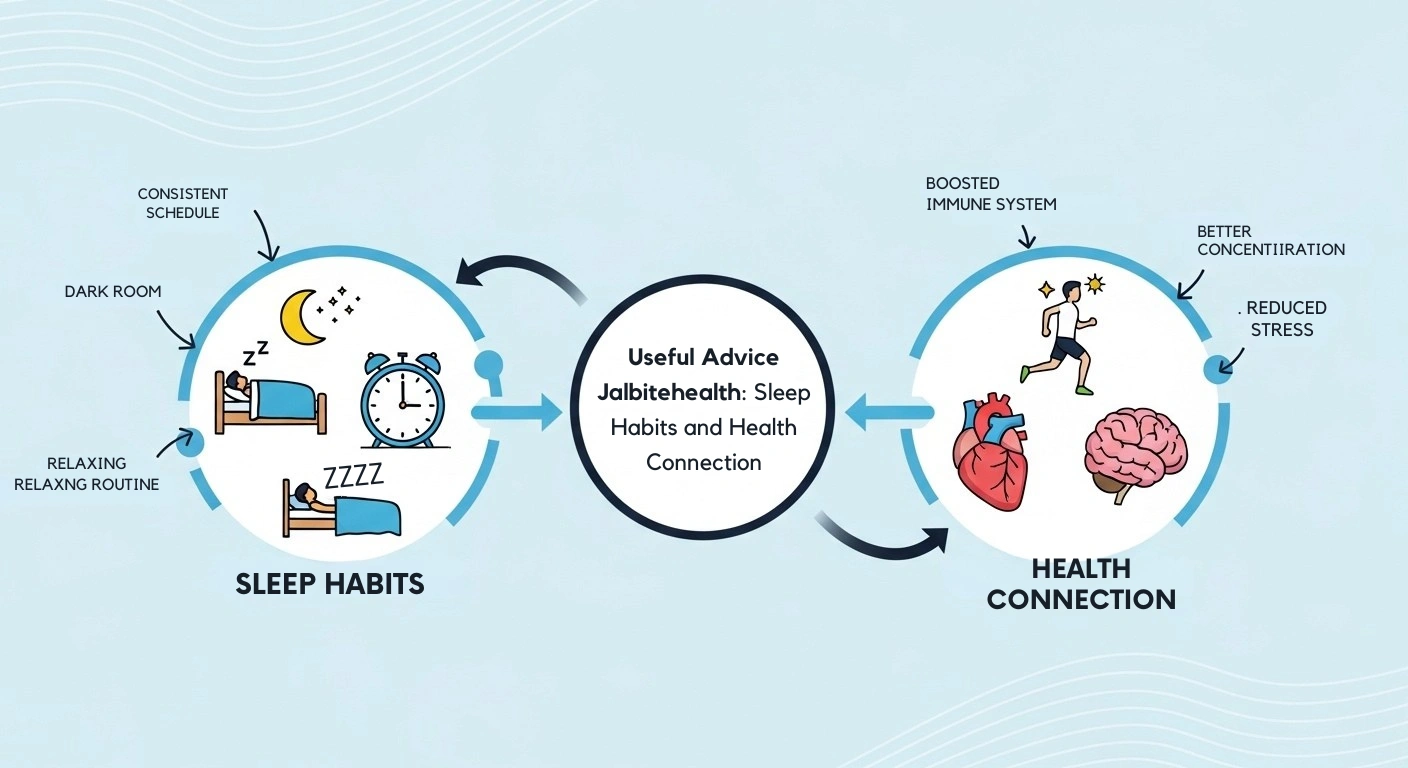
You probably know you should get more sleep. Everyone says it. Your doctor says it. That article you were reading at 1 AM while scrolling your phone said it too ironic, right?
But here is what most people miss. Sleep is not just about feeling rested. It touches almost every part of your health, from your heartbeat to your emotions to your waistline.
That is the kind of grounded perspective that useful advice Jalbitehealth brings to the table. No scary jargon. No overnight transformation promises. Just small, realistic steps you can actually stick with.
The Sleep Crisis Nobody Talks About Enough
The numbers are alarming. According to the National Sleep Foundation’s 2025 Sleep in America Poll, six out of ten American adults do not get enough sleep. Nearly four in ten struggle to fall asleep three or more nights per week.
The economic damage is just as shocking. The U.S. loses around $411 billion annually because of sleep-deprived workers. About 1.23 million workdays vanish every year because employees simply cannot function properly.
In hospitals, sleep deprivation among medical staff plays a role in roughly 100,000 preventable deaths yearly from errors. These are not just statistics. They are real lives affected by something most people dismiss as no big deal.
Most competitor wellness blogs mention sleep briefly “get 7 to 9 hours” and move on. That is a footnote, not useful advice. Jalbitehealth goes deeper.
Understand Sleep Stages: Why Not All Sleep Is Equal
Most wellness articles skip this entirely. But once you understand your sleep stages, everything changes. You do not stay in one state until morning. Your body cycles through distinct phases, and each one has a different job.
- Light Sleep (NREM 1): This is that drowsy transition lasting just a few minutes. Your muscles relax, your heart rate slows down, and your brain shifts gears. You are easy to wake during this phase.
- Deeper Light Sleep (NREM 2): Your body temperature drops and brain activity slows further. This stage makes up about 50 percent of your total sleep. Your brain works on consolidating short-term memories here, which is why even a brief nap can feel refreshing.
- Deep Sleep (NREM 3): This is the gold standard of physical recovery. Your body releases growth hormone, repairs tissues, strengthens immunity, and restores energy at a cellular level. Adults spend about 20 percent of the night here, though this number goes down with age.
- Where Your Brain Comes Alive: Dreaming happens here, but REM does far more than that. Your brain processes emotions, locks in complex memories, and strengthens neural connections. About 20 to 25 percent of your sleep should be REM.
Here is the key insight. If you only get five or six hours, you cut off the later cycles where REM dominates. That means your brain’s emotional processing and memory work take a hit even if you “feel fine.”
How Sleep Affects Your Body
Your Heart Pays the Price:
Poor sleep hits your cardiovascular system hard. A 2025 umbrella review found that not getting enough sleep raised hypertension risk by 1.2 to 1.6 times. People under 65 face an even higher risk.
Even one night of sleeping only 3.6 hours can push blood pressure up in healthy young men. Now imagine what years of short sleep do to your heart.
Your Weight and Metabolism Get Out of Balance:
After a bad night, you feel ravenous the next day. That is not your imagination. Sleep deprivation messes with two appetite hormones:
- Leptin (tells your brain you are full) — drops when you do not sleep enough
- Ghrelin (tells your brain you are hungry) — spikes when you do not sleep enough
The result? Your body tricks you into overeating. Harvard research estimates that 3 to 5 percent of adult obesity ties directly to chronic sleep loss. Your hormones literally work against you when you are exhausted.
Your Immune System Takes a Beating:
During deep sleep, your immune system releases protective proteins called cytokines. When you cut sleep short, your body makes fewer of these infection-fighting substances.
That is why people who skimp on sleep catch colds more often and take longer to bounce back.
Mental Health Suffers More Than You Think:
The link between poor sleep and mental health is powerful. A 2025 review found that sleep deprivation increases:
- Anxiety levels, which get worse the longer deprivation lasts
- Aggression and irritability
- Depression symptoms
- Emotional instability and poor self-regulation
Brain imaging shows that after 35 hours without sleep, the brain’s emotional center (amygdala) goes into overdrive while the rational decision-making area (prefrontal cortex) loses control. Relationships, work performance, and quality of life all suffer as a result.
| Health Area | Poor Sleep (Under 7 Hours) | Good Sleep (7 to 9 Hours) |
|---|---|---|
| Heart Health | Higher risk of hypertension, stroke, heart disease | Stable blood pressure, lower cardiovascular risk |
| Weight | Appetite hormones spike, obesity risk goes up | Balanced hunger signals, healthier metabolism |
| Immunity | Fewer infection-fighting substances, slower recovery | Stronger immune response, faster healing |
| Mental Health | More anxiety, depression, emotional instability | Better mood regulation, emotional resilience |
| Brain Function | Slower reactions, memory trouble, poor focus | Sharper thinking, better learning and recall |
| Gut Health | Microbiome imbalance, more inflammation | Balanced gut bacteria, smoother digestion |
| Mortality | 10 to 13 percent higher risk of premature death | Lower overall mortality risk |
| Work Performance | More errors, missed days, low productivity | Better focus, fewer mistakes, higher output |
| Cancer Risk | Higher risk, especially prostate cancer | Lower risk through proper melatonin production |
| Hormones | Growth hormone, testosterone, and cortisol go off track | Healthy hormone production and regulation |
The Gut-Sleep Connection: What No One Else Tells You
Here is something competitor articles almost never mention — the two-way relationship between gut health and sleep quality.
Your gut holds trillions of bacteria that form what scientists call the microbiome. This microbiome does more than help digestion. It produces neurotransmitters like serotonin and GABA, which play direct roles in regulating mood and sleep. About 95 percent of your body’s serotonin — a precursor to the sleep hormone melatonin — comes from the gut.
When your gut bacteria fall out of balance, a condition called dysbiosis, the production of sleep-regulating chemicals drops. You end up with difficulty falling asleep, more nighttime awakenings, and less deep sleep.
It works both ways too. Poor sleep changes gut bacteria composition for the worse, creating a vicious cycle.
What helps break this cycle:
- Eat fermented foods like yogurt, kefir, kimchi, and sauerkraut for probiotics
- Get more fiber through fruits, vegetables, and whole grains to feed good bacteria
- Cut back on processed food and added sugar, which harm the microbiome
- Stay hydrated throughout the day to support healthy digestion
This food-first approach fits perfectly with the Jalbitehealth philosophy of building health through simple daily choices.
Sleep Debt: How It Builds Up and Why Weekends
Another concept competitor blogs skip is sleep debt — the cumulative effect of not sleeping enough over multiple nights.
Say you need eight hours but only get six each weeknight. By Friday, that is ten hours of debt. You might sleep until noon on Saturday, but research shows that one long sleep-in does not fully restore your cognitive performance.
The scariest part? People who carry chronic sleep debt often have no idea how impaired they are. They get used to feeling tired and assume that is just how life feels.
The Jalbitehealth approach to sleep debt:
- Prevention beats recovery — aim for consistency all week long
- If you fall behind, add 30 to 60 extra minutes per night over the following week
- Avoid marathon sleep sessions that throw off your circadian rhythm
- Do not rely on weekends to “catch up” it only creates an irregular pattern
Why Most Sleep Advice Fails, and What Jalbitehealth
Most online sleep advice tells you what to do but ignores your real life. “Just go to bed at 10 PM!” sounds great unless you have a crying baby, a demanding job, or a brain that will not stop racing.
Jalbitehealth takes a different route because it stays rooted in practicality. It does not expect perfection. It expects progress.
Instead of overhauling your routine overnight, you start with one or two small changes and build from there. Behavioral psychology research backs this up tiny, consistent changes last far longer than dramatic overhauls.
Practical Sleep Habits Inspired by Useful Advice Jalbitehealth
Build a Consistent Sleep Schedule:
Your circadian rhythm thrives on routine. Go to bed and wake up at roughly the same time daily — including weekends. You do not need exact-minute precision, but try to stay within a 30-minute window.
You will fall asleep faster, sleep deeper, and wake up feeling more refreshed.
Create a Wind-Down Routine That Works:
Build a bedtime routine that signals your body it is time to relax. It does not need to be fancy:
- Dim the lights an hour before bed
- Read a few pages of a physical book
- Do gentle stretching or deep breathing
- Try a warm shower or bath
The key is consistency. Your brain learns to associate these activities with sleep over time.
Deal With the Screen Problem:
Blue light from phones and laptops holds back melatonin production. Jalbitehealth recommends going screen-free 30 to 60 minutes before bed.
If that feels impossible right now, start with just 15 minutes and build up. Progress, not perfection.
Watch What You Eat and Drink Before Bed:
What you consume in the evening directly shapes your sleep quality:
- Finish your last meal 2 to 3 hours before bed
- Cut off caffeine by early afternoon — it can mess with sleep even 6 hours later
- Limit alcohol — it makes you drowsy at first but breaks up deep sleep
- Stay away from heavy, spicy, or acidic foods close to bedtime
Make Your Bedroom a Sleep Sanctuary:
Your sleep environment matters more than you think:
- Keep the room cool, around 65 to 68°F or 18 to 20°C
- Block out light with blackout curtains or a sleep mask
- Reduce noise with earplugs or a white noise machine
- Use your bed only for sleep — not for work or watching TV
When your brain connects the bed with sleep instead of wakefulness, falling asleep becomes easier.
Pay Attention to Daytime Habits:
Good sleep starts during the day, not at bedtime:
- Regular physical activity, even a 20-minute walk, helps you sleep better at night
- Morning sunlight exposure keeps your circadian rhythm on track
- Managing stress through deep breathing or journaling during the day stops racing thoughts at night
Hydration Matters, but Timing Is Key:
Even mild dehydration can cause discomfort and nighttime awakenings. But drinking too much water before bed means repeated bathroom trips that break up your sleep cycles.
The solution is simple: front-load your hydration. Drink most of your water during morning and afternoon, then ease off about two hours before bed.
Use Journaling as a Sleep Tool:
If your mind races at bedtime, try five minutes of journaling before you turn in. Write down your worries, tomorrow’s to-do list, or a simple gratitude list.
Research from Baylor University found that writing a specific to-do list for the next day helped people fall asleep noticeably faster. It is like giving your brain permission to stop spinning because everything is safely on paper.
Sleep Tracking Technology: Using Tools the Smart Way
Most Jalbitehealth competitor articles miss this topic entirely. Sleep tracking can genuinely help you when you use it correctly.
What Sleep Trackers Can Tell You:
Modern wearables and apps can monitor:
- Total sleep duration versus time spent in bed
- Estimated time in each sleep stage
- Heart rate variability during the night
- Patterns like frequent awakenings
- How lifestyle choices like alcohol, late meals, or exercise affect your rest
The Benefits of Tracking:
Tracking reveals patterns you might not catch on your own. Maybe you spend seven hours in bed but only get six hours of actual sleep. Maybe your deep sleep drops on nights you eat late. Objective data gives you the push to make real changes.
Common Sleep Disorder, When to Seek Professional Help
Sometimes poor sleep is not just a habit problem it is a medical one. Most wellness blogs gloss over this, but Jalbitehealth addresses it honestly.
Insomnia: This means difficulty falling or staying asleep at least three nights per week for three months or more. Cognitive Behavioral Therapy for Insomnia, often called CBT-I, works better than sleeping pills for long-term relief.
Sleep Apnea: This condition causes repeated breathing pauses during sleep, often with loud snoring. Studies suggest that 24 to 31 percent of men and 9 to 21 percent of women have obstructive sleep apnea. Left untreated, it raises your risk of heart disease, stroke, and diabetes significantly.
Restless Legs Syndrome: This creates an uncomfortable urge to move your legs, especially at night. It often ties back to iron deficiency. A simple blood test can help your doctor figure out the cause.
Good sleep habits matter, but they cannot fix everything. If you have tried all the tips and still struggle, seeking professional help is part of taking care of your health not a sign of weakness.
Sleep Across Different Life Stages
Young Adults and College Students:
A 2025 University of South Florida study found that college students average just 5.8 hours of sleep per night. This leads to clear drops in memory recall, focus, and emotional resilience. If you are a student, treating sleep as study time for your brain might help your grades more than an extra hour of cramming ever will.
Working Professionals:
Long hours, high stress, and late-night emails create a perfect storm for poor sleep. Build clear boundaries — set a firm “screens off” time, follow a consistent wind-down routine, and accept that sacrificing sleep for productivity always backfires in the long run.
Parents and Caregivers:
Almost every sleep article ignores this group. If you are caring for young children or elderly parents, your sleep will get disrupted. Focus on what you can control — nap when you get the chance, ask for help from people around you, and create even a brief wind-down ritual before bed. Perfection is not the goal here.
Older Adults:
Sleep naturally gets lighter with age. Older adults tend to wake earlier, sleep less deeply, and experience more nighttime awakenings. Keeping a regular schedule, staying active during the day, and limiting daytime naps to under 30 minutes all help maximize sleep quality.
Final Thoughts
Sleep is not separate from your health it is your health. Your heart, brain, gut, immune system, and hormones all depend on it every single night. You do not need a complete life overhaul to see results. Just pick one small habit from this guide, do it for a week, and then add another. That is the Jalbitehealth way small steps, steady progress, and lasting change. Your body works hard for you every day, so give it the rest it truly deserves.