
Blog
The Best Teeth Whitening Pens for Quick Results

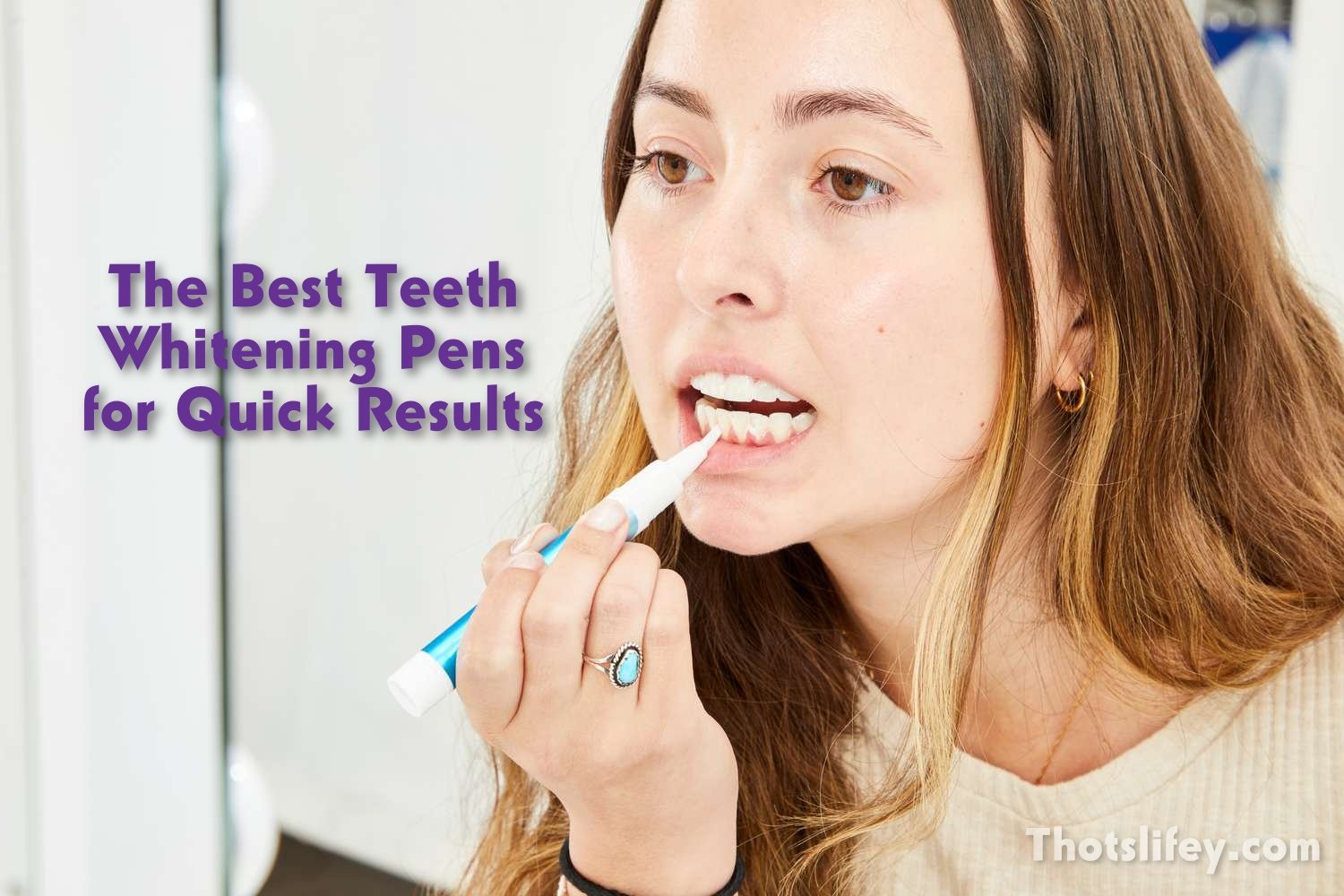
People who would prefer to whiten their teeth within a short time and not to change their entire routines are those who buy teeth whitening pens. These pens are small, portable and easy to use. A lot of individuals keep them in a bag, desk or bathroom cabinet in order to have frequent touch ups. Although they do not substitute professional whitening, they come in handy when one wishes to make his or her teeth look clean and bright within a short period of time.
A whitening pen is used by applying a thin coat on the surface of a tooth. A majority of pens have peroxide based formula to dissolve the stain of food, beverages or cigarette smoking. Other more recent pens have softer ingredients and are geared more towards cleaning and shine of the surface. One can get quick results, however it can be seen that knowing what a pen can and can not do is significant.
Whitening pens are effective on natural teeth and on the stains which are located on the surface of enamel. They do not alter the color of fillings, crowns or veneers. Due to this, the appearance of the results can appear to be uneven in case you have dental work on the front teeth. This information is important to know in time to prevent disappointment.
Understand before using a whitening pen

- Pens work best for mild to medium stains
- Results build over several days, not one use
- Natural teeth respond better than dental work
- Daily consistency matters more than strength
How teeth whitening pens create fast visible change
Whitening pens effect change by remaining in contact with stains to the extent of making them weak. The wet gel is dried on the tooth, thus enabling the active ingredients to be active but not washed off by saliva immediately. It is this firsthand experience that makes pens perform better than white toothpaste.
In most cases, quick results are seen when stains are as a result of coffee, tea, wine, soda and smoking. These stains are located on or close to the surface. Naturally dark or internally stained teeth may require more or additional treatment.
Situations where whitening pens work well
- Teeth that look dull but not deeply yellow
- Stains near the edges or surface of teeth
- Touch-ups before photos or events
- Maintenance after other whitening treatments
Situations where whitening pens may disappoint
- Teeth darkened from medication or injury
- Heavy staining built up over many years
- Teeth with crowns or bonding on the front
Example from daily life
A person who drinks coffee every morning notices their teeth look darker near the gum line. Using a whitening pen each night for ten days often makes the smile look cleaner and brighter, especially in daylight.
Ingredients that actually matter in whitening pens
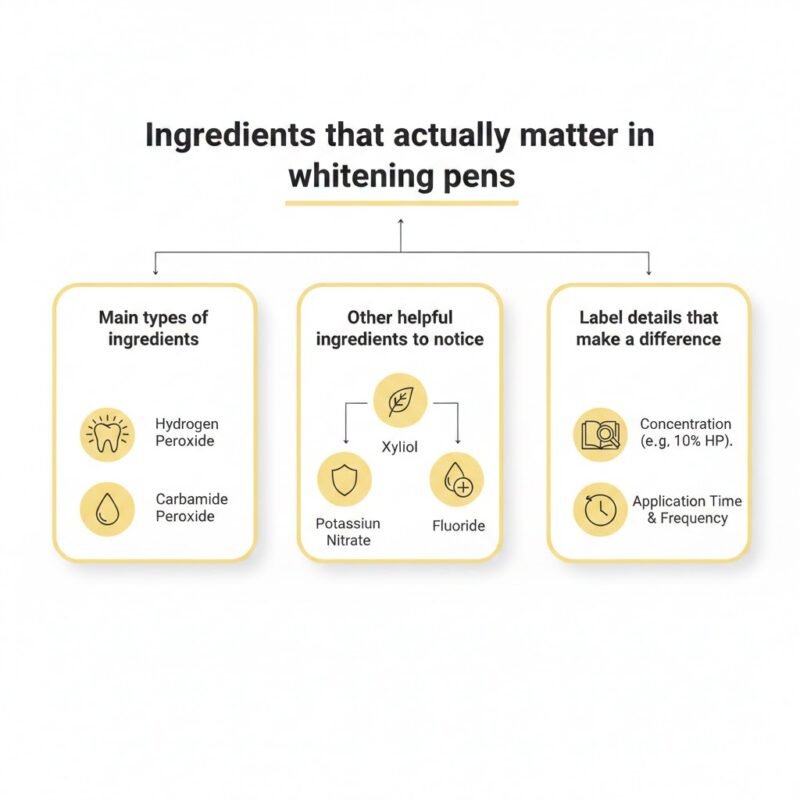
The ingredient list tells you how a pen will perform. Some ingredients lighten stains, while others only polish the surface. Understanding this helps you choose the right product instead of guessing.
Main types of whitening ingredients
- Hydrogen peroxide, which works quickly
- Carbamide peroxide, which breaks down slowly and is often gentler
- Non-peroxide blends, which focus on surface stain removal
Hydrogen peroxide tends to work faster, but it can cause sensitivity if overused. Carbamide peroxide releases its whitening effect more slowly, which some people find easier on their teeth. Non-peroxide pens are useful for people with sensitivity but usually offer lighter results.
Other helpful ingredients to notice
- Fluoride, which supports enamel strength
- Potassium nitrate or similar calming agents
- Thick gel formulas that stay in place
Label details that make a difference
- Clear instructions with time guidance
- Drying time listed or explained
- Warnings about gum contact
Ingredient comparison:
| Ingredient type | Speed of results | Sensitivity risk | Best use |
|---|---|---|---|
| Hydrogen peroxide | Fast | Medium to high | Short whitening runs |
| Carbamide peroxide | Moderate | Medium | Regular daily use |
| Non-peroxide blends | Mild | Low | Maintenance and shine |
How to choose the right whitening pen quickly
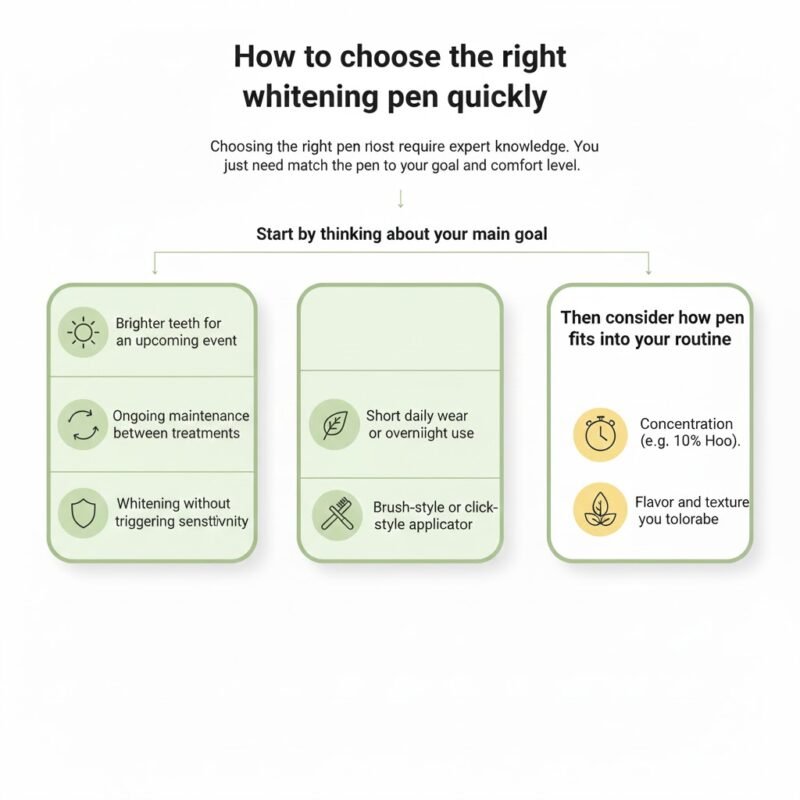
Choosing the right pen does not require expert knowledge. You just need to match the pen to your goal and comfort level.
Start by thinking about your main goal
- Brighter teeth for an upcoming event
- Ongoing maintenance between treatments
- Whitening without triggering sensitivity
Then consider how the pen fits into your routine
- Short daily wear or overnight use
- Brush-style or click-style applicator
- Flavor and texture you can tolerate
Practical selection guide
| Your priority | Best pen type | Why it helps |
|---|---|---|
| Fast improvement | Peroxide pen with longer wear | More contact time |
| Sensitive teeth | Lower-strength or gentle formula | Less irritation |
| Easy routine | Quick-dry pen | Less mess |
| Travel use | Slim pen with cap | Portable and clean |
Popular types of whitening pens and who they suit
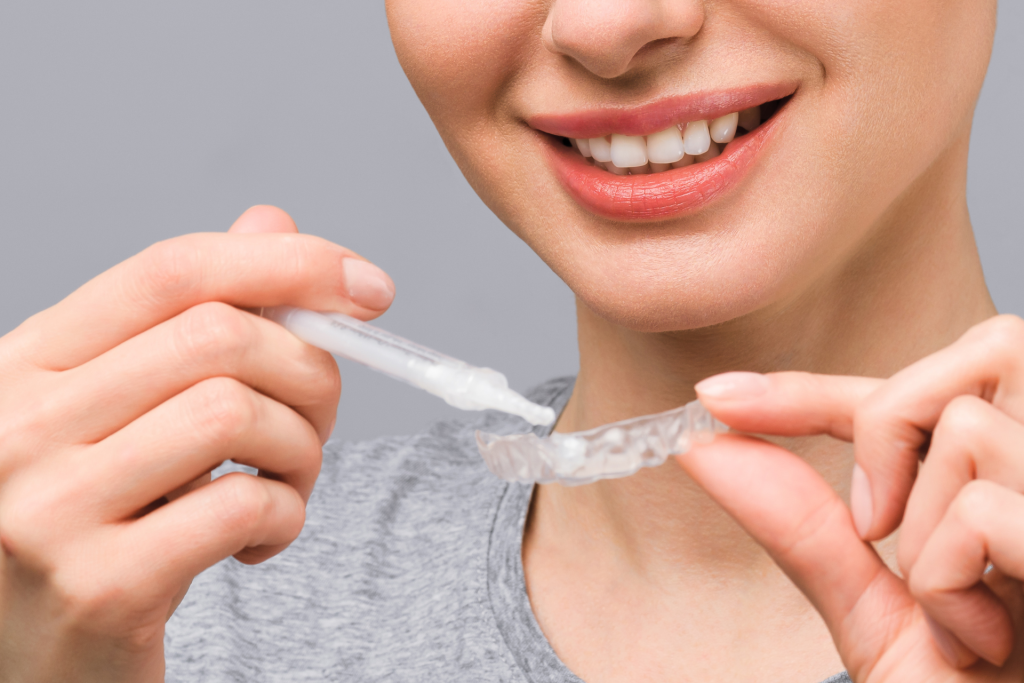
Not all whitening pens are built for the same purpose. Some are made for overnight use, while others are designed for quick daytime touch-ups.
Common pen categories
- Overnight whitening pens for deeper stain work
- Quick-dry pens for daytime use
- Gentle pens for sensitive teeth
- Maintenance pens for post-whitening care
Matching pen type to user need
| User type | Recommended pen style | Reason |
|---|---|---|
| Busy professional | Overnight pen | Works while sleeping |
| Frequent coffee drinker | Stronger daily pen | Targets surface stains |
| Sensitive teeth | Gentle formula | Lower discomfort |
| Event prep | Fast-dry pen | Quick visible boost |
People often get better results by choosing a pen that fits their schedule rather than choosing the strongest formula available.
The daily routine that improves whitening results
Using a whitening pen correctly matters as much as the pen itself. Many people lose results because of small routine mistakes.
Effective daily routine
- Brush and floss earlier, not right before
- Lightly dry teeth before application
- Apply a thin, even layer
- Keep lips away until gel dries
After applying the pen
- Avoid eating or drinking right away
- Stay away from dark foods for a while
- Let the gel sit for the full time
Simple mirror checklist
- Clean teeth
- Dry surface
- Thin layer only
- Full contact time
Daily routine example
In the evening, brush and floss, wait a short time, dry teeth, apply the pen, and avoid snacks afterward.
Tips for faster results without added discomfort
Since the results become faster, it does not imply the usage of more gel or the application of more gels. It implies enhancing communication and regularity.
Ways to improve speed safely
Write with the pen every day.
Begin with shorter wearing periods and come up gradually.
Combine whitening with stain-control.
Water should be drunk after staining of beverages.
What to avoid
Applying whitener products simultaneously.
Using gel near to the gums.
Moving in the presence of pain or sharp sensitivity.
Helpful habits
Use a straw for dark drinks
Cleanse mouth after tea or coffee.
Take progress pictures after every few days.
Common mistakes that reduce whitening success
Many people stop seeing progress because of avoidable errors.
Mistakes that reduce results
- Applying on wet teeth
- Using too much gel
- Skipping days
- Eating dark foods right after
Mistakes that raise sensitivity
- Extending wear time beyond directions
- Whitening several times per day
- Combining pens with strips or trays
Problem-solving examples
Uneven color often comes from uneven application. Gum irritation usually means too much gel or poor placement. No visible change after a few uses often means results need more time.
Safety, sensitivity, and who should be cautious
Whitening pens can be used by most healthy adults when one follows the directions. Nevertheless, not all the people ought to be careless.
Individuals to visit a dentist initially.
The ones who were uncavity-filled.
People with gum disease
Persons with extensive dental reconstruction on front teeth.
Any person who has extreme tooth sensitivity.
Normal reactions
Sensitivity of slight duration.
Minor irritation of the gum when in contact with soft tissue in case of gel.
Warning signs
Sharp pain lasting hours
Burning gums
Pain when biting
Safe-use reminder
In case discomfort worsens, stop using it a few days and resume using it with reduced wear durations.
Keeping teeth brighter after whitening
Maintaining results is easier than getting them in the first place. Small habits make a big difference.
Daily habits that protect whitening
- Rinse after dark drinks
- Brush gently but fully
- Floss daily
- Limit smoking
Stain-heavy foods
- Coffee
- Black tea
- Red wine
- Dark sauces
Lower-risk foods
- Water
- Milk
- Rice
- Chicken
- Light sauces
Simple maintenance plan
- Complete one full whitening run
- Use the pen a few times weekly as needed
- Take breaks if sensitivity appears
Final thoughts
The whitest tooth pen does not necessarily have to be the strongest. It is the one that suits your teeth, level of comfort, and routine in your daily life. Regular use, attention, and reasonable expectations will result in improvements and not overworking.
Whitening pens can only be considered as temporary aids and not total makeovers. When applied in the right way they will make more people smile, feel more confident and get their teeth to appear clean without a huge effort.