
Blog
Silly Wankok: The Fun, Absurdity and Internet Culture


Have you ever read a phrase so random and bizarre that you laughed without knowing why? That’s Silly Wankok in a nutshell.
If you’ve spent any time on TikTok, Reddit, or Twitter lately, you’ve probably seen this phrase popping up in meme captions, comment sections, and viral videos. It looks like someone randomly mashed a keyboard but it became a genuine internet phenomenon enjoyed by millions.
Silly Wankok is pure nonsense. And that’s exactly the point. This post covers where it came from, why it spread, what it tells us about internet culture, and why absurd humor matters more than most people think.
What Is Silly Wankok?
Silly Wankok has no dictionary entry, no Wikipedia page, and no fixed meaning. It doesn’t refer to a person, a place, a brand, or anything concrete. It exists almost entirely because it refuses to mean anything specific and that deliberate vagueness is the whole trick.
It works as pretty much any part of speech:
- Noun: “He’s such a Silly Wankok.”
- Adjective: “That situation was completely Silly Wankok.”
- Exclamation: “Silly Wankok! I can’t believe that just happened!”
This kind of flexibility is called a placeholder term in linguistics. Think of “Yeet,” “Sheesh,” or “No cap” none of these started with rigid meanings either. They found meaning through community use and repetition. Silly Wankok follows the same playbook, just with extra absurdity baked in.
The Origin Story: Murky, Messy and Very Internet
How Did This Even Start?
Nobody knows for certain where Silly Wankok came from. The internet doesn’t keep clean records of its own history, and that vagueness actually adds to the charm.
The three most popular origin theories are:
- A group of digital artists deliberately combined “silly” (lighthearted) with the made-up word “wankok” because of its funny, absurd sound.
- It started as a typo in a viral tweet that someone screenshot and shared, launching a wave of jokes.
- A popular streamer casually used it during a live broadcast, prompting viewers to tag their fan art and reactions with the phrase.
Honestly, the true origin probably doesn’t matter. What matters is that the phrase was short, fun to say out loud, odd to look at on a screen, and most importantly it made people curious. That curiosity is the real engine of virality.
How Silly Wankok Took Over the Internet
Platform by Platform, Laugh by Laugh
Silly Wankok’s journey from a small corner of the web to mainstream recognition is a textbook case of how internet trends travel.
Reddit was the early hotspot. Absurdist communities latched onto the phrase fast. A dedicated subreddit, r/SillyWankok, hosted weekly “Wankok Wednesdays” where members competed to post the most creatively unhinged content.
TikTok brought it to a massive audience. Short-form video is the perfect medium for nonsense humor. Creators used Silly Wankok in:
- Lip-sync videos with the phrase as a caption
- Cooking fails labeled as “Silly Wankok energy”
- Dance challenges with no explanation whatsoever
- Hand-drawn Wankok character reveals
Twitter gave it text-based lifestyle. The hashtag #SillyWankok accumulated millions of posts. Famous quote remixes like “May the Silly Wankok be with you” spread wildly because they layered absurdity on top of shared pop culture knowledge.
Mainstream media eventually joined too. BuzzFeed wrote explainers. YouTube creators made reaction videos. This second-wave coverage gave Silly Wankok a much longer shelf life than most viral phrases enjoy.
What makes it remarkable is how organic the whole thing was. No PR campaign, no celebrity deal, no brand strategy. Just real people finding something funny and sharing it.
Silly Wankok in Memes: A Creative Universe
Because Silly Wankok carries no existing baggage, creators could attach it to absolutely anything. Here are the main meme formats that emerged:
| Meme Format | How It Uses Silly Wankok | Why It Works |
|---|---|---|
| Image Macros | Bold-text captions on funny photos | Simple, shareable, instantly understood |
| Video Memes | Unexpected moments labeled “Silly Wankok energy” | The mismatch between visual and text is the joke |
| Quote Remixes | Famous lines with key words replaced | Plays on pop culture with an absurd twist |
| Character Art | Original Wankok creatures in absurd scenarios | Builds a fan community and creative universe |
| Text Posts | Relatable life moments called “Wankok moments” | Personal, low-effort, highly shareable |
| Dance Videos | The “Silly Wankok dance” no fixed moves | Participatory and endlessly variable |
| Micro-Stories | Short fiction about mischievous Wankok creatures | Builds lore and extends the universe |
Unlike memes tied to a specific image template, Silly Wankok had no locked-in visual. That openness meant anyone could contribute a teenager with MS Paint had just as much creative power as a professional designer. Some artists illustrated full Wankok characters: round, wobbly creatures with oversized goggles, riding unicycles, or hosting tea parties for rubber ducks.
How Silly Wankok Compares to Past Viral Internet Phrases
Silly Wankok didn’t arrive in a vacuum. The internet has a long, glorious tradition of absurd phrases that became cultural touchstones. Here’s how it stacks up:
| Phrase / Meme | Era | Meaning | How It Spread | Legacy |
|---|---|---|---|---|
| Rickrolling | 2007 | None — a prank | Forum links, email chains | Still used as a reference |
| Doge | 2013 | Comic broken English | Reddit, then everywhere | Inspired a cryptocurrency |
| Nyan Cat | 2011 | Pure visual nonsense | YouTube, GIF sites | Symbol of early internet culture |
| Yeet | 2014–2018 | Throwing something / excitement | Vine, then TikTok | Entered mainstream dictionaries |
| Sheesh | 2021 | Exaggerated praise or surprise | TikTok duets | Still used in everyday speech |
| Silly Wankok | 2020–present | Anything absurd or chaotic | Reddit → TikTok → Twitter | Ongoing creative community |
The key thing all these share is a refusal to be pinned down. Specificity kills virality. Vagueness feeds it.
What sets Silly Wankok apart, though, is how strongly it invited visual creativity. Doge had the Shiba Inu. Nyan Cat had its animation. Silly Wankok had nothing which forced every participant to create something new from scratch. That produced a richer, more varied creative output than most viral phrases ever manage.
Why Absurd Humor Works: The Psychology Behind the Laugh
There’s real science behind why nonsense makes us laugh. It comes down to incongruity theory: our brains are constantly hunting for patterns and logic. When something confidently breaks that expectation with no setup and no punchline we experience a pleasurable surprise. That’s the laugh.
Silly Wankok is incongruity in its purest form. There’s no resolution, no logic, no justification. It just exists in places it has no business being. That’s funny for the same reason a cat sitting in a way-too-small box is funny there’s no reason, and that’s exactly why it works.
There’s also a long artistic tradition behind this kind of humor:
- Monty Python rejected conventional punchlines and embraced pure absurdity.
- Dada art in the early 20th century deliberately destroyed meaning to expose how arbitrary “normal” things are.
- Surrealist comedy used dreamlike illogic to make audiences laugh at their own confusion.
Silly Wankok is the internet’s version of all of those traditions stripped of pretense and handed to millions of ordinary people with smartphones.
The Mental Health Angle Nobody Talks About
Here’s something almost no article about Silly Wankok mentions: absurd internet humor has genuine mental health benefits.
Research on humor and well-being consistently shows that non-threatening, playful humor:
- Reduces cortisol (the primary stress hormone)
- Lowers resting heart rate
- Creates measurable feelings of social connection
- Provides a brief but effective emotional reset
The internet can be anxious, competitive, and emotionally draining. Something as simple as a Silly Wankok meme doesn’t ask you to have an opinion, pick a side, or feel bad about anything. It just invites you to laugh for a second. That’s surprisingly rare online — and it’s a big reason people keep coming back to this kind of content even after the peak virality is long gone.
Silly Wankok and Internet Culture: What It Reveals
Silly Wankok isn’t just a dumb joke it reflects something real about how internet culture actually functions.
- It pushes back against polished content. Social media rewards perfect photos and aspirational captions. Silly Wankok is the opposite of all that raw, weird, and making zero effort to impress. It’s a quiet rebellion against the pressure to perform online.
- It celebrates the unexpected. The early internet thrived on surprise. Silly Wankok carries that original spirit forward and reminds people that the web can still just be fun.
- It evolves through community. Nobody owns Silly Wankok. Its meaning has been shaped by millions of collective contributions. That bottom-up creativity is one of the most powerful features of internet culture.
- It crosses language barriers. In communities where English isn’t the primary language, Silly Wankok still appears. People adopted it not for its linguistic meaning, but for its energy which somehow translates universally.
Brands, Influencers and the Commercialization of Chaos
Once Silly Wankok hit critical mass, brands inevitably showed up. Indie game developers added Wankok characters as Easter eggs. Merchandise shops launched stickers, enamel pins, and T-shirts. Influencers folded the phrase into sponsored content trying to appear more “authentic.”
The results followed a familiar pattern:
- Brands that genuinely played along with the absurdity did reasonably well.
- Brands that tried to own it or force it into a sales message got mocked almost immediately.
The audience always knows the difference between authentic and engineered. Silly Wankok works because it came from nowhere and meant nothing. The second it starts meaning “buy our product,” the joke is over.
How to Actually Participate in Silly Wankok Culture
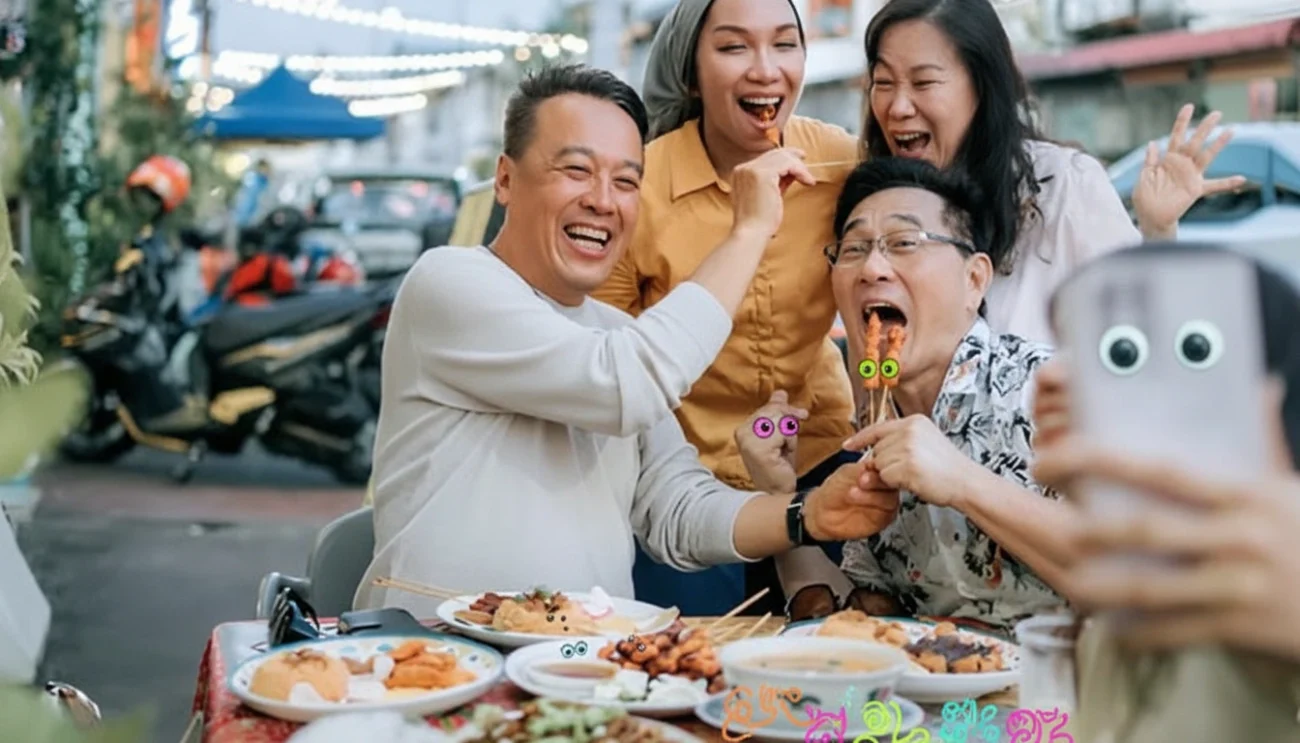
Most articles treat Silly Wankok as something you watch from a distance. But the whole point is participation. Here’s how to actually get involved:
Get Familiar With the Tone Spend a few minutes browsing existing Silly Wankok content. The unifying quality is confident, cheerful absurdity. Nothing is explained. Nothing needs to be. Once you feel that energy, you’re ready to create.
Start With a Simple Image Macro Take a funny or confusing photo your confused dog, a weird-shaped vegetable, a strange cloud add “Silly Wankok” as a bold caption, and post it. No explanation needed. The lack of context is the joke.
Design Your Own Wankok Character Sketch a Wankok creature. The design is completely open:
- Round body, spindly limbs
- Absurd accessories like oversized goggles or polka-dot scarves
- Ridiculous scenario: baking in zero gravity, directing traffic with rubber ducks, hosting a formal dinner for squirrels
The weirder the scenario, the better it fits.
Use the Hashtag and Engage Post with #SillyWankok and actively respond to other creators. Comment, remix, and collaborate. The community element is what keeps the trend alive it’s a conversation, not a broadcast.
Respect the Unwritten Rules Even chaos has etiquette:
- Credit creators if you remix their work
- Keep humor inclusive Silly Wankok punches at nothing and no one
- Don’t spam the hashtag on unrelated content just for reach
Keeping it genuine is what keeps it alive.
The Lifecycle of a Viral Trend Where Silly Wankok Sits Now
Viral trends follow a predictable lifecycle. Understanding it shows you exactly where Silly Wankok stands today and why that’s actually a healthy place to be.
- The Seed A small group invents or stumbles onto a phrase, shares it internally, and finds it funnier every time. Almost nobody outside the group knows it exists.
- The Spark Something pushes it outward. A streamer uses it live. A tweet gets unexpectedly reshared. Suddenly strangers are asking “what is this?” and that question becomes more fuel.
- The Wildfire This is the peak. Everyone is posting it. Hashtags trend. Mainstream media writes explainers. Brands try to get involved.
- The Plateau Jokes start feeling repetitive. Forced usage appears. The original community feels diluted. This is where Silly Wankok is now.
- The Legacy The phrase stops being actively trending but becomes cultural shorthand a reference point that signals fluency in internet culture.
The Criticism: Not Everyone Is a Fan
No viral trend survives entirely without criticism, and Silly Wankok is no exception.
- “What’s even the joke?” – For people who prefer humor with a punchline or narrative, pure absurdism feels like being left out of a room where everyone is laughing at something invisible.
- Overuse fatigue – Once a phrase gets applied to everything, it stops being surprising. When the unexpected becomes expected, the incongruity that made it funny disappears.
- Low-effort content flood – Not every Silly Wankok post was a creative triumph. A lot of it was noise.
These are fair points. But they’re also just part of the lifecycle. No meme is meant to be funny forever. Peaking, plateauing, and becoming a reference isn’t failure it’s just how the internet works.
The Future of Silly Wankok
The future for Silly Wankok likely looks like this:
- AR and VR integration – Wankok-style characters are a natural fit for AR filters, digital avatars, and interactive game Easter eggs as immersive platforms keep growing.
- Collaborative storytelling – Community-driven world-building could give the Wankok universe an actual mythology (however absurd) that sustains long-term interest.
- Participation over consumption – The best internet trends increasingly reward making over watching. Silly Wankok’s participatory DNA positions it well for wherever internet creativity heads next.
One thing is certain: as long as people crave something lighthearted and weird in their feeds, the spirit of Silly Wankok will find a way to resurface maybe under a new name, but with the same cheerful, pointless energy.
FAQs
Q: What does Silly Wankok actually mean?
It has no fixed meaning. It describes anything absurd, chaotic, or hard to explain. The meaning comes entirely from context and community use.
Q: Where did Silly Wankok originate?
Most likely from a small online community around 2020, possibly pushed into the mainstream by a streamer. The true origin is disputed which, honestly, makes it more interesting.
Q: Is Silly Wankok offensive?
No. The phrase targets nothing and no one. Its humor is inclusive by design. As always, how you use any language matters more than the words themselves.
Q: Why do people laugh at meaningless phrases?
Incongruity theory explains it when something confidently breaks our expectation of meaning or logic, our brain responds with laughter. The more unexplained the phrase, the funnier it tends to be.
Q: Is Silly Wankok still popular in 2026?
It’s past peak virality but hasn’t disappeared. It’s currently transitioning from active trend to cultural reference the phase where only the best internet phrases land.
Q: How is it different from Doge or Nyan Cat?
Both Doge and Nyan Cat had fixed visuals. Silly Wankok had none meaning every piece of content had to be created from scratch, producing a wider and more creative body of work.
Q: Can absurd humor actually reduce stress?
Yes. Research consistently shows that non-threatening, playful humor reduces cortisol, lowers heart rate, and builds social connection all real measurable effects from something as small as a meme.
Q: Can I create my own Silly Wankok content?
Absolutely. Nobody owns it. Just keep it inclusive, credit creators if you remix their work, and lean fully into the absurdity. The weirder, the better.
Final Thought
At the end of the day, Silly Wankok is just a reminder to not take the internet or yourself too seriously. In a world full of hot takes, outrage cycles, and perfectly curated feeds, a phrase that means nothing and makes you laugh anyway might be exactly what we all need a little more of. So the next time you spot it in your feed, don’t overthink it. Just smile, share it, and enjoy the absurdity.