
Blog
Michael Tell: The Life of Patty Duke’s Ex-Husband

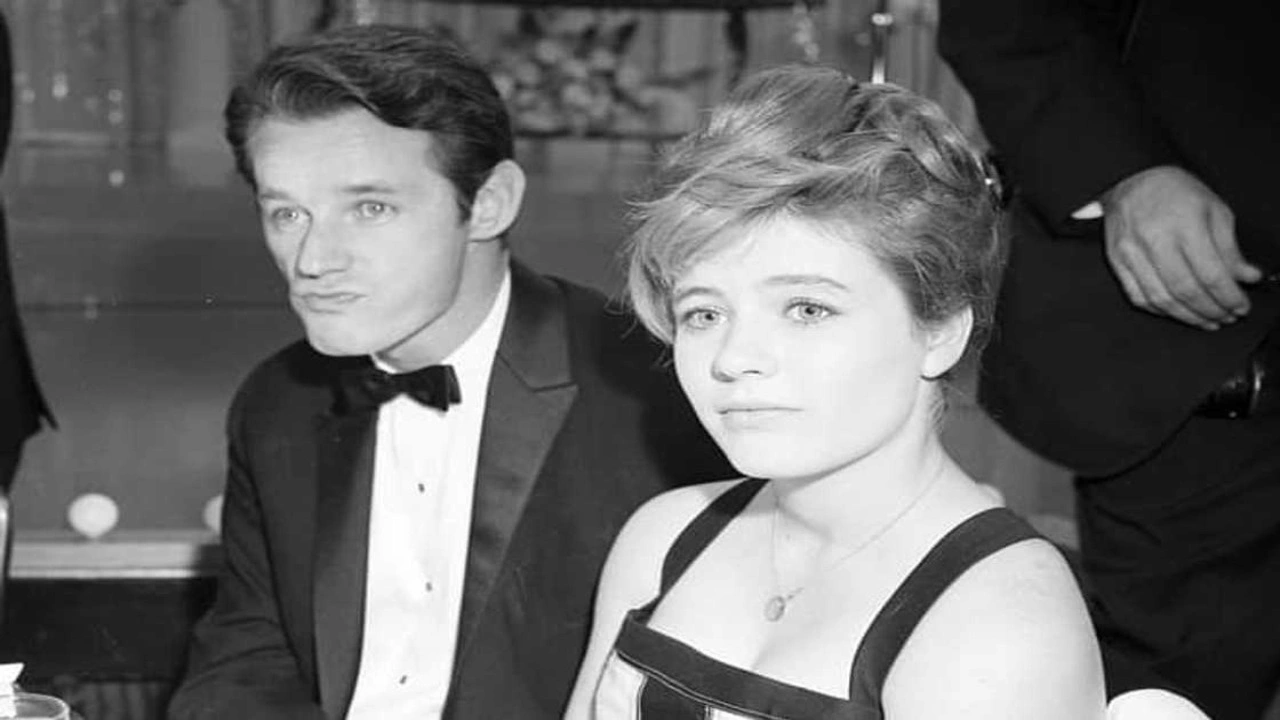
He never asked for fame. He never chased the spotlight. Yet somehow, Michael Tell became permanently woven into one of Hollywood’s most fascinating family stories. This is the full, honest account of who he really was.
| Detail | Information |
|---|---|
| Full Name | Michael Tell |
| Nickname | Mike / Papa Mike |
| Date of Birth | Circa 1944–1945, United States |
| Date of Death | April 9, 2025 |
| Age at Death | 80 years old |
| Birthplace | United States of America |
| Nationality | American |
| Ethnicity | Caucasian (Austrian and Polish roots) |
| Religion | Christianity |
| Education | High school graduate |
| Height | 5 ft 10 in (178 cm) |
| Profession | Rock Music Promoter, Journalist, Publisher |
| Famous For | Patty Duke’s ex-husband; biological father of Sean Astin |
| Marriage Duration | 13 days (June 26 – July 9, 1970) |
| Ex-Wife | Patty Duke (Anna Marie Duke) |
| Biological Son | Sean Astin (confirmed by DNA in 1994) |
| Estimated Net Worth | ~$1 million |
| Career End | Retired around 2010 |
| Last Known Residence | Las Vegas, Nevada |
Who Was Michael Tell?
Michael Tell was an American rock music promoter and journalist who spent his career working behind the scenes. He married actress Patty Duke on June 26, 1970 a marriage that lasted just 13 days. That brief union, and the decades-long paternity mystery surrounding actor Sean Astin that followed it, kept Tell’s name in public conversation even though he himself wanted nothing to do with the spotlight.
He passed away on April 9, 2025, at the age of 80, in Las Vegas, Nevada. His death was quiet, as was his life. This post tells his complete story his roots, his career, his 13-day marriage, the DNA truth about Sean Astin, and the kind of man he really was beneath the headlines.
Early Life, Family Origins, and Background
Michael Tell was born in the mid-1940s in the United States. He came from Austrian and Polish immigrant roots — a family background that valued hard work, discipline, and keeping personal matters private. Those values stayed with him for the rest of his life.
Very little is publicly known about his childhood, mainly because Tell never wanted it any other way. He was a high school graduate who never attended university, but that didn’t stop him from developing a sharp, curious mind. People who knew him described him as:
- Calm and measured in every situation
- Deeply private and uncomfortable with public attention
- Intellectually curious, especially about music and culture
- Content to stay in the background while others took the credit
He grew up during a time of massive cultural change in America post-war prosperity, the civil rights movement, and the explosion of rock music. All of those forces shaped his worldview and eventually pointed him toward his career.
Michael Tell’s Career: Journalism, Rock Promotion, and Four Decades of Hard Work
Before Patty Duke ever entered the picture, Tell had already built a real professional life. In the 1960s, he worked as a journalist and reporter, writing for various publications during the counterculture era. His writing naturally pulled him toward the music world, and by the late 1960s he had moved into rock music promotion full time.
What did a rock promoter actually do in the 1970s? It was far less glamorous than it sounds:
- Booking venues and negotiating fees with managers and artists
- Coordinating transportation and logistics for touring bands
- Printing and distributing posters to build audiences without digital tools
- Managing backstage requirements and show-night operations
- Building relationships with radio DJs to get airplay and buzz
Tell did this work through one of the most electric periods in music history the era of Led Zeppelin, Fleetwood Mac, The Eagles, and hundreds of smaller touring acts that filled arenas across America. He was never the headline. He was the engine behind the headline.
He retired from music promotion around 2010, after roughly four decades in the industry. Dependable, organized, and respected by those he worked with that was his professional reputation. It just never came with any fame attached.
Meeting Patty Duke: A Chance Encounter That Changed Everything
The way Tell and Duke crossed paths was almost comically ordinary for a story that would generate decades of tabloid attention. In June 1970, Tell arrived at the Sierra Towers apartment building in Los Angeles, looking for a place to sublet. Patty Duke overheard him speaking with the building staff, invited him upstairs to look at her apartment, and the two began talking.
That small, accidental moment led to something neither of them was prepared for.
Duke, at 23, was already an Oscar-winning television star. But she was also deeply vulnerable in the grip of an untreated manic episode caused by what would only be diagnosed as bipolar disorder twelve years later in 1982. Around that same time, she had also just discovered she was pregnant, and was simultaneously involved with three men: actor John Astin, teen celebrity Desi Arnaz Jr., and now Michael Tell.
She was looking for stability. Tell was calm, gentle, and easy to talk to. Within weeks, she made one of the most impulsive decisions of her life.
The 13-Day Marriage: What Actually Happen
On June 26, 1970, Michael Tell and Patty Duke married at the Little Church of the West in Las Vegas. The wedding had:
- No formal planning or preparation
- No guest list to speak of
- A borrowed ring
- A ceremony driven entirely by emotional crisis, not romance
Thirteen days later, on July 9, 1970, Duke requested an annulment. Legally, the marriage was treated as if it had never happened.
In her 1987 autobiography Call Me Anna, Duke was brutally honest about why. She didn’t blame Tell. She acknowledged the marriage as a symptom of her own compromised mental state a desperate, impulsive act during a manic episode. She described Tell not as a villain but as a man she had pulled into her storm.
Tell, for his part, said nothing publicly. No interviews. No statements. No attempt to shape the narrative. He processed it privately and moved on which, considering the media circus surrounding Duke, was a remarkable act of self-discipline.
The Paternity Mystery: Sean Astin and Two Decades of Confusion
Sean Astin was born on February 25, 1971, in Santa Monica, California roughly nine months after Tell and Duke’s wedding. By simple timing, Tell was the most obvious biological candidate. But what actually happened over the following two decades was far messier.
Here’s how the confusion unfolded:
- In her 1987 autobiography, Duke claimed the marriage to Tell was never consummated and named actor John Astin as Sean’s biological father.
- Later, she told Sean directly when he was 14 years old that Desi Arnaz Jr. was actually his father. Sean built a relationship with Arnaz on that basis.
- In 1994, DNA testing finally provided the definitive, undeniable answer: Michael Tell was Sean Astin’s biological father.
All of Duke’s previous statements had been incorrect. The man whose marriage had been legally annulled, the man she said she was never intimate with, was confirmed as the biological father of one of Hollywood’s most beloved actors the future Samwise Gamgee of The Lord of the Rings and Bob Newby of Stranger Things.
Tell’s response to the confirmation was exactly what you’d expect from him: quiet, dignified, and entirely private.
Michael Tell and Sean Astin: “Papa Mike”
After the DNA results were confirmed in 1994, Tell and Sean Astin developed a relationship on their own terms slowly, honestly, and without any drama for public consumption. Sean came to refer to Tell affectionately as “Papa Mike,” a nickname that says everything about the tone of their bond.
Sean has spoken about his complicated family history with genuine warmth and maturity. He has described himself as lucky to have had multiple father figures, each meaningful in a different way:
- John Astin — the man who raised him and gave him his name
- Desi Arnaz Jr. — who briefly figured into the story before the DNA truth emerged
- Michael Tell / Papa Mike — his biological father, quiet and respectful to the end
Tell never used their connection for publicity. He never inserted himself into Sean’s public life. He simply showed up as a decent, steady presence — which, given everything, was exactly the right thing to do.
Life After the Spotlight: Retirement and His Final Years
After the annulment in 1970 and the DNA confirmation in 1994, Tell did something most people in his position would never do — he asked for absolutely nothing.
He continued working in music promotion until around 2010. He settled in Las Vegas. He kept his circle small and his routine simple. He never remarried. He gave no interviews, wrote no memoir, and appeared in no documentaries about Patty Duke or Sean Astin.
His estimated net worth at death was around $1 million every dollar earned from his own work in music, not from celebrity connections. He passed away peacefully on April 9, 2025, at the age of 80 in Las Vegas. The cause of death was not publicly disclosed, which felt entirely fitting for how he had always lived.
Patty Duke Other Marriages: Context for Place in Her Story
Understanding Tell’s role requires seeing the full picture of Duke’s romantic life:
- Harry Falk (1965–1969) — Her first husband, a TV director 13 years her senior
- Michael Tell (1970) — 13 days, annulled, the most chaotic chapter
- John Astin (1972–1985) — Adopted Sean, had son Mackenzie Astin together
- Michael Pearce (1986–2016) — A drill sergeant; their marriage lasted until her death
Duke died on March 29, 2016, at age 69, from sepsis caused by a ruptured intestine. The contrast between the emotional wreckage of 1970 and the decades of stability she found with Pearce shows just how turbulent that earlier period truly was for everyone involved in it.
Michael Place in the Golden Age of Rock Promotion
Most accounts of Michael Tell’s lifestyle skip right past the professional world he spent four decades in. That’s a mistake, because the 1970s rock promotion industry was genuinely significant and the people who made it function rarely get the credit they deserve.
Before digital ticketing and social media, every single concert had to be built from scratch. Promoters like Tell were the ones who did the invisible heavy lifting:
- Physically advertising shows through posters and radio relationships
- Managing the financial risk of booking major acts without guaranteed returns
- Keeping tours running smoothly across dozens of cities
- Bridging the gap between artists and the audiences who would make them legends
Tell operated through the most electric period of American rock history. His name never appeared on a poster. But without people like him, those posters never would have gone up at all. That’s a legacy worth naming, even if he never named it himself.
The Mental Health Dimension: What the Duke-Tell Story Quietly
No other article about Michael Tell addresses this properly, but it matters. The story of his 13-day marriage to Patty Duke is inseparably tied to one of the most important mental health conversations in American celebrity history.
When Duke published Call Me Anna in 1987 and spoke openly about her bipolar disorder diagnosis, she became one of the first major public figures to do so honestly and publicly. She described what mania actually felt like from the inside. She talked about the impulsive decisions it drove her toward including, very specifically, her marriage to Michael Tell.
By telling that story honestly, she helped millions of people recognize similar patterns in their own lives. She gave them language and permission to seek help.
Tell’s role in this was passive but real. He was the person on the other side of that moment. And crucially, he never exploited it. He never framed himself as a victim. He never used Duke’s mental health struggles to garner sympathy or attention for himself. He simply stepped aside and let her tell her own story — with honesty, on her own terms.
That restraint was its own quiet form of respect, both for Duke as a person and for the broader conversation about mental health that her courage made possible.
Final Thoughts
Michael Tell lived a life that most people would walk right past without noticing and that was exactly how he wanted it. He came from humble immigrant roots, built an honest career in music, stumbled into one of Hollywood’s most talked-about marriages, became the biological father of a beloved actor, and through all of it never once tried to make himself the story. He earned his privacy the hard way, by simply refusing to give it up even when the world kept offering him reasons to. In the end, what makes Michael Tell worth remembering isn’t the 13 days or the DNA test or the famous name attached to his own it’s the quiet dignity he carried through every chapter of a life that could have gone very differently, and didn’t.