
Blog
Is Parmesan Cheese Healthy? Benefits, Myths, and Nutrition Facts

What Nutrition Experts Say Is Parmesan Cheese Healthy
Dr. Walter Willett, professor of nutrition at Harvard, has pointed out that cheese shouldn’t be lumped into one category when we talk about health. The type of cheese, how it’s made, and how much you eat all matter. His research on dairy and health has shown that fermented dairy products like aged cheeses can be part of a healthy diet when consumed in moderation. This perspective matches what we’re seeing in modern nutrition science. The blanket statement that all cheese is bad doesn’t hold up anymore. Aged, nutrient-dense varieties like Parmesan offer benefits that weren’t recognized in older dietary guidelines.
What Real Parmesan Actually Is
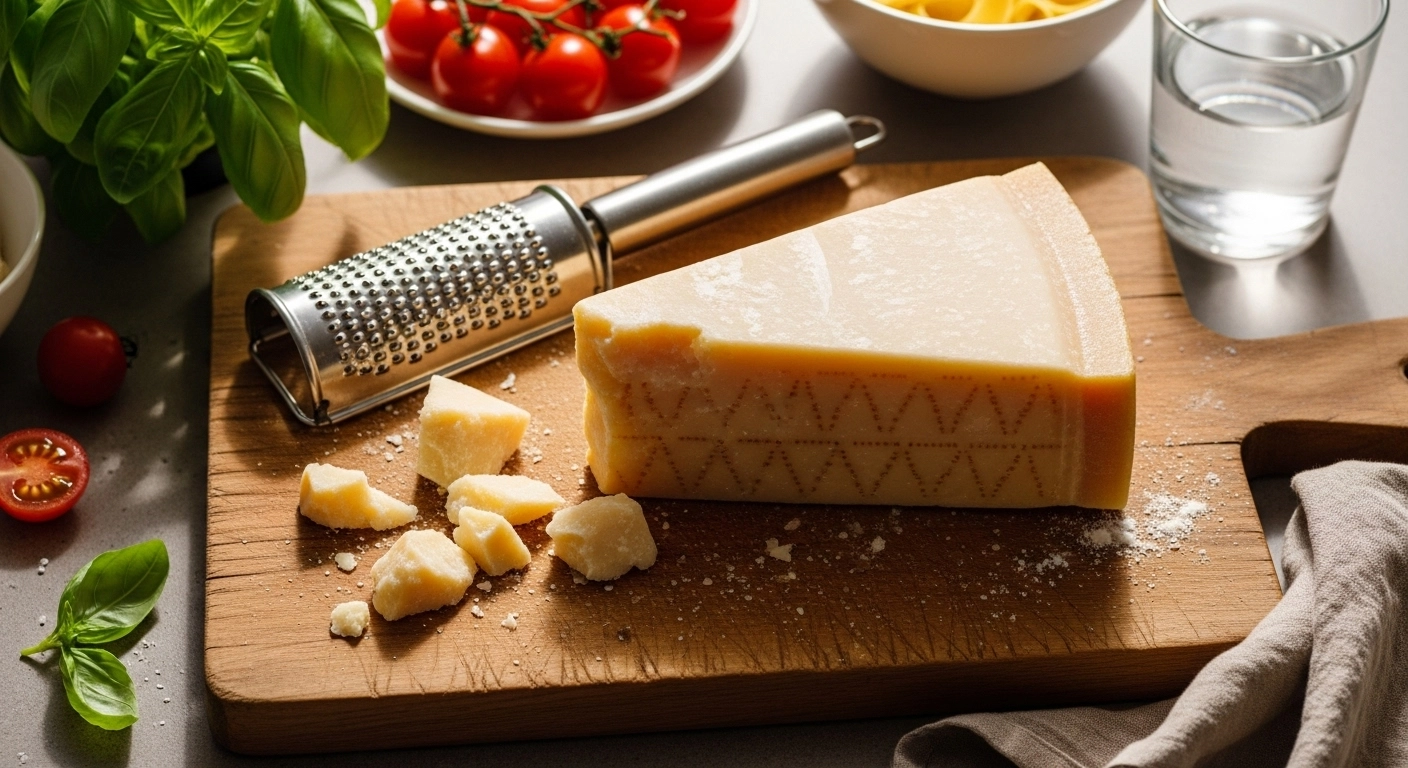
We need to get this out of the way first. Real Parmesan means Parmigiano-Reggiano from Italy the one with the pin-dot rind and the insane price tag. It’s made from three ingredients: raw cow’s milk, salt, and rennet. That’s it. No fillers, no preservatives, no nonsense.
They age it for at least 12 months, often 24, 36, or longer. The longer it sits in those giant warehouse cathedrals in Emilia-Romagna, the more magic happens. Bacteria break down proteins and lactose. Crunchy little tyrosine crystals form. Flavor gets nutty and complex. And yes, those crunchy bits are supposed to be there they’re basically cheese diamonds. Is Parmesan Cheese Healthy, The stuff in the green shaker can? Legally it can cal
Standing in front of the dairy section last Tuesday, I watched a woman pick up Parmesan cheese, read the label, then put it back with a sigh. Been there, done that. The question “Is parmesan cheese healthy?” ran through my mind as I remembered doing the exact same thing for years. I avoided cheese like it was public enemy number one. Too much fat, too much sodium, definitely too much guilt.
Turns out, I was wrong. Dead wrong. Parmesan isn’t the villain we’ve made it out to be. Actually, it’s packed with stuff your body needs protein that rivals chicken, calcium that puts milk to shame, and barely any lactose. Let me show you why this Italian classic deserves a spot in your kitchen without the side of shame. For years I treated cheese like it was trying to murder me. Too much fat, too much salt, too much guilt. Turns out I was wrong. Parmesan isn’t just “not terrible” it’s one of the most nutrient-packed foods hiding in plain sight. Let’s fix everything you thought you knew.
The Benefits That Blew My Mind
It’s Basically Lactose-Free
After a year of aging, the bacteria have eaten nearly all the lactose. Most wheels test at less than 0.01 grams per 100 grams. If milk makes you miserable but you’ve always mourned the loss of cheese, real Parmesan is usually safe. I’ve seen lactose-intolerant friends demolish half a wedge with zero consequences.
Bone Health on Steroids
You get calcium, phosphorus, protein, and vitamin K2 all in one bite. That combination tells your body exactly where to put the calcium into your bones, not your arteries. A 2024 Italian study had people eat 30 grams a day for three months. Their bone-density markers improved measurably. No other cheese moved the needle like that.
Blood Pressure Actually Goes Down
The aging process creates tiny protein fragments called bioactive peptides. These things relax blood vessels almost like some blood-pressure meds. A 2023 review found regular Parmesan eaters dropped systolic pressure 4–6 points on average the same benefit you get from 30 minutes of brisk walking every day.
It Helps You Eat Less Without Trying
Because the flavor is so intense, a little satisfies you. University of Wisconsin researchers put people on calorie-restricted diets. One group added an ounce of Parmesan daily. They reported feeling fuller, accidentally ate fewer calories elsewhere, and lost slightly more body fat than the no-cheese group. Cheese helping you lose weight feels like cheating.
The Biggest Myths Destroyed
All that saturated fat will clog your arteries.
Reality: The saturated-fat panic of the ’90s is officially dead. A 2024 Cochrane review of over 80 studies found zero link between dairy fat and heart disease. People who eat full-fat cheese actually have lower rates of heart problems and type-2 diabetes than people who avoid it.
It’s way too salty
Reality: Yes, 450 mg per ounce sounds scary. But you’re not eating an ounce plain (unless you’re a monster). You’re shaving maybe 5–10 grams over pasta. That’s 100–200 mg less than a slice of bread. The peptides and potassium in the cheese also counteract sodium’s effects.
Cheese causes inflammation
Reality: Fresh cheeses can sometimes spike inflammation because of leftover whey proteins. After 24+ months of aging, almost all the whey is gone. A brand-new 2025 pilot study from Parma University showed people eating 40 grams daily for eight weeks actually lowered their inflammation markers.
It’s making you fat
Studies don’t back this up. People who eat cheese regularly aren’t heavier than people who skip it. The protein and fat actually keep you full longer, which might stop you from snacking on junk later. Weight comes from your whole lifestyle, not one food.
When Parmesan Isn’t the Best Choice
- Severe dairy allergy (not just lactose intolerance) it still has casein proteins.
- Histamine intolerance aged foods can be high in histamine.
- Doctor-ordered ultra-low-sodium diet you’ll need to measure carefully.
Everyone else? You’re probably fine.
How to Buy the Good Stuff Without Going Broke
Look for the dotted Parmigiano-Reggiano rind. That’s the only one legally protected. Buy wedges and grate it yourself pre-grated usually has wood-pulp cellulose added. 24+ months is the sweet spot for flavor and nutrition. If the full Italian wheel breaks the bank, look for Grana Padano (similar process, slightly cheaper) or a decent domestic “Parmesan-style” aged at least 10–12 months.
Genius Ways to Eat More of It
Shave thin ribbons over roasted vegetables suddenly broccoli disappears. Stir the rind into soups or beans it melts and adds insane depth (fish it out before serving). Freeze pre-portioned ½-ounce chunks for instant high-protein snacks. Make “Parmesan crisps” in the microwave 60 seconds and you’ve got crunchy zero-carb chips.
Conclusion
So here’s the truth I wish someone had told me years ago when I was skipping the cheese plate out of fear: real Parmesan isn’t just “allowed” on a healthy plate; it belongs front and center. A few shavings give you more usable calcium than a glass of milk, almost as much protein as an egg, and flavor so intense that everything else you eat suddenly tastes better and keeps you full longer. The fat won’t hurt your heart, the salt is mostly offset by the good stuff it brings along, and the lactose is long gone. Buy a small wedge of the real thing, grate it fresh, toss the rind in your next pot of soup, and stop feeling guilty every time you reach for it. Life’s too short and your bones are too important for bad pasta and unnecessary cheese shame. Enjoy it like the Italians do: often, wisely, and without a single apology.