A calculus bridge is a dental condition that many people have without realizing it. It develops slowly, often without pain at first, but it can cause serious oral health problems if ignored. Understanding what a calculus bridge is, how it forms, and how it affects your mouth can help you take better care of your teeth and gums.
This guide explains the topic in simple language, using practical examples, tips, and clear explanations so it is easy to understand even if you are not familiar with dental terms.
Understanding What a Calculus Bridge Is
A calculus bridge forms when hardened dental plaque, called calculus or tartar, builds up on teeth and connects across multiple teeth. Over time, this buildup can stretch from one tooth to another, creating a “bridge” of hardened material.
Plaque starts as a soft, sticky film made of bacteria, food particles, and saliva. If plaque is not removed through proper brushing and flossing, it hardens into calculus within a few days. Once it becomes calculus, it cannot be removed with a toothbrush at home.
Understanding What a Calculus Bridge Is
A calculus bridge often forms along the gum line and between teeth, especially in areas that are hard to clean, such as behind the lower front teeth or around molars.
features of a calculus bridge include
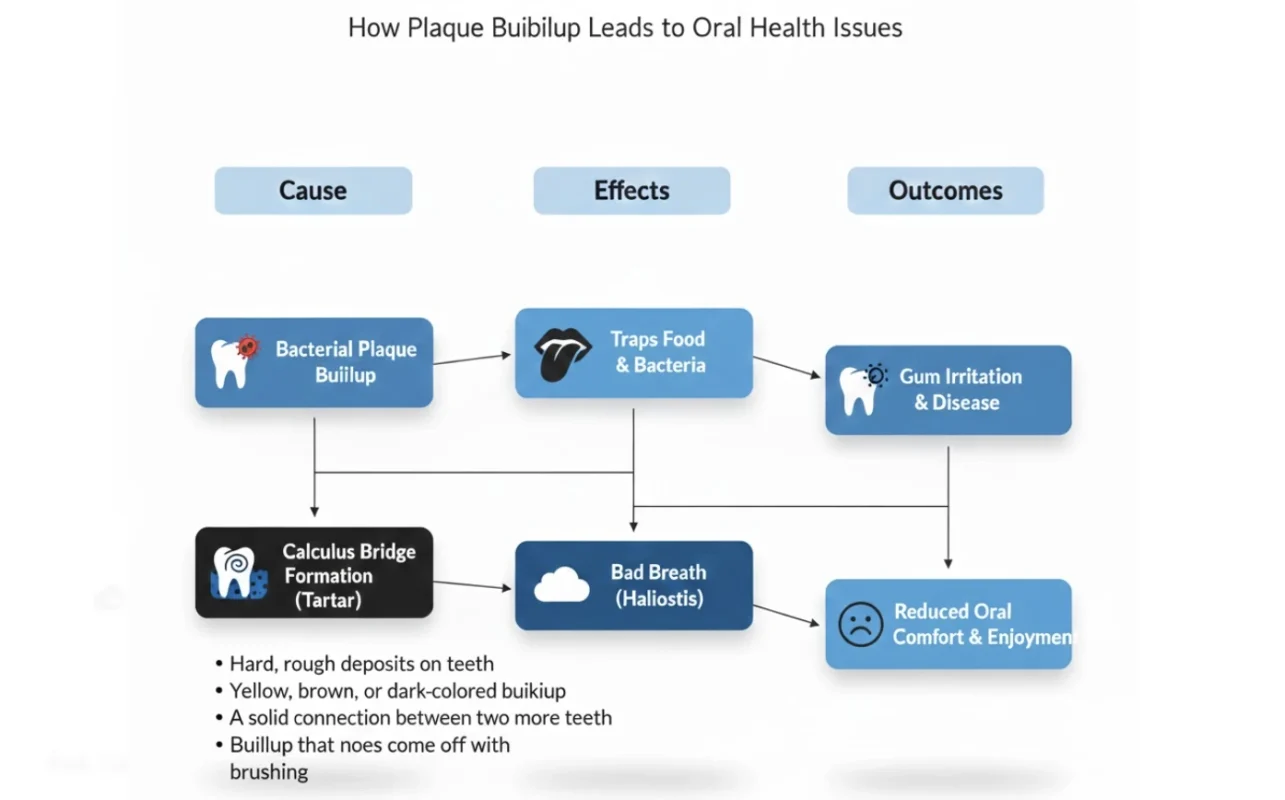
Hard, rough deposits on teeth
Yellow, brown, or dark-colored buildup
A solid connection between two or more teeth
Buildup that does not come off with brushing
Unlike simple plaque, a calculus bridge is firmly attached to the tooth surface and sometimes extends under the gums.
How a Calculus Bridge Develops Over Time
A calculus bridge does not appear overnight. It is the result of ongoing plaque buildup combined with poor or inconsistent oral hygiene.
The process usually follows a pattern. First, plaque forms on the teeth after eating or drinking. If brushing and flossing are skipped or done poorly, plaque stays on the teeth. Minerals in saliva then harden this plaque into calculus.
As days and weeks pass, more plaque sticks to the rough surface of existing calculus. This leads to thicker deposits that spread across nearby teeth, eventually forming a bridge-like structure.
Common factors that increase the risk of calculus bridge formation
Example A person who brushes once a day but never flosses may clean the visible surfaces of teeth but leave plaque between them. Over months, this plaque hardens and connects across several teeth, forming a calculus bridge.
Where Calculus Bridges Most Often Appear
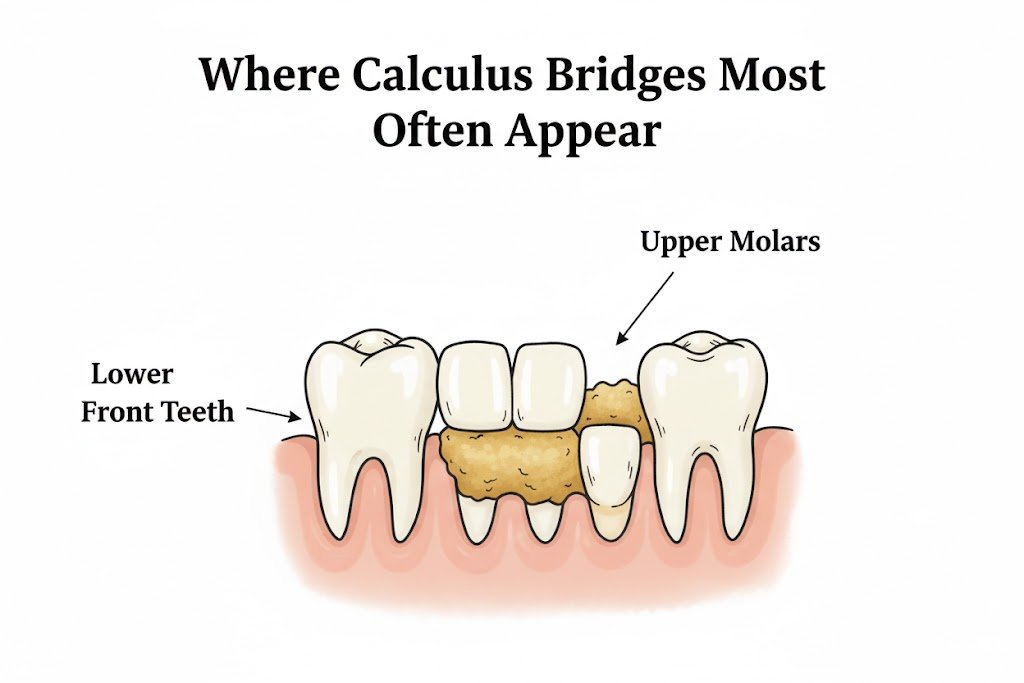
Where Calculus Bridges Most Often Appear
Calculus bridges can form anywhere in the mouth, but certain areas are more prone due to saliva flow and cleaning difficulty.
The most common locations include
Behind the lower front teeth, where saliva glands are nearby
Along the gum line of molars
Between tightly spaced teeth
Around dental crowns or fillings
These areas are harder to reach with a toothbrush, making them ideal spots for plaque to remain and harden.
How a Calculus Bridge Affects Gum Health
One of the biggest problems caused by a calculus bridge is its effect on the gums. Calculus creates a rough surface that traps bacteria close to the gums. This constant irritation leads to inflammation.
Early gum problems linked to calculus bridges include redness, swelling, and bleeding when brushing. This stage is often called gingivitis. At this point, the damage is still reversible with proper treatment.
If the calculus bridge remains, inflammation can worsen and progress into more serious gum disease. The gums may pull away from the teeth, forming pockets that collect more bacteria.
Signs your gums may be affected
Bleeding during brushing or flossing
Swollen or tender gums
Gums that appear red instead of pink
Bad breath that does not improve with brushing
Important note Gum disease linked to calculus bridges often develops without pain, which is why many people do not seek treatment until damage is advanced.
Impact of a Calculus Bridge on Teeth
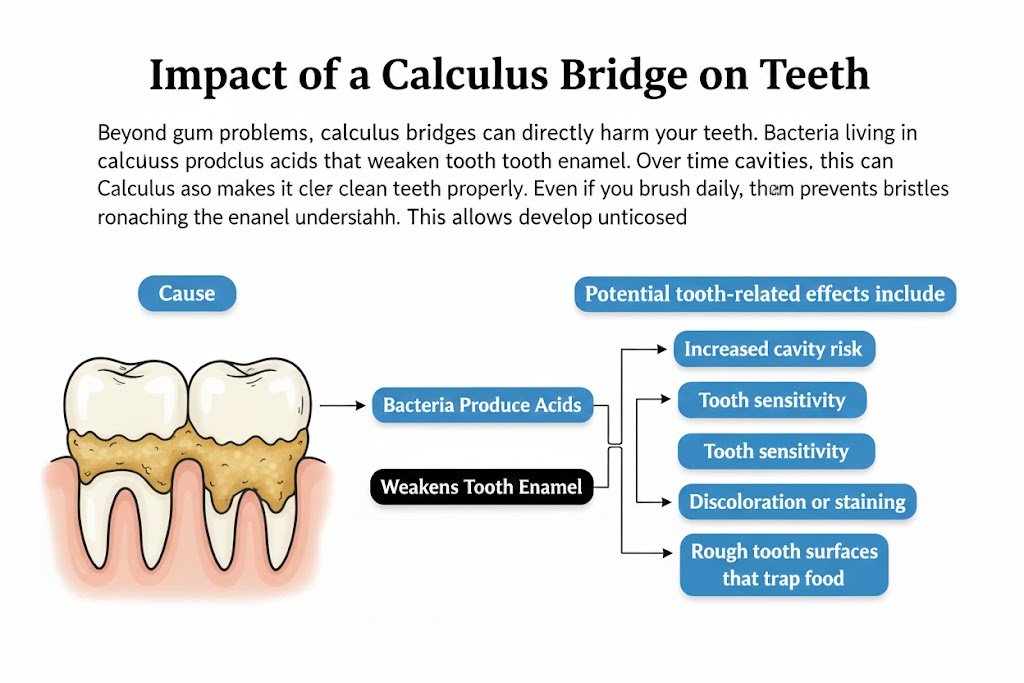
Impact of a Calculus Bridge on Teeth
Beyond gum problems, calculus bridges can directly harm your teeth. Bacteria living in calculus produce acids that weaken tooth enamel. Over time, this can increase the risk of cavities.
Calculus also makes it harder to clean teeth properly. Even if you brush daily, the hardened surface prevents bristles from reaching the enamel underneath. This allows decay to develop unnoticed.
Potential tooth-related effects include
Increased cavity risk
Tooth sensitivity
Discoloration or staining
Rough tooth surfaces that trap food
Someone with a calculus bridge may brush twice a day but still develop cavities along the gum line because bacteria remain protected under the hardened deposits.
Effects on Breath and Taste
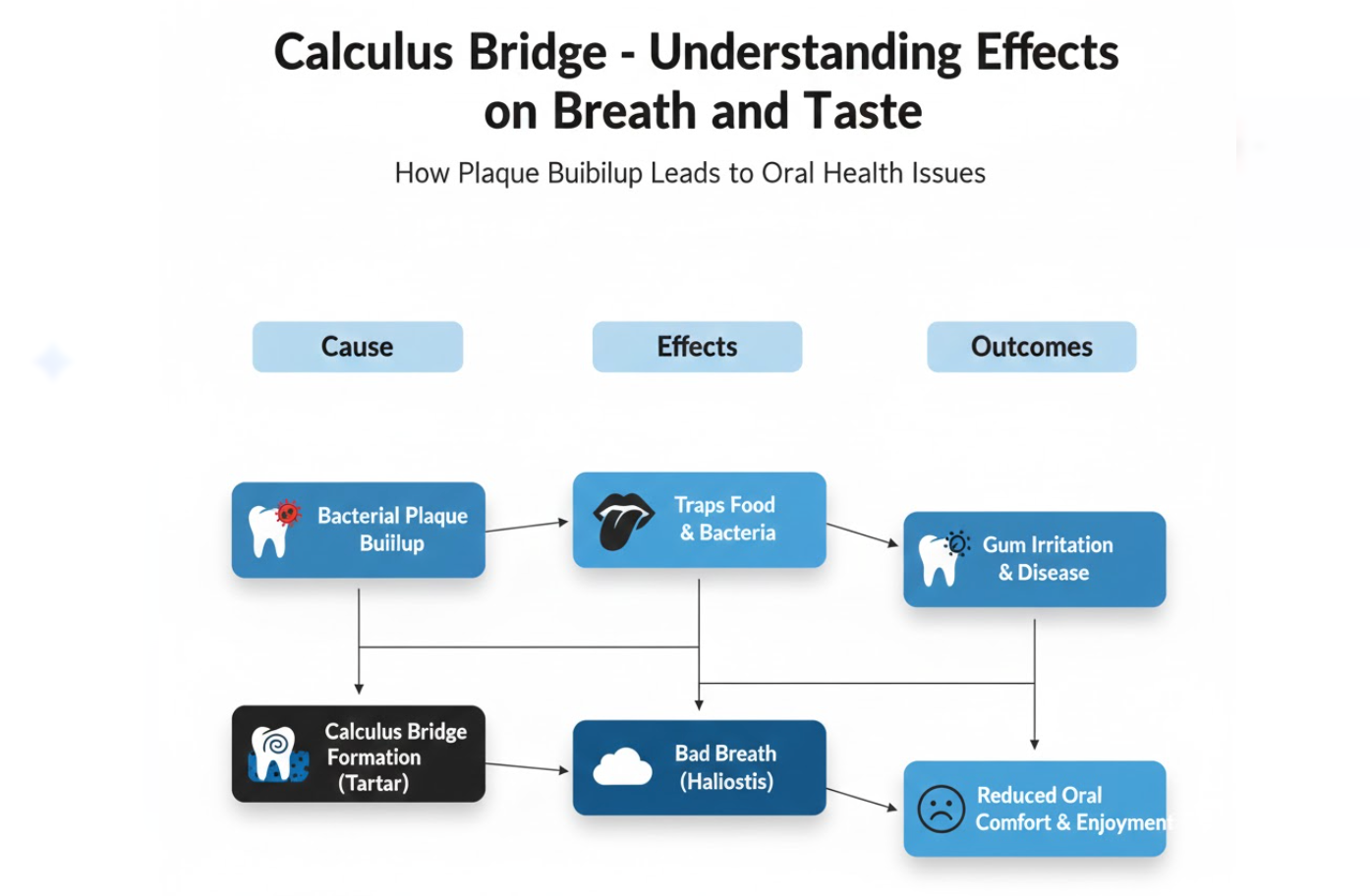
A calculus bridge often contributes to ongoing bad breath. Bacteria trapped in calculus release sulfur compounds that create an unpleasant odor. Mouthwash may mask the smell temporarily, but it does not solve the root cause.
Taste can also be affected. Some people notice a metallic or unpleasant taste due to bacterial buildup and gum inflammation.
Signs that a calculus bridge may be affecting breath
Bad breath that returns quickly after brushing
A bad taste in the mouth, especially in the morning
Others noticing persistent mouth odor
If mouthwash and gum only provide short-term relief, professional cleaning is usually needed.
Can a Calculus Bridge Cause Pain?
In the early stages, a calculus bridge may not cause pain. This is one reason it is often ignored. However, as gum disease progresses or decay develops, discomfort can appear.
Pain may come from
Inflamed or infected gums
Exposed tooth roots
Advanced decay under the calculus
Pressure on the gums from hardened deposits
Pain is usually a late sign, meaning damage may already be significant by the time it is felt.
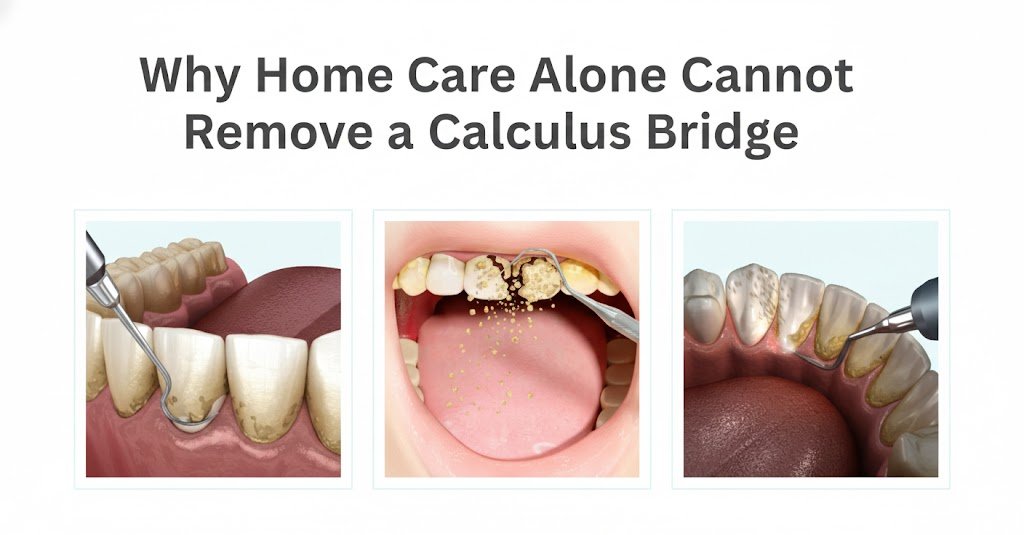
Why Home Care Alone Cannot Remove a Calculus Bridge
Why Home Care Alone Cannot Remove a Calculus Bridge
Once plaque hardens into calculus, it becomes tightly attached to teeth. Toothbrushes, floss, and home scraping tools cannot remove it safely.
Trying to remove calculus at home can lead to
Gum injury
Enamel damage
Increased infection risk
Professional dental tools are designed to remove calculus without harming teeth or gums. Dentists and dental hygienists use scaling instruments to carefully break and remove deposits.
Key point If the buildup feels hard and does not come off with brushing, professional care is needed.
Professional Treatment for a Calculus Bridge
The main treatment for a calculus bridge is professional dental cleaning. Depending on the severity, different approaches may be used.
Basic professional cleaning
Suitable for mild to moderate calculus
Focuses on removing deposits above the gum line
Deep cleaning
Needed if calculus extends under the gums
Includes cleaning below the gum line
Helps reduce gum pockets and inflammation
In advanced cases, additional treatments may be required to manage gum disease or restore damaged teeth.
What to expect after removal
Teeth feel smoother
Gums may be tender for a few days
Bleeding may occur initially but should improve
Breath often improves quickly
How a Calculus Bridge Can Affect Overall Health
Oral health is closely linked to general health. Bacteria from infected gums can enter the bloodstream, potentially affecting other parts of the body.
Research has linked advanced gum disease to
Heart disease risk
Poor blood sugar control
Worsening of existing health conditions
While a calculus bridge alone does not cause these problems, it can contribute by increasing bacterial load and gum inflammation.
Preventing a Calculus Bridge From Forming
Prevention is far easier than treatment. Consistent oral care habits can stop plaque from hardening into calculus.
Daily habits that help prevent calculus bridges
Brush twice daily using proper technique
Clean between teeth every day
Focus on the gum line, not just tooth surfaces
Drink water after meals to reduce plaque buildup
Reduce sugary snacks and drinks
Avoid tobacco products
Manage dry mouth if present
Eat a balanced diet that supports saliva flow
Signs You May Have a Calculus Bridge
Not everyone notices calculus buildup right away. Knowing the warning signs can help you seek care early.
Common signs include
A rough feeling on teeth
Visible yellow or brown buildup
Gums that bleed easily
Persistent bad breath
Gums pulling away from teeth
If you notice more than one of these signs, a dental checkup is recommended.
Final Thoughts
A calculus bridge is more than just hardened plaque. It is a sign that bacteria have had time to build up and attach firmly to your teeth. While it may not cause pain at first, it can lead to gum disease, tooth decay, bad breath, and long-term oral health problems if ignored.
The good news is that calculus bridges are preventable and treatable. With regular dental care, good daily hygiene, and early action, you can protect your gums and teeth and maintain a healthier mouth over time.
About Dr. Soyab Ahmed
Hello, I'm Dr. Soyab. I studied at (Stanford University school of medicine with ACCME). I'm from India, where yoga started. I know about old Indian ways to heal. I learned how people used to live long, healthy lives. I studied Ayurveda medicine in school. I like to share tips for living healthy in natural ways. I mix old ideas with new ones about health. I can help with many health problems using Ayurveda and yoga. I teach how to use these old ways in today's life.