
Blog
Artificial Sweeteners: Types, Health Effects & Alternatives

What Exactly Are Artificial Sweeteners?
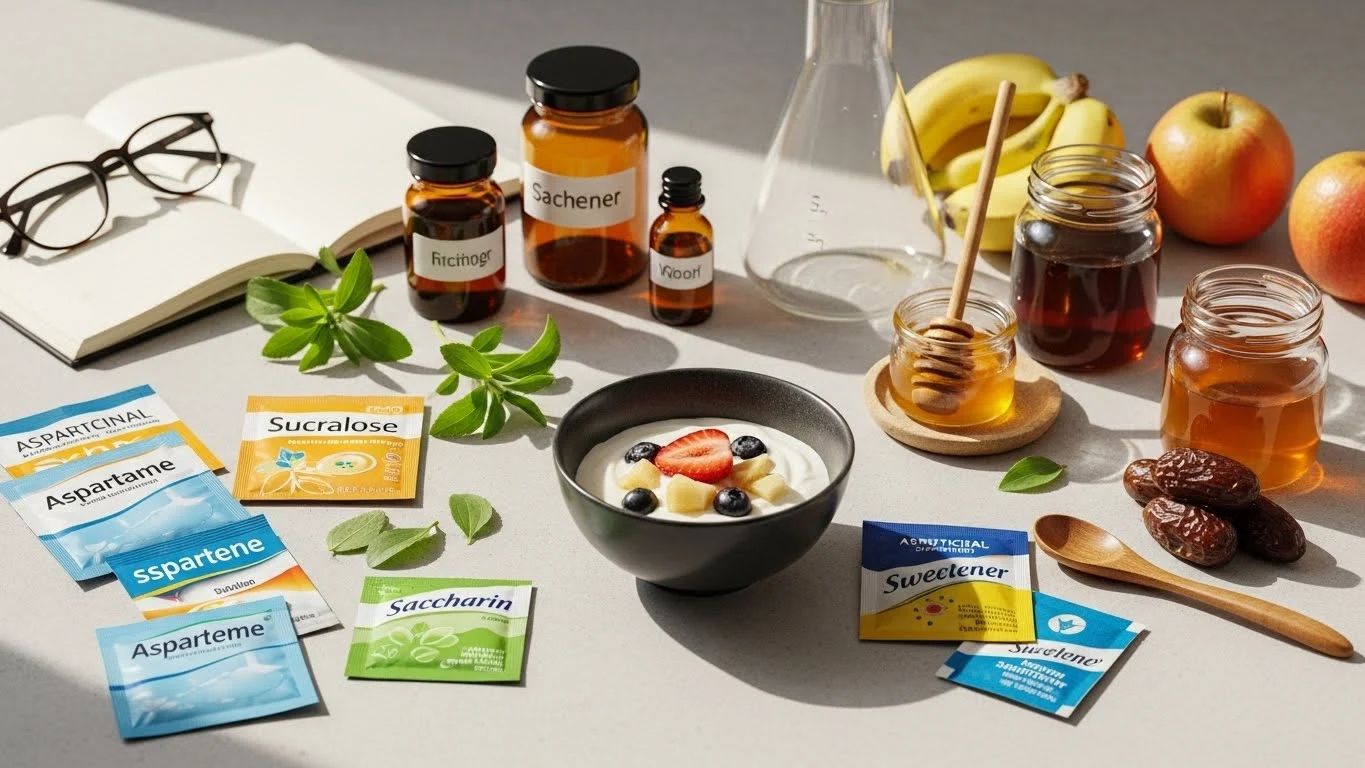
Picture this: scientists in white coats, tinkering in labs to create something that tastes like sugar but packs zero calories. That’s artificial sweeteners in a nutshell. They’re chemical compounds designed to trick your taste buds into thinking you’ve just had a spoonful of the good stuff, without the caloric crash. Born out of the post-World War II boom when folks wanted sweets without the rationing woes, these bad boys exploded into our diets think diet colas, “sugar-free” gums, and those little pink packets next to the diner creamer.
Unlike plain old table sugar (sucrose), which your body breaks down into energy-giving glucose, artificial sweeteners sail through your system mostly untouched. They don’t spike your blood sugar, which sounds great if you’re managing diabetes or watching your waistline. But and this is where it gets interesting they’re often hundreds or thousands of times sweeter than sugar. A tiny pinch does the job, but that intensity? It can leave some people puckering up or craving more real sweetness later. I’ve swapped them in my morning yogurt before, only to end up finishing it with a banana anyway. Moral of the story: they’re everywhere, but they’re not magic.
Why We’re All Sweet on Something (But Maybe Not This Sweet)
Hey there, coffee sipper or cookie crumb chaser let’s talk about that sneaky little craving for something sweet. You know the one: it’s 3 p.m., your energy’s dipping, and suddenly a plain apple feels like a personal insult. We’ve all been there, reaching for the sugar bowl or that diet soda promising guilt-free bliss. But here’s the kicker while sugar’s been getting a bad rap for years (and rightfully so, with its links to everything from weight gain to wild blood sugar swings), its lab-made replacements, artificial sweeteners, are supposed to be the heroes. Right? Well, not so fast.
In this post, we’re diving deep into artificial sweeteners: what they are, the types you’ll spot on shelves, the real talk on how they might mess with your body, and most importantly smarter swaps that won’t leave you feeling like you’re munching on regret. I’ll keep it real, no fancy doctor-speak, just straightforward info so you can make choices that fit your lifestyle. Whether you’re dodging diabetes drama or just tired of the aftertaste that lingers like a bad blind date, stick around. By the end, you’ll have the tools to sweeten things up without the side-eye from your body.
Breaking Down the Common Types of Artificial Sweeteners
Let’s get specific because not all artificial sweeteners are created equal. Some are old-school holdovers from the ’70s, others are newer kids on the block. I’ll walk you through the big players, what they’re made of, and where you’ll find them hiding in your pantry. No need for a chemistry degree; think of this as your cheat sheet.
Aspartame: The Everywhere Guy
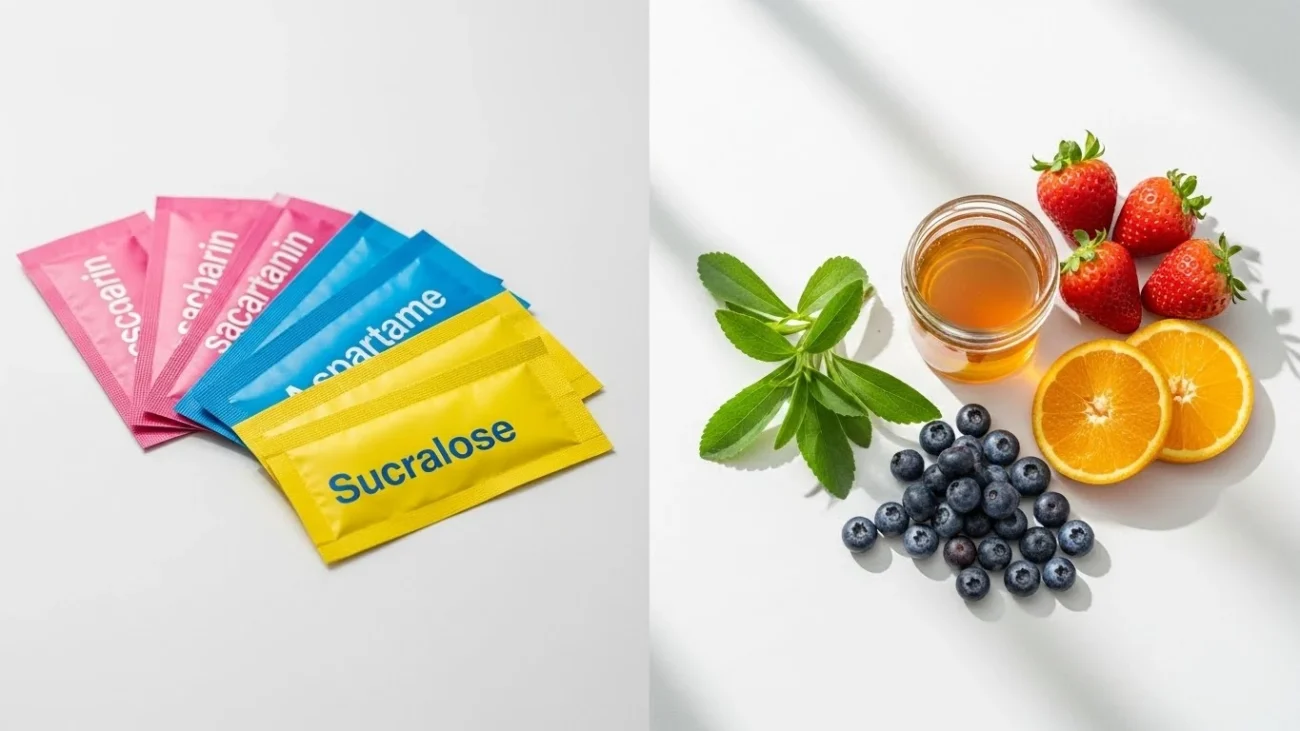
You probably know aspartame as Equal or Nutra-Sweet the stuff in those blue packets. It’s made from two amino acids (building blocks of protein) and clocks in at about 200 times sweeter than sugar. Heat zaps its power, so it shines in cold drinks like diet sodas or iced teas, but skip it for baking unless you want a flat fail. It’s been around since the ’80s, and while it’s zero-calorie, folks with phenylketonuria (PKU, a rare genetic thing) need to steer clear because their bodies can’t process one of its parts. Fun fact: it breaks down into stuff your body already makes from protein-rich foods, so in small doses, it’s like borrowing from your own pantry.
Sucralose
Enter sucralose, or Splenda that yellow packet staple. Chlorinated sugar molecules make it 600 times sweeter, and here’s the win: it’s heat-stable. Bake away with it for cookies that won’t betray you calorically. Approved in the ’90s, it’s in everything from protein bars to ketchup. Your gut barely absorbs it, so most flushes out unchanged. But that chlorine twist? It gives some a metallic vibe, like biting into foil by accident. I’ve tried it in smoothies decent, but it makes me miss the fruit’s natural zing.
Saccharin
Saccharin is the OG, discovered in 1879 yep, older than your great-grandma’s recipe box. At 300-400 times sweeter, it’s got that bitter edge some call “aftertaste central,” but blend it with others and it mellows. It’s in Sweetens Low (pink packets) and tons of canned goods. Back in the day, rat studies freaked everyone out about cancer links, slapping warning labels on it till the ’00s when humans got the all-clear. Now it’s calorie-free and tooth-friendly, but if you’re sensitive, it might hit like a too-strong herbal tea.
Acesulfame Potassium (Ace-K)
Often paired with aspartame (they cancel each other’s funky flavors), Ace-K is 200 times sweeter and super stable hot, cold, doesn’t matter. It’s the potassium salt of acesulfame, lurking in sports drinks, gums, and yogurts. Approved in the ’80s, it’s not metabolized, just excreted. Quick aside: some early buzz linked it to thyroid tweaks in animals, but human data says chill it’s safe in limits.
Neotame and Advantage
These are the underdogs neotame (1,000 times sweeter) and advantage (20,000 times!) are like artificial sweetener steroids. Neotame’s in some sodas since 2002; advantage hit in 2014 for baking and beverages. Both zero-cal, heat-proof, and they don’t need that PKU warning. You won’t taste them solo much they’re mixers. If you’re experimenting, start small; their power can turn a recipe into a sweet bomb.
There you have it the lineup. Each has its spot, but remember, the FDA sets daily limits (like 50mg/kg body weight for aspartame) to keep things safe. Overdo it, and you might invite headaches or tummy rumbles.
The Good, the Bad, and the “Wait, Really?” of Health Effects
Alright, time for the meaty part how do these lab sweets play with your insides? Spoiler: it’s not all rainbows. Research flips like a bad coin: some studies cheer them for weight control, others wave red flags on gut health and beyond. I’ll break it down without the scare tactics, pulling from solid sources like Mayo Clinic and recent 2025 digs. You’re smart; you decide.
Why Folks Swear By Them
First, the wins. Artificial sweeteners slash calories big time. Swap sugar for sucralose in your latte, and you’ve dodged 16 calories per teaspoon. For weight watchers, that’s gold; a 2024 Johns Hopkins review notes they help folks cut intake without feeling deprived. Diabetics love ’em too no blood sugar rollercoaster, per the American Diabetes Association. And oral health? Less sugar means fewer cavities dentists high-five that.
They curb obesity epidemics in theory, letting you enjoy “treats” minus the fallout. A Mayo Clinic fact sheet from last year backs this: moderate use fits healthy diets, especially if you’re ditching sugary sodas. I’ve seen friends drop pounds swapping Coke for Diet, feeling victorious. It’s empowering, right?
Gut Drama and Beyond
But hold up emerging science whispers (or shouts) concerns. Gut health takes a hit; these non-calories confuse your microbiome, those trillions of belly bugs keeping you balanced. A 2025 Health piece highlights how acesulfame-K tweaks bacteria, potentially leading to inflammation or wonky metabolism. Feel bloated after a sugar-free gum binge? That’s your gut protesting.
Weight gain? Counterintuitive, but yeah some studies link heavy use to more belly fat. Why? They might crank appetite hormones, making you hungover for real sweets. Harvard’s 2023 report ties them to metabolic shifts, upping type 2 diabetes odds. Heart stuff too: WHO’s 2022 alert (still relevant) flags higher CVD risk from sweetened drinks, with 2025 updates showing cholesterol tweaks.
Headaches? Aspartame gets blamed, though evidence is spotty. And for pregnant peeps or kids? A Danish study linked them to preterm birth risks yikes. Humor break: if sweeteners were a friend, they’d be that one who promises fun but leaves you queasy at 2 a.m.
Quick swap table for your kitchen adventures:
| Artificial Swap | Natural Alternative | Why It Wins | Swap Tip |
|---|---|---|---|
| Aspartame | Stevia | Zero-cal, plant-based | Drops in drinks; no heat woe |
| Sucralose | Maple Syrup | Minerals, antioxidants | Drizzle on oats; half amount |
| Saccharin | Dates | Fiber-packed energy | Puree for baking binder |
| Ace-K | Monk Fruit | No aftertaste, anti-inflammatory | Blend in smoothies |
| Neotame | Honey | Soothes throat, antibacterial | Stir into tea; raw preferred |
These keep flavor alive while your body cheers. Pro tip: retrain by cutting sweets gradually sudden quits backfire.
Wrapping It Up
Whew, we covered ground from lab tricks to leafy lifelines. Artificial sweeteners? Handy in pinches for calorie cuts and sugar dodges, but the 2025 curveballs on brains and barriers say moderation’s your mantra. Ditch the daily dependence; lean into fruits, herbs, and a dash of honey. Your gut, heart, and head will thank you and hey, life’s too short for fake flavors that fool no one.