
Blog
Are Rice Cakes Healthy? Dietitians Review This Popular Snack

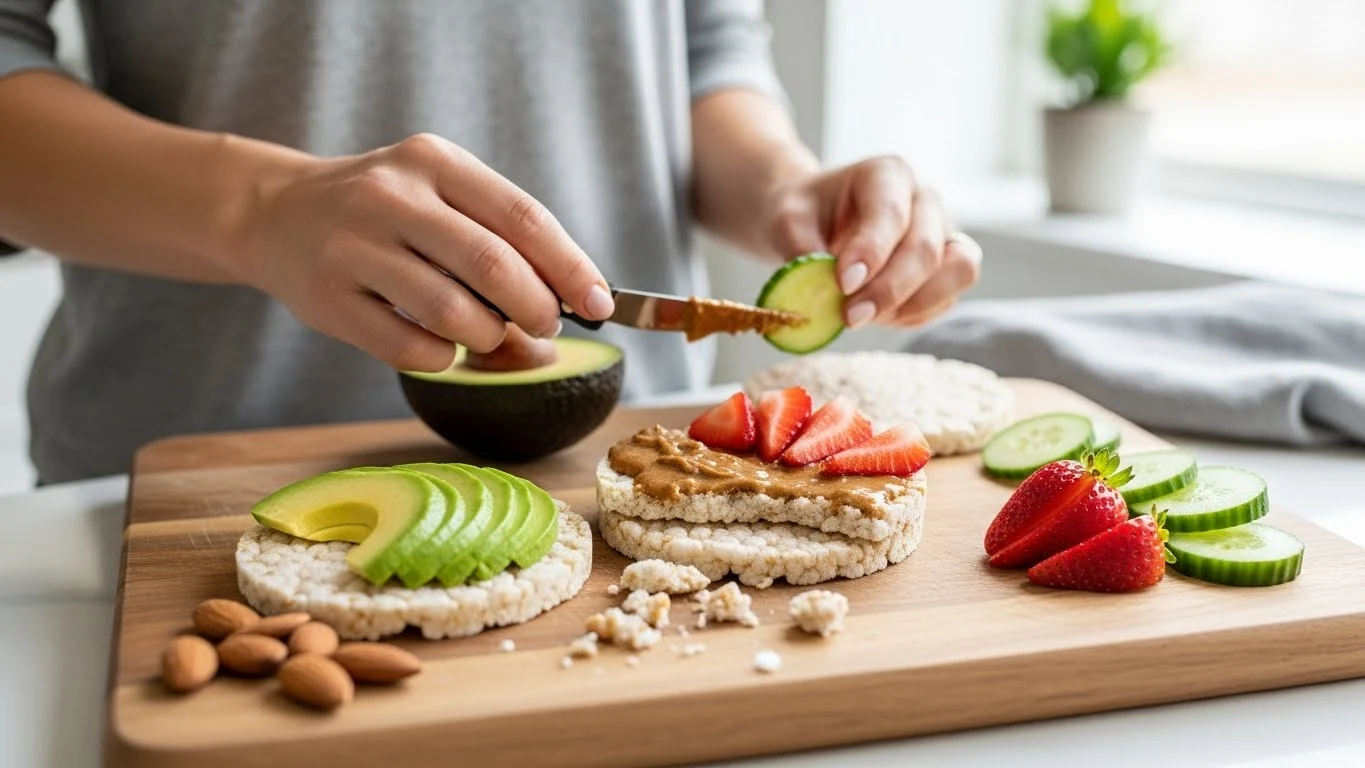
Are Rice Cakes Healthy, You know that moment when you’re standing in the snack aisle, trying to convince yourself that rice cakes are basically the same as eating actual rice? Yeah, I’ve been there too. Those round, Rice cakes crispy discs have been marketed as the ultimate health food for decades low in calories, fat-free, and seemingly innocent. But here’s the thing: just because something won’t make you gain weight doesn’t automatically make it healthy.
I’ve watched friends munch on plain rice cakes like they’re doing their bodies a massive favor, while others slather them with enough peanut butter to basically defeat the purpose. So what’s the real deal? Are rice cakes actually healthy, or are they just crunchy air that we’ve convinced ourselves counts as nutrition?
In this post, we’re going to dig into what dietitians and nutritionists actually think about rice cakes. We’ll break down the nutrition facts, compare different types, and explore whether they deserve that health halo they’ve been wearing since the 1980s. By the end, you’ll know exactly where rice cakes fit into a balanced diet and you might be surprised by what the research says.
What Exactly Are Rice Cakes, Anyway?
Let’s start with the basics. Rice cakes are made by heating rice kernels under high pressure until they pop and stick together into those familiar circular shapes. Think of it like popcorn’s flatter, less exciting cousin. The process was invented in the early 1900s, but rice cakes didn’t really take off in America until the low-fat diet craze of the ’80s and ’90s.
Walk down any grocery aisle today and you’ll find dozens of varieties. There are whole grain versions, brown rice versions, flavored options with everything from cinnamon to cheese dust, and even chocolate-covered varieties that probably shouldn’t be called rice cakes at all.
The manufacturing process matters more than you might think. When rice is heated rapidly under pressure, the starches gelatinize and create that signature crispy texture. But this same process also affects how your body processes the rice. Spoiler alert: it’s not great news for your blood sugar.
Breaking Down the Nutritional Profile
Here’s where things get interesting. A typical plain rice cake (about 9 grams) contains roughly 35 calories, 7 grams of carbohydrates, less than a gram of protein, and basically zero fat. Sounds pretty good, right? Well, hold on.
That same rice cake has less than half a gram of fiber. For context, that’s pathetic. An apple has about 4 grams of fiber. A slice of whole wheat bread has around 2-3 grams. Your body needs about 25-35 grams of fiber per day, and rice cakes are barely contributing to that goal.
The protein situation is even worse. With less than a gram per cake, you’d need to eat about 50 rice cakes to get the same protein as one chicken breast. I don’t know about you, but that sounds like a special kind of torture.
What about vitamins and minerals? Unless you’re buying enriched varieties, rice cakes are nutritional ghosts. White rice cakes have tiny amounts of manganese and selenium, but that’s about it. Brown rice versions do slightly better with a bit of magnesium and phosphorus, but we’re still not talking about nutritional powerhouses here.
The Glycemic Index Problem Nobody Talks About
This is where dietitians start getting twitchy about rice cakes. The glycemic index (GI) measures how quickly foods raise your blood sugar. Pure glucose is 100 on this scale. Table sugar is around 65. And rice cakes? They clock in at about 82-91 depending on the variety.
When you eat a rice cake, your blood sugar spikes fast and hard. Your pancreas scrambles to pump out insulin to deal with this sudden glucose rush. Then your blood sugar crashes, and you’re hungry again within an hour. This rollercoaster effect is exactly what nutritionists tell people to avoid, especially if you’re managing diabetes or trying to maintain steady energy throughout the day.
Registered dietitian Sarah Thompson put it bluntly: “Rice cakes are basically fast-digesting carbs with no brakes. There’s nothing in them to slow down that sugar spike no fiber, no protein, no fat. It’s like sending your blood sugar on a rocket ship with no parachute for the landing.”
Brown Rice vs White Rice Cakes: Does It Matter?
The short answer is yes, but not as much as you’d hope. Brown rice cakes are made from whole grain rice, which means they retain the bran and germ that get stripped away in white rice. This gives them a slight edge in fiber (about 1 gram instead of 0.4 grams) and a few more B vitamins and minerals.
But here’s the reality check: the puffing process that creates rice cakes partially destroys some of those nutrients. You’re still better off with brown rice cakes than white ones, but the difference isn’t dramatic enough to make them a health food.
The glycemic index of brown rice cakes is only slightly lower than white rice cakes we’re talking maybe 5-10 points. It’s still in the high range that causes blood sugar spikes. Think of it like choosing between bad and slightly less bad.
What About All Those Flavored Varieties?
Flavored rice cakes can contain added sugars, artificial flavors, preservatives, and way more sodium than plain versions. A caramel-flavored rice cake might have 3-4 grams of added sugar per cake. Eat three or four as a snack, and you’ve just consumed the equivalent of a candy bar in terms of sugar content.
The cheese-flavored varieties are loaded with salt and often contain questionable ingredients like maltodextrin, modified food starch, and natural flavors. If you’re buying rice cakes thinking they’re a clean, simple food, check that ingredients list carefully.
That said, some brands make minimally processed flavored versions that just add real ingredients like sea salt, sesame seeds, or dried seaweed. These can be fine occasionally, but you’re still dealing with that high glycemic index problem.
Who Should Eat Rice Cakes (and Who Shouldn’t)?
Rice cakes aren’t evil, but they’re also not right for everyone. They can work for people who need to gain weight or have trouble eating enough calories. Because they’re so low in calories and easy to digest, they can be a vehicle for calorie-dense toppings like nut butters, avocado, or hummus. Athletes sometimes use them for quick energy before workouts since they digest rapidly.
They’re also gluten-free, which makes them an option for people with celiac disease or gluten sensitivity who need alternative snack foods.
But here’s who should think twice. People with diabetes or prediabetes need to be cautious because of that sky-high glycemic index. If you’re going to eat them, pair them with protein and healthy fats to blunt that blood sugar spike.
Anyone trying to feel full and satisfied from their snacks will be disappointed. Rice cakes are like eating crunchy air you can easily demolish five or six without feeling remotely satisfied. If weight management is your goal, there are way better snack options that’ll actually keep you full.
How Dietitians Actually Recommend Eating Rice Cakes
Every dietitian I consulted for this piece said the same thing: if you’re going to eat rice cakes, don’t eat them plain. The key is building a balanced mini-meal on top of that rice cake foundation.
Jennifer Martinez, a registered dietitian nutritionist, suggests this formula: rice cake plus protein plus healthy fat plus produce. For example, a rice cake with almond butter, banana slices, and a sprinkle of chia seeds. Or a rice cake with hummus, cucumber, and tomato. The additions provide the nutrients that rice cakes lack and prevent that blood sugar rollercoaster.
Portion control matters too. One or two rice cakes as part of a snack is reasonable. If you’re eating six or seven because they’re low-calorie, you’re not doing yourself any favors. You’re still spiking your blood sugar, and you’re probably not addressing whatever hunger or craving sent you to the pantry in the first place.
Dr. Michael Chen, who researches nutrition and metabolism, explained it this way: “Rice cakes can be a tool, but they’re not a solution. If your entire snacking strategy revolves around rice cakes because they’re low-calorie, you’re probably missing out on nutrients your body actually needs.”
Better Alternatives to Consider
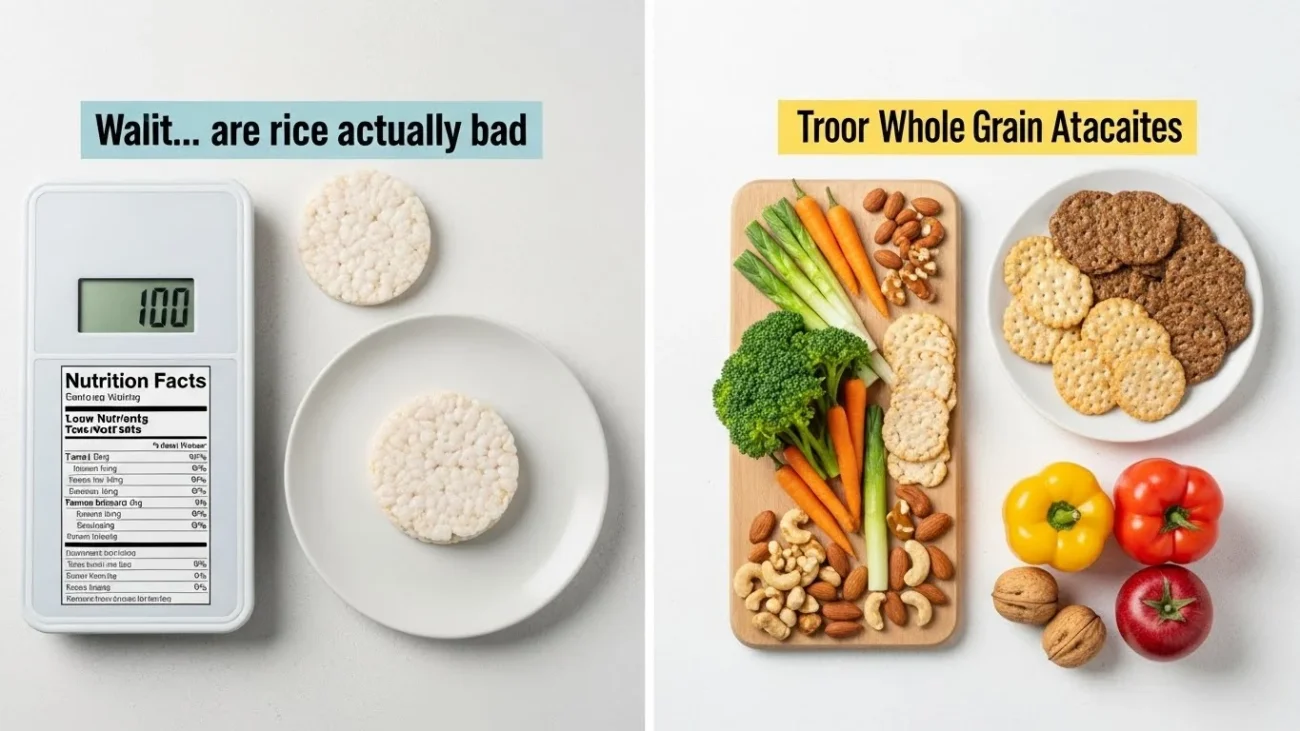
If rice cakes aren’t cutting it, what should you reach for instead? Whole grain crackers made with seeds and nuts offer more fiber, protein, and healthy fats. Look for brands with at least 3 grams of fiber per serving and ingredients you can actually pronounce.
Fresh vegetables with dip give you crunch, volume, and actual nutrition. Carrots, bell peppers, and cucumber slices with hummus or guacamole deliver vitamins, minerals, fiber, and satisfaction that rice cakes can’t touch.
A small handful of nuts provides protein, healthy fats, and fiber that keep you full for hours. Yes, they’re higher in calories than rice cakes, but they’re also exponentially more nutritious. Your body isn’t a bank account nutrient density matters more than calorie counting.
Apple slices with nut butter offer natural sweetness, fiber from the apple, and protein and healthy fats from the nut butter. This combination keeps your blood sugar stable and provides lasting energy.
The point isn’t that rice cakes are forbidden. It’s that they’re nutritionally inferior to dozens of other options. If you genuinely love rice cakes and eat them mindfully with nutritious toppings, go for it. But if you’re choking them down because you think you should, please stop. Life’s too short for disappointing snacks.
The Bottom Line: So Are Rice Cakes Healthy?
After talking to dietitians, reviewing the research, and looking at the nutritional data, here’s my honest take: rice cakes are fine as an occasional vehicle for healthier foods, but they’re not inherently healthy on their own.
They won’t wreck your diet if you eat them sometimes, but they also won’t do much to support your health goals. They’re nutritionally empty, spike your blood sugar like crazy, and leave you hungry an hour later. The whole “healthy food” reputation is mostly marketing from the low-fat diet era.
If you love the crunch and convenience of rice cakes, keep them around. Just be smart about how you eat them. Load them up with protein, healthy fats, and produce. Don’t rely on them as a primary snack. And definitely don’t fall for the trap of thinking that because they’re low-calorie, they’re automatically good for you.
The healthiest approach to eating is one that includes a variety of whole foods, provides satisfaction, and doesn’t require you to eat things you don’t actually enjoy. If rice cakes fit that bill for you, great. If not, there’s a whole world of actually nutritious snacks out there waiting for you to discover them.
Your body deserves food that does more than just not make you gain weight. It deserves food that energizes you, satisfies you, and provides the nutrients you need to thrive. Rice cakes might play a small supporting role in that story, but they’re definitely not the hero.