
Blog
Adenoids: Function, Symptoms, and Treatment Options

Most parents have heard the word “adenoids” at least once usually in a doctor’s office adenoidid, usually while their child is snoring loud enough to rattle the windows.
If you have been wondering whether your child’s constant stuffy nose, restless sleep, or even their changing facial appearance is connected to their adenoids, you’re in the right place. Everything from basic anatomy to treatment options, including information that most other articles completely skip.
What Are Adenoids?
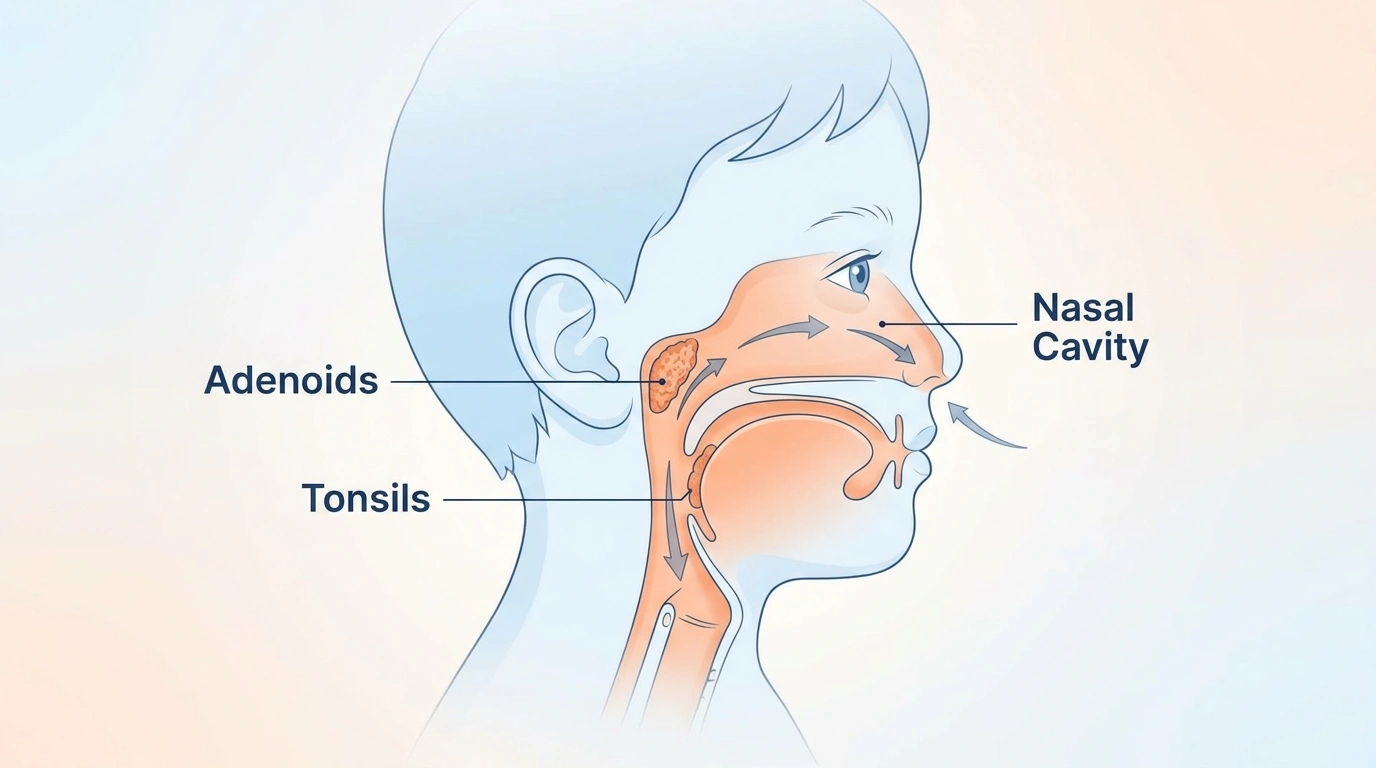
Adenoids are small lumps of tissue that sit at the back of the nasal passage, right where the nose meets the throat. You can’t see them by looking into the mouth because they’re too high up for that. Doctors also call them pharyngeal tonsils since they’re a type of tonsil tissue positioned higher in the throat.
They’re part of the lymphatic system, which is the body’s natural defense network. Think of adenoids as security guards standing at the entrance of your airways. Every breath passes by them, and their job is to catch bacteria and viruses before those invaders go deeper into the body.
Here’s something most people don’t know. Adenoids are most active between ages 4 and 10. They start shrinking around age 5 to 7, and by the teenage years, around age 16, they’ve often disappeared almost completely. The body essentially lets them go once the immune system is strong enough to handle things on its own.
Adenoids vs. Tonsils?
A lot of parents confuse adenoids and tonsils because both are part of the immune system and both can cause similar problems. They’re neighboring structures, but they’re not the same thing.
- Tonsils are the two oval lumps you can see at the back of the throat when you open your mouth wide. They’re visible to the naked eye.
- Adenoids sit much higher, behind the nose, and you can’t see them without a special camera or scope.
Tonsils tend to cause sore throats and swallowing difficulties when they get inflamed. Adenoids, because of their position near the nasal passages and Eustachian tubes, are more likely to cause nasal congestion, snoring, and ear problems. Both can cause issues at the same time, which is why surgeons often remove them together when surgery becomes the right call.
What Causes Adenoids to Become Enlarge?
The same tissue that helps fight infections can become a problem when it grows too large or stays inflamed for too long. Doctors call this adenoid hypertrophy when the adenoids are enlarged, or adenoiditis when they’re infected.
Several things can trigger or worsen adenoid enlargement:
- Frequent respiratory infections — Each infection makes the adenoids swell. If infections keep coming back, the adenoids may stay enlarged permanently.
- Allergies — Reactions to pollen, dust mites, mould, or pet dander keep the adenoids in a constant state of irritation.
- Genetics — Some people are simply built with larger adenoid tissue. If a parent had adenoid problems, the children are more likely to face them too.
- Chronic sinusitis — Long-lasting sinus infections feed ongoing adenoid inflammation.
- Cigarette smoke or air pollution — Environmental irritants inflame adenoid tissue over time, especially in children who live with smokers.
- GERD (acid reflux) — This one surprises most people. When stomach acid creeps up into the throat, it irritates the tissue there, including the adenoids. Treating reflux can sometimes reduce adenoid symptoms directly.
Common Symptoms of Enlarge or Infected Adenoids
Persistent Nasal Congestion That Won’t Go Away:
A stuffy nose that seems permanent, not tied to a cold or allergy season, is one of the clearest signs of an adenoid problem. Parents often describe their child as always sounding “blocked up.” That’s because swollen adenoids physically close off the nasal passages, making normal airflow very difficult.
Breathing Through the Mouth:
When the nose is blocked, the mouth takes over. You’ll notice a child breathing with their mouth open constantly, not just during exercise but while sitting quietly, watching TV, or sleeping. Over time this changes the shape of the face and jaw in growing children. We’ll cover that more in the “Adenoid Face” section below.
Loud Snoring and Sleep Problem:
Swollen adenoids are one of the most common reasons children snore. More seriously, they can cause obstructive sleep apnea, where breathing actually pauses during sleep. When that happens, children often show:
- Poor sleep quality and restlessness at night
- Daytime irritability and tiredness
- Difficulty focusing at school
- Behavior that looks a lot like ADHD
Sleeping in Unusual Position:
This is a symptom that almost nobody talks about, but it’s more common than you’d think. Children with significantly enlarged adenoids sometimes sleep in strange positions, such as:
- Head tilted sharply backward
- Face down with knees pulled up toward the chest
They’re doing this instinctively to open up their airway as much as possible. If your child consistently sleeps this way night after night, adenoids are worth looking into.
Recurrent Ear Infection:
Adenoids sit very close to the Eustachian tubes, which are the small tubes that connect the middle ear to the back of the throat. When adenoids swell, they can block these tubes and cause:
- Fluid buildup in the middle ear
- Ear pain and pressure
- Temporary hearing loss
- A condition called glue ear, where thick fluid fills the middle ear space
Nasal Voice and Delayed Speech Development:
Enlarged adenoids block the normal resonance of the nasal passages, giving the voice a muffled, “talking through the nose” quality, even when the child is completely healthy. In younger children still developing language skills, this nasal blockage can also slow speech development. Many parents attribute this to other causes before anyone thinks to check the adenoids.
Chronic Runny Nose and Post-Nasal Drip:
Infected adenoids produce extra mucus that drips down the back of the throat. This leads to:
- A persistent cough that won’t clear up
- Constant throat clearing
- Bad breath that doesn’t improve no matter how well the child brushes
Dry Mouth and Bad Breath:
Breathing through the mouth bypasses the nose, which normally filters and moistens incoming air. The mouth and throat stay chronically dry, which creates ideal conditions for bacteria to grow. Parents often focus on brushing and dental hygiene trying to fix the bad breath, not realizing the real issue is nasal obstruction.
Difficulty Swallowing:
In more serious cases, very enlarged adenoids make swallowing uncomfortable, particularly with solid foods. This is less common, but worth paying attention to if your child consistently avoids certain textures without a clear reason.
“Adenoid Face” The Facial Change Nobody Warns You About
This is one of the most important things in this article, and one that most resources barely mention.
When adenoid enlargement goes unaddressed for a long time, especially in young children whose bones are still developing, it can cause permanent changes to the shape of the face and mouth. Doctors call this “adenoid face,” and it’s a recognized clinical condition, not just a cosmetic concern.
Because the child breathes constantly through the mouth, the tongue rests in a low position instead of pressing naturally against the roof of the mouth the way it does during nasal breathing. Over time, this affects how the jaw, palate, and teeth develop.
Common features of adenoid face include:
- Mouth hanging open, even when the child is relaxed and at rest
- Narrow, high-arched upper palate
- Crowded and misaligned teeth
- Slightly forward-protruding lower jaw
- Long, narrow facial shape
- Dark circles under the eyes
- A tired, sleepy look even after a full night’s sleep
These aren’t just appearance issues. A narrowed palate and misaligned teeth affect chewing, speech clarity, and long-term dental health. Orthodontic treatment may be needed down the road. The critical point is that these changes are much harder to fix once a child has finished growing. Catching and treating adenoid problems early can prevent these changes from happening in the first place.
Who Is Most at Risk?
Adenoid issues are far more common in children than in adults, which makes sense since adenoids are largest and most active during childhood. Peak problems tend to happen between ages 2 and 6.
That said, adults can develop adenoid problems too. Common triggers in adults include:
- Chronic infections or sinusitis that won’t fully clear
- Long-standing, uncontrolled allergies
- Years of smoking or exposure to pollution
- In rare cases, a tumor which is why persistent adult adenoid symptoms should always be evaluated properly, not ignored
How Are Adenoid Problem Diagnose?
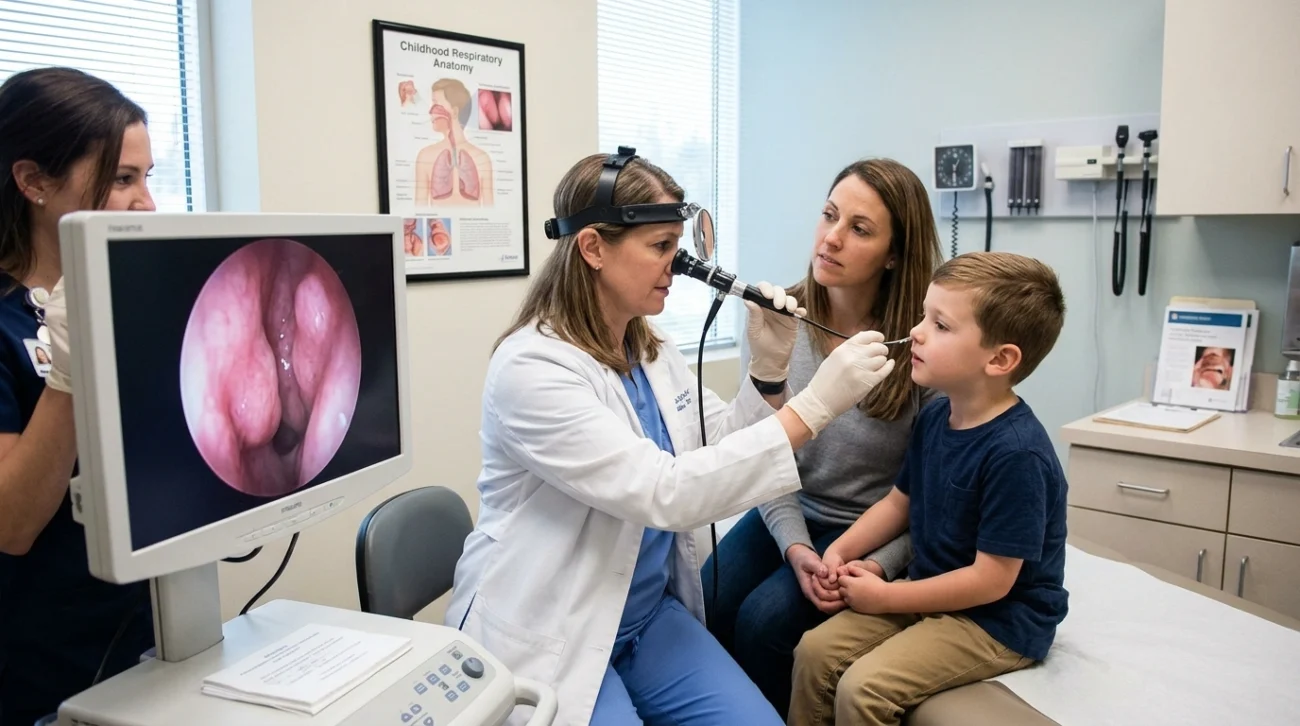
Diagnosis starts with a physical exam and a review of symptoms. Since adenoids can’t be seen through the mouth, doctors use a few different approaches:
Nasopharyngoscopy:
A thin, flexible tube with a small camera is gently passed through the nostril to view the adenoids directly. This is the clearest and most accurate way to assess their size and condition, and it’s considered the gold standard for diagnosis.
Lateral Neck X-Ray:
A side-view X-ray shows how large the adenoids are relative to the airway. It’s less invasive and commonly used, though it gives less detail than a camera scope.
Blood Tests:
When an active adenoid infection is suspected, a blood test checks for signs of infection, such as elevated white blood cell counts. Blood tests also help rule out other conditions that may be causing similar symptoms.
Sleep Study (Polysomnography):
If sleep apnea is suspected, a doctor may recommend an overnight sleep study. This monitors:
- Breathing patterns throughout the night
- Blood oxygen levels
- Brain wave activity
- Heart rhythm
- Chest movement and carbon dioxide levels
This test shows clearly how much the adenoids are affecting a child’s sleep and breathing overnight.
Treatment Options for Adenoid Problem
Treatment depends on how severe the symptoms are and how long they’ve been going on. Not every case needs surgery. There’s a range of options, and most doctors start with the least invasive approach first.
Watchful Waiting:
If symptoms are mild and not affecting daily life much, doctors sometimes recommend simply monitoring the situation. In young children, adenoids occasionally shrink on their own as the child gets older.
Nasal Corticosteroid Sprays:
Prescription nasal sprays like fluticasone or budesonide reduce inflammation inside the nasal passages. Studies show they can meaningfully shrink adenoid size in mild to moderate cases without any surgery. These sprays are usually the first treatment tried.
Nasal Decongestants and Antihistamines:
When allergies are part of the problem, antihistamines reduce the immune-driven inflammation keeping the adenoids swollen. Nasal decongestants can relieve congestion in the short term, though they aren’t a long-term fix on their own.
Antibiotics for Adenoiditis:
When the adenoids are actively infected, a course of antibiotics clears the infection and brings down the swelling. Antibiotics don’t help with adenoids that are enlarged purely from growth rather than infection. They should always be taken under a doctor’s supervision since overuse leads to antibiotic resistance.
Treating GERD When Present:
When acid reflux is contributing to adenoid inflammation, which happens more often than most people realize, treating the GERD with the right medication and dietary changes can directly reduce adenoid irritation. This is an angle that almost always gets overlooked.
Allergy Management:
Treating the root cause of allergies, whether through antihistamines, nasal sprays, or immunotherapy (allergy shots), reduces the chronic immune activation that keeps adenoids inflamed. Managing allergies well can make a real difference over time.
Adenoidectomy Surgical Removal:
When adenoids are causing serious, ongoing problems that don’t respond to other treatments, surgical removal is recommended. It’s one of the most common surgeries performed in children and has a strong safety record. Studies confirm that adenoidectomy improves sleep apnea symptoms in up to 85% of cases.
Key facts about the procedure:
- Performed under general anesthesia
- Takes approximately 20 to 45 minutes
- Done through the mouth with no cuts on the outside of the body
- Most children go home the same day
- Full recovery takes one to two weeks
Combined Adenoidectomy and Tonsillectomy:
If both adenoids and tonsils are enlarged and causing problems, surgeons often remove both at the same time. This is called an adenotonsillectomy and it’s one of the most common pediatric surgical procedures in the world.
Ear Tube Insertion:
If adenoid problems have led to repeated ear infections or fluid in the middle ear, small tubes called grommets or tympanostomy tubes may be placed into the eardrums to drain fluid and balance pressure. This is often done at the same time as an adenoidectomy.
How Adenoid Problem Affect Academic Performance
This topic deserves its own space, and most adenoid articles skip it entirely. That’s a real problem because the impact on a child’s school performance can be significant and is often blamed on the wrong things.
When adenoids obstruct the airway during sleep, the result is broken, low-quality sleep night after night. During deep sleep, the brain consolidates memories, processes new information, and releases growth hormone. When this gets disrupted repeatedly, development suffers in ways that show up in the classroom.
Children dealing with chronic adenoid problems often show a pattern that looks a lot like ADHD:
- Trouble focusing and staying on task in class
- Hyperactivity and emotional outbursts
- Memory problems and poor retention
- Academic results that don’t match the child’s actual intelligence
Research shows that some children who carry an ADHD diagnosis actually have sleep-disordered breathing as the real underlying cause. After adenoidectomy, many of these children see their attention, behavior, and grades improve, often without any medication for ADHD at all.
There’s also the oxygen side of things. During sleep apnea episodes, blood oxygen levels drop temporarily. When this happens repeatedly over months or years, it has measurable effects on how the brain functions. Teachers sometimes notice these children performing far below their potential, and parents often put it down to effort or attitude, not knowing their child is genuinely exhausted and oxygen-deprived every single night.
If a teacher raises concerns about attention or behavior, and your child also snores or breathes through the mouth at night, bring both observations to a doctor before assuming ADHD is the answer.
Prevention Can You Reduce the Risk of Adenoid Problem?
Most adenoid articles don’t touch prevention at all. That’s a missed opportunity because there are practical steps that genuinely lower the risk.
Reduce infection exposure:
- Encourage regular handwashing, especially before meals and after school
- Teach children not to share cups, utensils, or water bottles with others
- Keep up with the annual flu vaccine and routine childhood immunizations
Manage allergies proactively:
- Uncontrolled allergies keep the immune system in a constant state of irritation, and adenoids take a lot of that strain
- Keeping known allergies well-controlled with the right medications or immunotherapy makes a real difference
Remove smoke exposure:
- Children who live with smokers have significantly higher rates of adenoid and tonsil problems
- Removing cigarette smoke from a child’s environment is one of the most impactful changes a family can make for respiratory health
Support general immune health:
- A balanced diet, enough sleep, and regular physical activity help the immune system respond proportionally, without the excessive inflammation that drives adenoid enlargement
Address acid reflux early:
- If a young child shows signs of GERD, such as discomfort after eating, frequent coughing, or spitting up regularly, treating it early removes one significant and often overlooked contributor to chronic adenoid inflammation
What Happen After Adenoid Removal?
The most common worry parents have is this: will my child’s immune system suffer without the adenoids? It’s a fair concern, and the answer is reassuring.
Because adenoids are most important in the very early years of life, and because the immune system has many other components working alongside them, removing adenoids after age 3 or 4 typically has little to no impact on overall immune health. Multiple studies back this up. The body adapts, and other parts of the immune system pick up the work.
Most children improve dramatically after adenoidectomy. Parents often describe it as transformative. Their child finally sleeps through the night, stops snoring, starts breathing through the nose naturally, and becomes noticeably more energetic and focused during the day. Children who had attention or behavioral issues tied to poor sleep often see those problems ease within just a few weeks of surgery.
Final Thought
Adenoids are small, but when they cause trouble, the effects reach further than most people expect touching sleep, behavior, hearing, facial development, and school performance all at once. The good news is that adenoid problems are well understood, entirely treatable, and when caught early, preventable from causing lasting harm. Whether the solution turns out to be a daily nasal spray or a short outpatient surgery, acting sooner always leads to better outcomes. If something feels off with your child, trust that instinct and get it checked because with adenoid problems, early action genuinely changes things.