
Blog
Simpciry – A Path To Minimalist LifeStyle, Purpose & Clarity

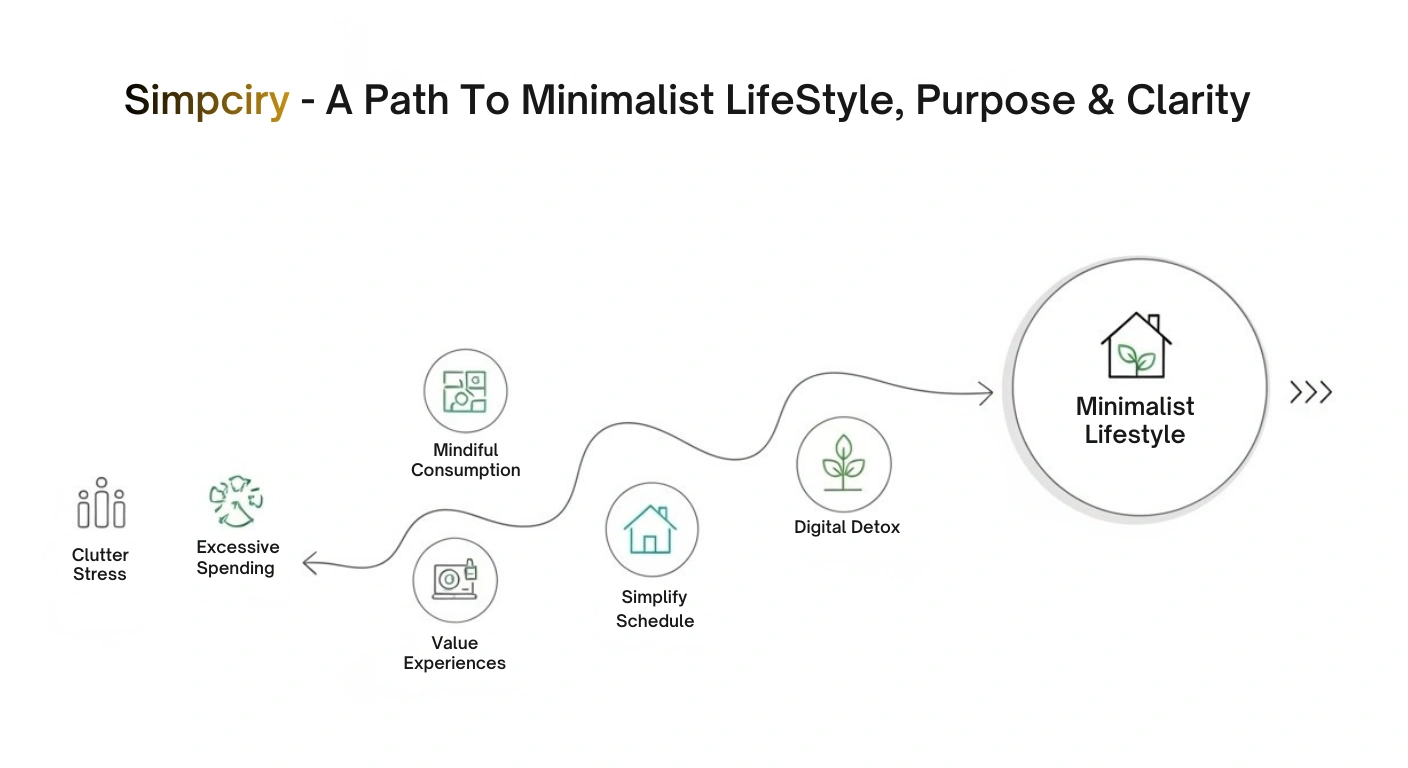
Do you ever feel like your life is drowning in stuff? Physical clutter, mental noise, and a to-do list that never stops growing. If that sounds familiar, you are not alone. Millions of people around the world now realize that more is not always better. That is exactly where Simpciry steps in.
Simpciry is not some trendy buzzword. It is a real philosophy and a way of living that cuts through the excess and brings your focus back to what actually matters. Whether you want to declutter your space, calm your mind, or discover a deeper sense of purpose, Simpciry gives you a clear and practical path forward.
What Is Simpciry
Simpciry is the intentional pursuit of simplicity in every area of your life. It does not mean owning nothing or living in an empty room. It means making deliberate choices, keeping what adds value and letting go of what does not.
The word blends simplicity with clarity. When you simplify your environment, your schedule, and your commitments, your thinking gets sharper. Your priorities become obvious. You stop feeling pulled in every direction and start moving forward with real intention.
Think of it like cleaning a foggy windshield. The road was always there. You just could not see it clearly.
The core elements of Simpciry include:
- Intentional living, which means making deliberate choices about time, energy, and resources
- Mindful consumption, which means avoiding excess and focusing on real value
- Balanced technology use, so digital tools help you instead of controlling you
- Meaningful relationships, where depth matters more than numbers
The History and Rise of Simpciry
Simpciry did not appear overnight. It grew from the lifestyle shifts of the early 2020s. Remote work took over, notifications became relentless, and global uncertainty left millions feeling mentally drained.
By 2024 and 2025, people started pushing back. Wellness writers, entrepreneurs, and online communities began promoting Simpciry as something beyond basic minimalism. It valued mental clarity and emotional presence, not just tidy shelves.
The hashtag SimpciryLife spread across Reddit, YouTube, and Instagram. People shared quiet mornings, clean workspaces, and mindful routines. What started as a small idea turned into a global movement. Today Simpciry is more than a trend. It is a mindset and a counterbalance to modern chaos.
Simpciry vs Traditional Minimalism vs Essentialism
These three philosophies overlap, but they are not the same.
Traditional minimalism focuses on physical possessions. It is about counting items, living with less, and keeping only what sparks joy. That works for many people, but it can feel rigid over time. Studies suggest that strict minimalists tend to abandon the practice at a higher rate within two years compared to those who follow a more flexible approach.
Essentialism is less about stuff and more about priorities. It teaches you to say no to almost everything so you can invest fully in what matters most.
Simpciry brings both together and adds something neither one covers on its own. That something is clarity of thought, emotion, and purpose. Where minimalism empties your closet, Simpciry asks why it was overflowing in the first place. Where essentialism filters your priorities, Simpciry also builds environments that make those priorities effortless to follow.
Here is a simple way to think about it:
- Minimalism means reduce your possessions
- Essentialism means filter your priorities ruthlessly
- Simpciry means simplify everything and add clarity of thought, emotion, and purpose
Simpciry is also flexible. A parent practicing it might own more than a single person, and that is perfectly fine as long as every item serves a clear purpose.
The Three Pillars of Simpciry
Pillar One is a Minimalist Lifestyle:
This is where most people begin. Under Simpciry, a minimalist lifestyle means designing your physical space to support calm, focus, and function.
Your home does not need to look like a magazine. It just needs intention. Every item earns its place. Your kitchen tools help you cook meals you love. Your wardrobe fits well and feels good. Your workspace supports clear thinking.
The shift is simple. Move from accumulation to curation. Stop asking what else do I need and start asking what is already enough.
Pillar Two is Purpose:
Purpose is the engine behind everything. When you strip away noise like pointless commitments, mindless scrolling, and impulse purchases, you create space. And in that space, clarity about what you actually want from life naturally shows up.
Maybe you have been so busy maintaining a lifestyle that you never asked whether it is the one you actually wanted. Simpciry gives you permission to pause, reflect, and reconnect with your values on a daily basis.
Pillar Three is Clarity:
Clarity comes naturally when you combine a minimalist lifestyle with strong purpose. Decision making gets easier because you already know what aligns with your values and what does not.
Research published in Current Psychology links cluttered environments to higher cortisol and lower well-being. When you simplify, you are literally building the conditions for a healthier mind.
The Science and Psychology Behind Simpciry
This is not just feel good advice. Real science explains why Simpciry works so well.
Cognitive Load Theory:
Your brain can only process a limited amount of information at once. Every extra item on your desk, every notification on your phone, and every unresolved task floating in your head takes up mental bandwidth. When that load gets heavy, focus drops and creativity stalls. Simpciry reduces that load by removing unnecessary inputs so your brain can do its best work.
Hick’s Law and Decision Fatigue:
The more options you have, the longer it takes to make a decision. That is why you can scroll a streaming service for twenty minutes and end up watching nothing. Too many choices lead to indecision and frustration. Simpciry shortens the decision path. Fewer options mean faster and more confident choices.
Cortisol and Stress Response:
People who live in cluttered and disorganized environments tend to have higher cortisol levels. The American Psychological Association reports that most adults feel overwhelmed by daily decisions. People who practice intentional simplification report notably lower stress and better sleep quality. When your surroundings feel manageable, your nervous system stays calmer.
How to Start Living the Simpciry Way
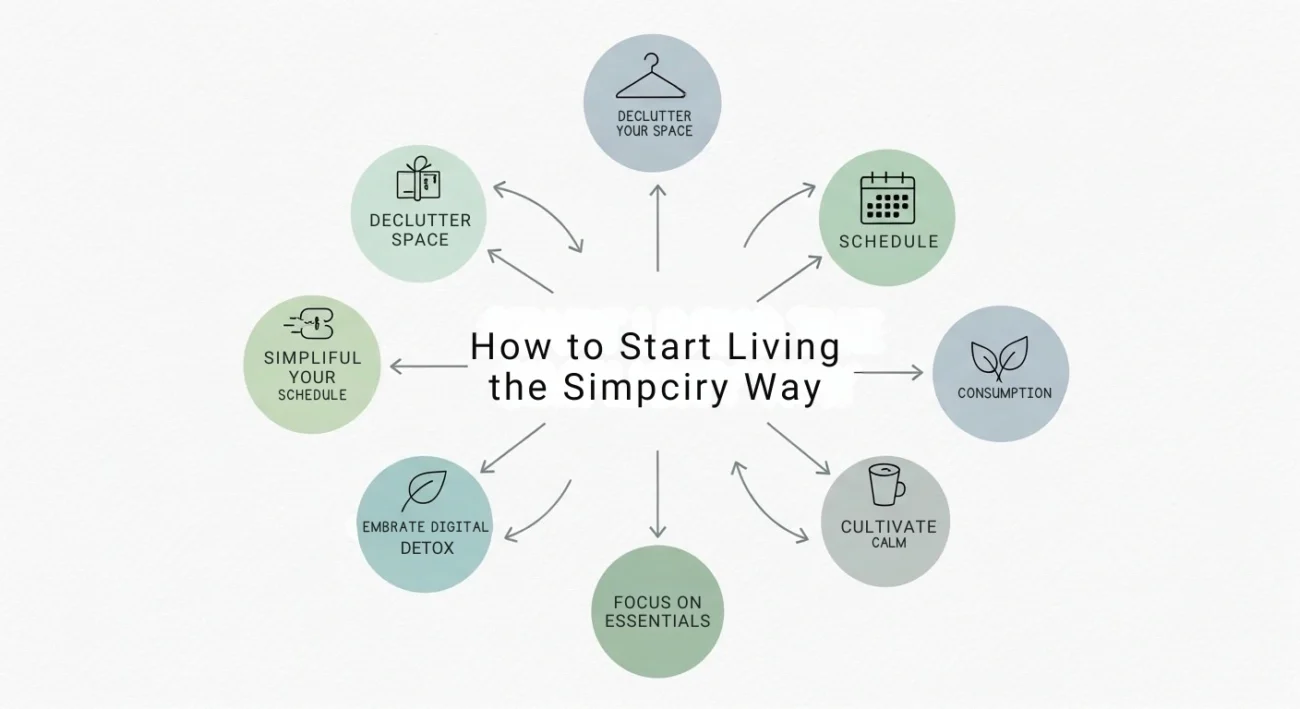
Start Small and Build Momentum:
Do not try to overhaul your entire life in a weekend. Pick one area like your desk, your morning routine, or your inbox and simplify just that. Spend a week with it. Notice how it feels. Then move to the next thing. Small wins build the confidence you need for bigger changes.
Define Your Why First:
Before you start decluttering, write down why you want a simpler life. Maybe it is to reduce stress, save money, or spend more time with your family. Your why becomes your filter for every decision going forward.
Build Systems Instead of Relying on Willpower:
A habit says I will clean my desk every evening. A system says everything on my desk has a designated spot so it stays organized on its own. Build environments where simplicity becomes the default rather than something you constantly fight for.
Review and Adjust on a Regular Basis:
Life changes. Your version of Simpciry should change with it. Every few months, check what is working, what feels forced, and where new clutter crept back in. This is not about being perfect. It is about staying intentional.
Simpciry in Your Home
Your home is your foundation. When it is chaotic, everything else feels harder.
Go room by room and ask honest questions about what you own and why. For each item, consider whether it serves a function, brings genuine joy, or just takes up space out of habit. Be real with yourself. That bread maker you used once three years ago? It is okay to let it go.
Once you have pared down, organize what remains so daily life feels easier:
- Group similar items together for quick access
- Create a landing zone near the front door for keys, wallets, and bags
- Choose neutral calming colors because muted tones make rooms feel more spacious
- Invest in multipurpose furniture that serves double duty
- Add plants or wood accents to bring warmth and a connection to nature
- Set up specific areas for reading, working, and relaxing
Simpciry in Your Mind
Mental clutter is often heavier than physical clutter. The worries, the overthinking, and the constant information overload weigh you down more than a messy closet ever could.
Here are three practices that make a real difference:
- Limit your information intake. You do not need to check the news every hour or scroll social media before bed. Pick a few trusted sources and set specific times to catch up.
- Build a daily reflection practice. Even five minutes of morning journaling where you write your top three priorities can dramatically sharpen your focus throughout the day.
- Learn to say no without guilt. Every yes to something unimportant is a no to something that matters. Protecting your time and energy is not selfish. It is essential.
Simpciry in Relationships
Many of us maintain relationships out of obligation rather than genuine connection. Simpciry asks you to invest your energy in people who truly enrich your life and gently step back from those who consistently drain you.
This does not mean cutting people off harshly. It means being intentional about who gets your time and attention. A few deep friendships will always matter more than a hundred shallow ones.
Simpciry also encourages shared experiences over material gifts. A long walk together, a home cooked dinner, or a meaningful conversation holds more value than expensive presents. This kind of mindset nurtures gratitude and builds stronger bonds over time.
Simpciry and Financial Freedom
Living simply and building financial security go hand in hand. When you stop buying things you do not need, your savings grow, your debt shrinks, and money stress starts to fade.
The Simpciry approach to money is straightforward:
- Spend only on what genuinely matters to you
- Save consistently even if it is a small amount
- Avoid lifestyle inflation as your income grows
- Question every purchase against your values before you buy
- Redirect the money you save toward experiences or personal growth
Try tracking your expenses for one month. You will probably be surprised by how much goes to things that add zero value to your life.
Simpciry for Career and Professional Growth
Your career takes up most of your waking hours. If it is cluttered with misaligned goals, pointless meetings, and scattered effort, it will undermine everything else you are trying to simplify.
Start by asking yourself one question. Is the work I am doing aligned with my values and strengths? If the answer is no, that is your first signal that something needs to shift.
Here is how to apply Simpciry at work:
- Prioritize ruthlessly. Identify the two or three tasks each day that actually move the needle. Let the rest wait.
- Use time blocking. Protect your deep work hours from interruptions and unnecessary meetings.
- Keep your workspace clean. A clutter free desk reduces cognitive load and sharpens your thinking.
- Say no to meetings that do not need you. If your input is not required, decline without guilt.
- Turn down projects that do not fit your growth path. Not every open door is meant for you. Walking through the wrong ones takes you further from where you actually want to go.
For entrepreneurs, Simpciry is a real competitive edge. Focus on doing a few things exceptionally well instead of trying to offer everything to everyone. Customers trust brands that respect their time and deliver without unnecessary complexity.
Simpciry for Parenting and Family Life
Simplifying with a family feels ten times harder. Kids come with stuff like toys, clothes, gadgets, and activities. The pressure to give them everything can make minimalism seem impossible.
But Simpciry is not about taking things away. It is about creating an environment where your kids can focus, play, and grow without being overwhelmed.
Here is how to make it work:
- Lead by example. You cannot force simplicity on anyone, but you can model it every day.
- Let kids be part of the process. Give them the choice of which toys to keep and which to donate. Frame it as making room for new adventures.
- Protect unstructured time. Overscheduling exhausts the whole family. Kids need open hours to just be kids and use their imagination.
- Choose experiences over stuff. Family hikes, cooking together, and game nights create memories that outlast any toy.
- Give experience based gifts. Tickets to a show, a camping trip, or a class they have been curious about beats plastic packaging every time.
The families that thrive with Simpciry are the ones who treat it as a team effort rather than a set of rules handed down from the top.
Simpciry in Business and Branding
Simpciry is not just a personal philosophy. It is becoming a powerful business strategy too.
In a crowded market, companies that embrace clarity stand out from the rest. Tech companies are removing unnecessary app features and keeping only what users actually need. Cafes are cutting their menus down to fewer but higher quality items. Brands that communicate in plain honest language and prioritize their best offerings build trust, loyalty, and repeat business.
The lesson here is simple. When you respect people’s time and deliver on your promises without added complexity, they keep coming back..
Final Thoughts
Simpciry is not about having less for the sake of less. It is about making room for more of what actually matters. In a world that constantly pushes you to accumulate, consume, and hustle, choosing simplicity is a quiet act of rebellion. Start where you are today, simplify one thing, and trust that clarity and purpose will follow. The life you want is already there, waiting just beneath the noise.