
Blog
Delta Fitness Authority: Boosting Strength and Health Performance

Most fitness programs promise the world but deliver only sore muscles and frustration. We’ve all been there—scrolling through endless plans without seeing real progress. The Delta Fitness Authority is different; it is a structured, science-backed approach designed to boost your strength and health through measurable change.
This guide breaks down the “Delta” method, covering everything from tech-driven training to mental health and recovery. Whether you are a beginner or a seasoned lifter, you will find a 12-week blueprint here to transform your results.
What Exactly Is the Delta Fitness Authority?
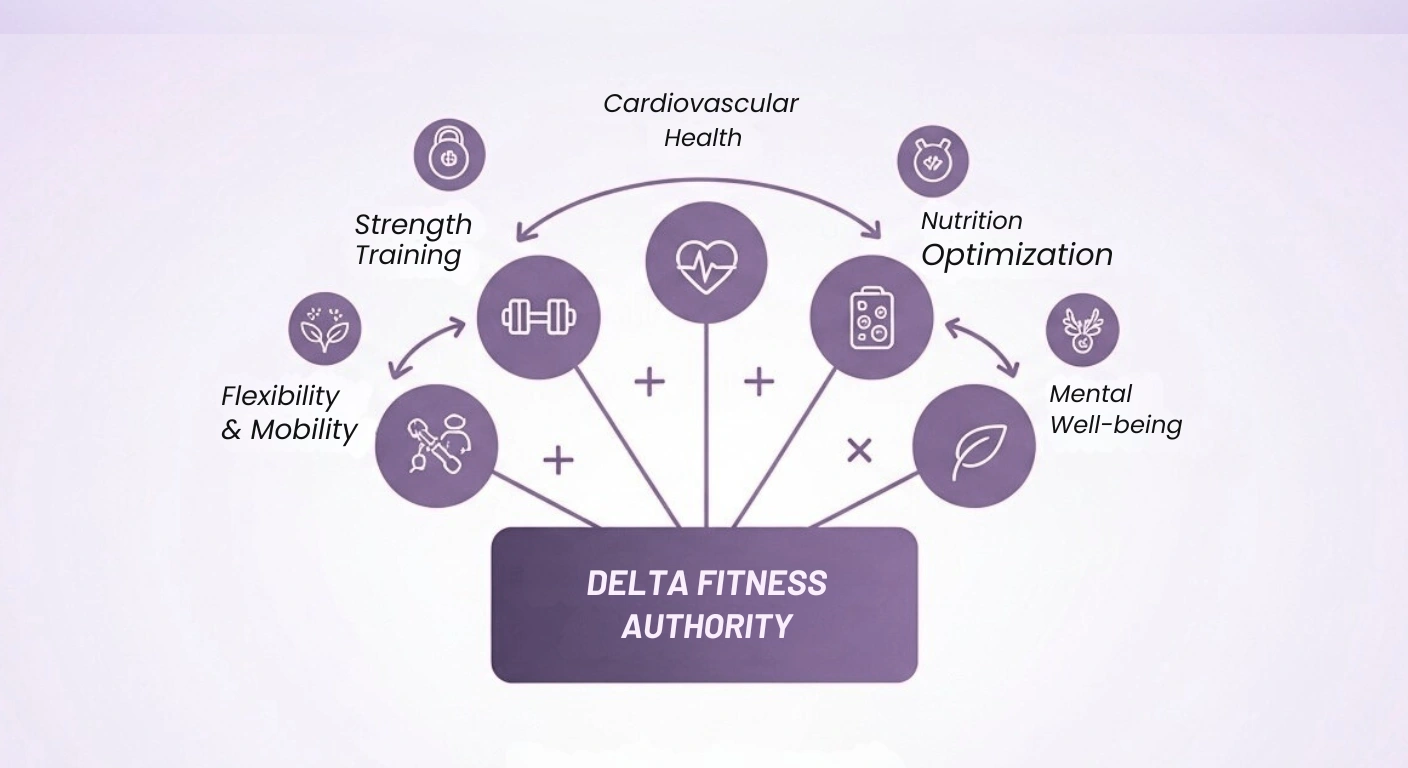
The Delta Fitness Authority is a complete ecosystem for improving physical performance. The name “Delta” signifies change, reflecting the core mission of continuous, measurable improvement. It isn’t just a workout; it is a framework that adapts to your specific needs.
Instead of treating fitness as isolated tasks, the Delta method weaves several pillars together:
- Strength Training: Building raw power and muscle.
- Functional Fitness: Enhancing movements used in daily life.
- Nutrition Science: Fueling the body for performance and recovery.
- Mental Wellness: Reducing stress to improve physical output.
The Six Core Principles
To ensure long-term success, the Delta method relies on six non-negotiable pillars:
- Progressive Overload with Purpose: You only add weight when your form and recovery metrics prove you are ready.
- Functional Movement: Training focuses on squats, deadlifts, and presses—movements that translate to the real world.
- Strategic Recovery: Rest is treated as an active part of training, utilizing sleep optimization and mindfulness.
- Periodization: Training is broken into phases (strength, power, conditioning) to prevent plateaus.
- Nutrition as a Tool: Focus is on macro-balanced meals and hydration rather than restrictive dieting.
- Community and Mindset: Group classes and coaching keep you accountable and motivated.
Using Biomechanical Cues to Prevent Injury
A common “missing link” in most fitness blogs is how to adapt exercises to your unique body. Many programs tell everyone to squat the same way, but the Delta method emphasizes biomechanical precision.
- Joint-Specific Range: Don’t force a full range of motion if your joints feel “blocked.” Stop where your muscles are doing the work, not your ligaments.
- Eliminate Inertia: Perform “tempo reps” (e.g., 3 seconds down, 1 second pause) to ensure muscle recruitment rather than using momentum.
- Personalized Angles: Adjust your foot width or grip to find the “active” angle where you feel the target muscle most, rather than following a rigid “standard” form.
Supercharging Performance with Wearable Analytics
Most people use trackers just to count steps. The Delta approach uses this data to make “proactive” decisions about your training intensity.
- HRV (Heart Rate Variability): Check your HRV every morning. If it’s significantly lower than your average, scale back your lifting weight by 10-20% to avoid overtraining.
- Sleep Correlation: Log your “Deep Sleep” time. If you get less than 90 minutes, prioritize a mobility or yoga session instead of a heavy PR (Personal Record) attempt.
- Resting Heart Rate (RHR): A rising RHR over several days is a signal of hidden stress or illness. Use this as a “stoplight” to take an extra rest day before you get sick.
12-Week Starter Blueprint
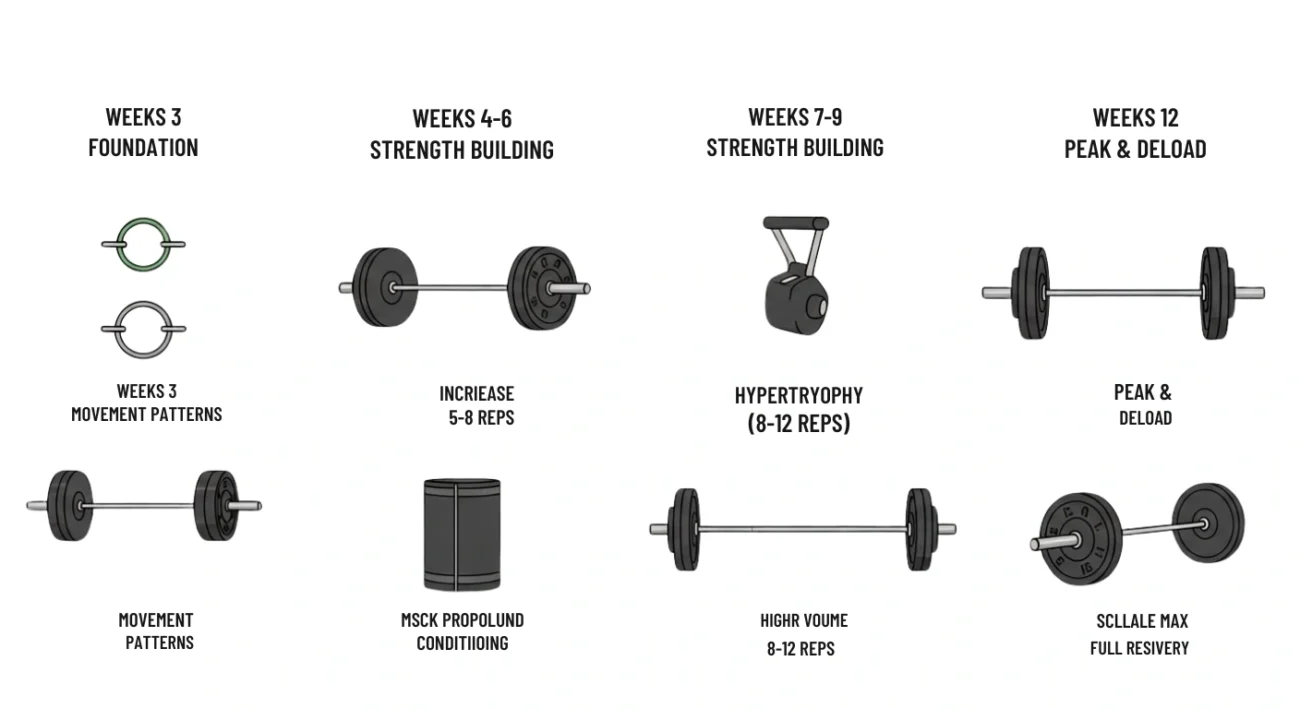
This structured plan takes you from your initial assessment to peak performance:
- Weeks 1–3 (Foundation): Focus on movement patterns and core lifts with light weights.
- Weeks 4–6 (Strength Building): Increase the load and focus on the 5–8 rep range for compound lifts.
- Weeks 7–9 (Hypertrophy): Higher volume (8–12 reps) to encourage muscle growth and conditioning.
- Weeks 10–12 (Peak & Deload): Test your max strength, then scale back intensity to allow for full recovery.
FAQs
Q: Will lifting heavy weights make me look “bulky”?
A: No. Building significant muscle mass requires a specific high-calorie diet and years of targeted training. For most, the Delta method results in a lean, toned, and powerful physique while boosting metabolism.
Q: Should I still do cardio while following the Delta method?
A: Yes. We recommend 2-3 sessions of low-to-moderate intensity cardio per week. It aids in recovery by increasing blood flow and ensures your “engine” (heart and lungs) can keep up with your growing strength.
Q: What if I’m too sore to work out?
A: Use your wearable data! If your HRV is normal but you have muscle soreness, light “active recovery” like walking or swimming is best. If your metrics are low, take a full rest day. Never push through sharp joint pain.
Final Thought
True fitness is a marathon, not a sprint, and the Delta Fitness Authority provides the roadmap to ensure you actually finish the race. By combining science, technology, and biomechanical precision, this method turns a difficult journey into a sustainable, life-changing habit.