
Blog
Why Healthy Fitness Routines Only Possible in Certain Living Environments
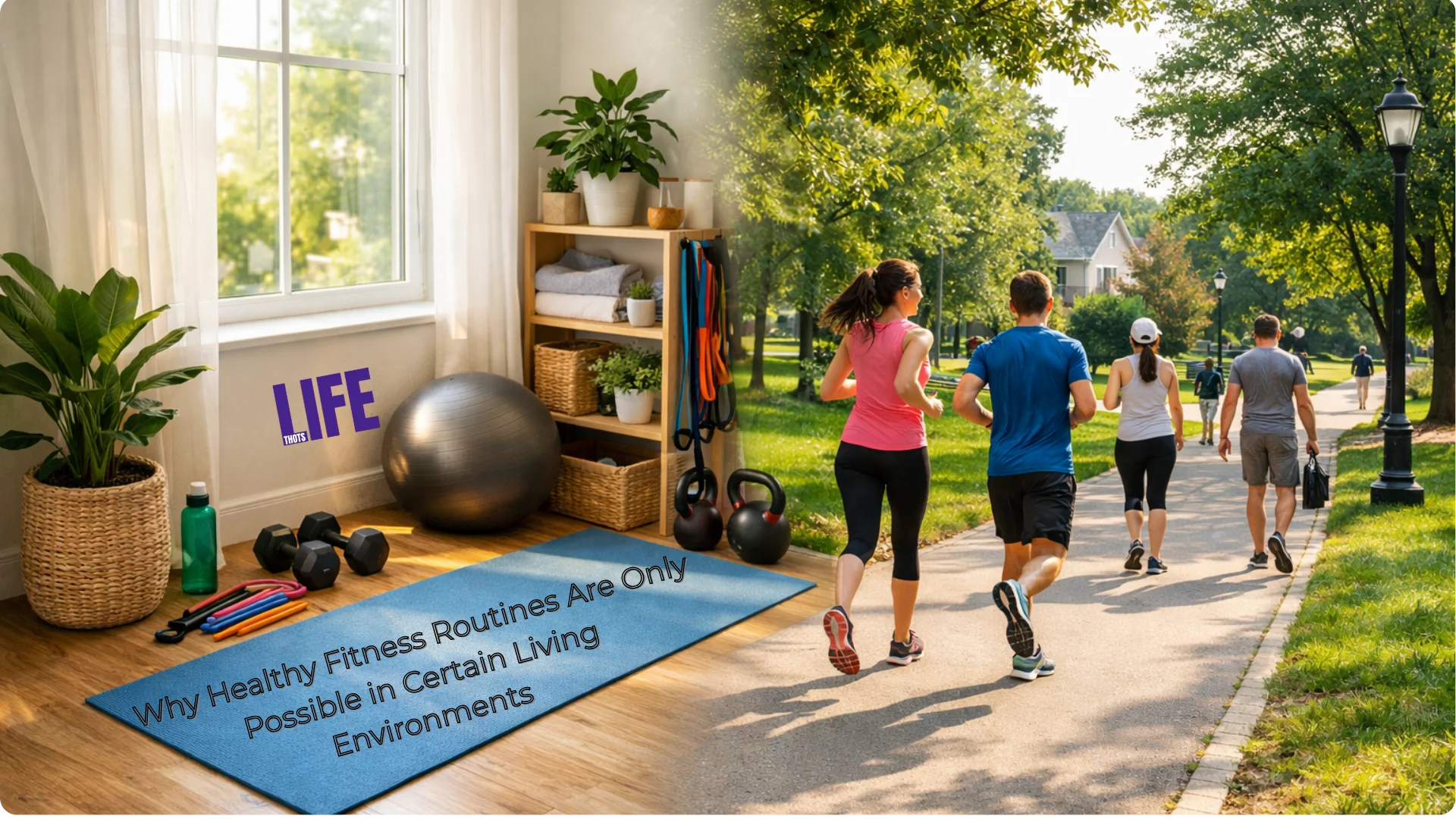
Getting fit isn’t just about willpower or motivation. It’s about having the right surroundings to support your goals. The truth is, your living environment plays a huge role in whether you can stick to a fitness routine or not. Some places make it much easier to stay active and healthy, while others can create barriers that make fitness feel like an uphill battle. In this post, we’ll explore why healthy fitness routines are only possible in certain living environments, what factors contribute to this, and most importantly how to make fitness work no matter where you live.
How Your Environment Affects Your Healthy Fitness Routines
You’ve probably heard that success starts with a plan, but there’s another key factor: your environment. The place where you live, the space inside your home, and the community around you can all influence how often and easily you exercise. Take two people with the same fitness goals. One lives in a neighborhood with walking paths, parks, and a gym nearby. The other lives in a place with no sidewalks, no safe walking routes, and a long drive to the nearest gym. Which one do you think will stick with their healthy fitness routine? More often than not, it’s the person with the better environment.
Your environment affects more than just convenience it shapes your mindset. When you live in a space that encourages physical activity, it’s easier to stick to your goals. But when your surroundings don’t offer these benefits, you may find yourself struggling to stay active.
The First Step in Building Healthy Habits
When most people think about their environment, they focus on the outdoors or the neighborhood. But your home itself plays a huge role. If you don’t have space to move freely or enough room to exercise, it can be a challenge to stay active. living in a tiny apartment without room for yoga or home workouts can make it harder to get started. On the other hand, having a dedicated workout space or even a small area where you can stretch, do push-ups, or set up a few pieces of equipment can make a big difference.
Having a space that’s designed for fitness can send a clear signal to your brain: this is where I work out. It’s a simple psychological trick that makes it easier to stick with a routine.
What’s Around You Matters
Once you step outside, your neighborhood can have a huge impact on your healthy fitness routine. If you live in an area with sidewalks, parks, and bike lanes, you’re more likely to stay active. Walking, running, or cycling becomes part of your daily life. Even if you don’t have a gym membership, just getting outside to exercise is easier.
But if you live in a neighborhood without sidewalks or safe places to walk, it can feel like you’re fighting against your environment. It becomes harder to get outside, and you’re less likely to move your body regularly. This makes it more challenging to stick with a healthy fitness routine.
Having access to parks, walking trails, and bike lanes not only encourages outdoor exercise, but it also makes it more convenient. When exercise is just a short walk or bike ride away, it’s easier to stay motivated.
The Role of Gyms and Classes
One of the biggest factors in whether people stick to their healthy fitness routines is access to gyms and fitness resources. When you live close to a gym or have easy access to fitness classes, it’s easier to stay on track. Being able to walk or bike to the gym, or even having a fitness center in your apartment complex, makes working out feel less like a chore.
On the other hand, if your gym is far away or you don’t have easy access to fitness facilities, it takes more effort to fit exercise into your day. This extra effort can create friction, and when motivation is low, it’s easier to skip a workout. The more convenient the option, the more likely you are to stick with it. Even if you don’t have a gym nearby, there are ways to get creative. Consider investing in home workout equipment, or look for online classes that you can do in the comfort of your own space.
How People Around You Shape Your Fitness Goals
The people around you can have a big impact on your healthy fitness routine. If you live in a community where fitness is valued, you’re more likely to stay active yourself. This could mean having friends who go for runs, neighbors who bike, or local workout groups you can join. Social influence is a powerful motivator, and being part of a fitness-focused community can help you stay accountable.
When you’re surrounded by people who prioritize health and fitness, it becomes a natural part of your lifestyle. On the other hand, if you’re the only one in your circle who values exercise, it can be harder to stay motivated.
Don’t be discouraged if your social circle doesn’t prioritize fitness. You can create your own support network online or through local groups. Finding a workout buddy or joining fitness challenges can help you stay on track, even if your immediate environment doesn’t offer that support.
Hidden Factors That Affect Fitness
Here’s a factor that’s often overlooked air quality and mental energy. If you live in an area with high pollution or bad air quality, outdoor exercise may not feel safe or enjoyable. Poor air quality can make physical activity feel like a struggle and might even discourage you from working out outside.
On the other hand, living in a place with clean air, green spaces, and nature nearby can have a positive impact on your mental and physical well-being. Studies show that being in nature can reduce stress, improve mood, and make it easier to stay motivated to exercise.
Even if you live in an area with less-than-ideal air quality, you can still make fitness work by focusing on indoor exercises or finding places to work out that have better air quality.
Making Fitness Work No Matter Where You Live
Not everyone has the perfect living environment for fitness, and that’s okay. The key is to find ways to make your space work for you. Here are a few tips to help you overcome common barriers:
1. Small Living Spaces
If you live in a small space, you can still create a workout-friendly environment. Use furniture and decor to carve out a small exercise area. Resistance bands, yoga mats, and dumbbells are easy to store and can be used for a variety of workouts.
2. No Nearby Parks or Gyms
If your neighborhood doesn’t offer easy access to parks or gyms, focus on home workouts. There are plenty of online fitness classes, apps, and YouTube channels that offer workouts you can do from the comfort of your own home. You can also take advantage of virtual fitness challenges or workout groups to stay motivated.
3. Lack of Social Support
If your friends and family aren’t into fitness, look for support elsewhere. Join online communities or fitness groups that share your goals. Having someone to check in with, whether in person or virtually, can help you stay committed.
Final Thoughts
While some living environments naturally make it easier to stick to a healthy fitness routine, it’s important to remember that you can make fitness work anywhere. The key is to adapt your space and habits to support your goals, whether that means finding creative ways to work out at home, connecting with like-minded people, or overcoming environmental challenges.
No matter where you live, creating a fitness-friendly environment is possible. With the right mindset and a little creativity, you can make fitness a part of your daily life and achieve your health goals no matter what your surroundings look like.