
Blog
Recipe Nutrition Calculator: The Easiest Way to Size Up Your Meals

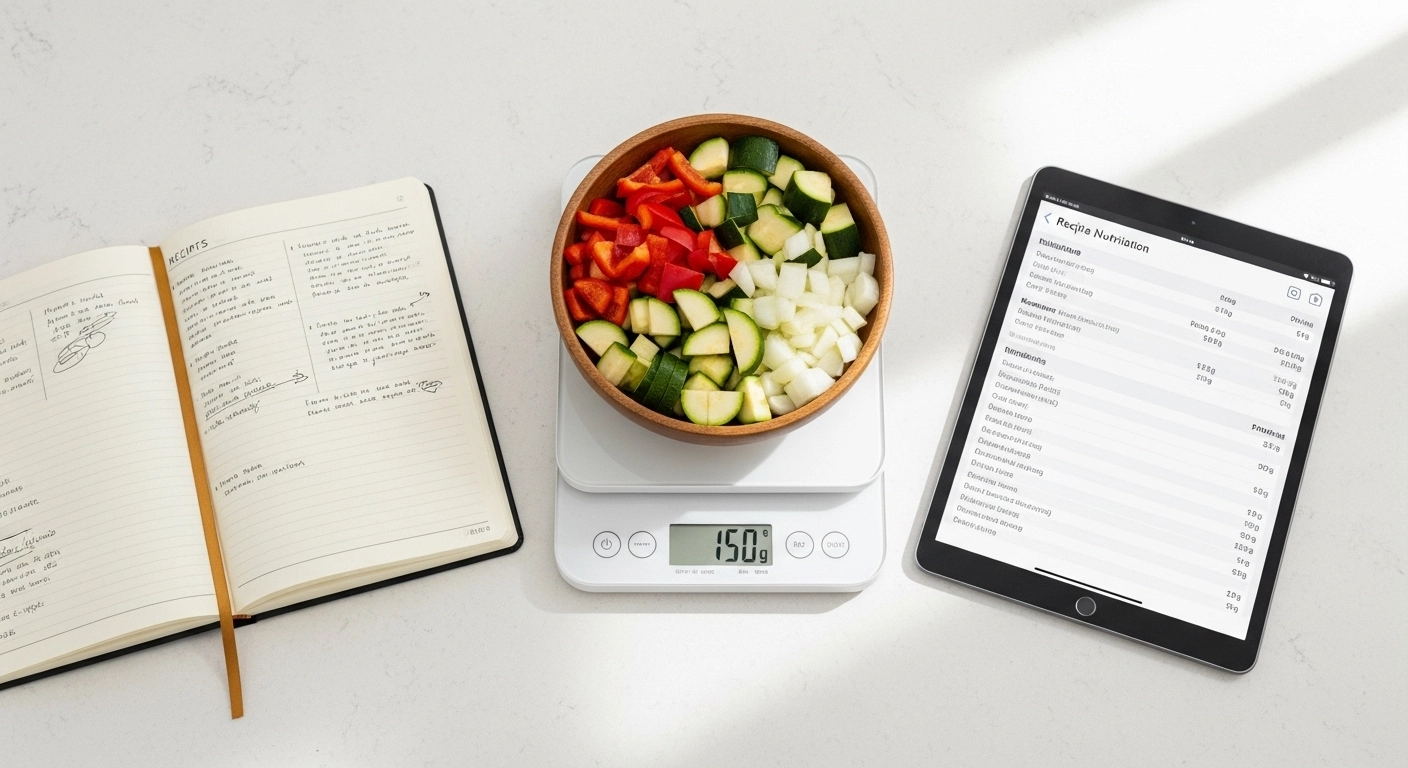
All home cooks eventually reach the point during meal preparation when they look down at the food they have plated, assume a contemplative look, and consider the age-old question, “What have I created?”
Not as a form of self-punishment or food guilt more as a question of caloric and nutritional worth. If you are not the type to meticulously log every nutritional detail, estimating it yourself can become tedious. Fortunately, a recipe nutrition calculator does the estimating for you. It is akin to a co-cook who assumes responsibility for the tedious calculations while you focus on the more enjoyable activities.
This guide functions as an explanation of what inspires these calculators, what limitations they may have, the oversights of other blogs in the field concerning variations in ingredient databases, and why a recipe like your grandmother’s may not be calculable in a precise manner and why that is also acceptable.
Understanding What a Recipe Nutrition Calculator Really Does
All calculators essentially do the same, you input your ingredients, it is crunching the numbers in a database and then it returns the calories, the macronutrients and in some cases, it also gives you the vitamins. It sounds simple until you find out that various calculators draw data on different sources. Others accessed the USDA Food data Central, whereas others accessed from privately owned databases owned by food manufacturers. And those little variations will come to some total,– a cup of cooked rice is not a cup of cooked rice in all the tools since what a cup is is not as universal as you would think. They perform as all calculators do work miraculously. Cooking in real life does not go that smoothly.
Why Home Cooks Actually Need This Tool
You’ve got people counting calories for weight loss. Others checking protein because they lift. Someone else trying to track sodium because of blood pressure. And honestly? Most folks are just trying to understand what they’re putting in their body without turning dinner into a math exam. A decent calculator lets you size up a recipe before you even cook it. Change the butter to olive oil? You’ll see the switch instantly. Swap beef for chickpeas? The nutrition flips. It’s practical, not preachy more like peeking under the hood of your food.
Where the Numbers Come From
“No one clearly explains this. A nutritional calculator isn’t guessing it’s pulling from whatever nutrition database the company maintains. The USDA Food Data Central is the most reliable source of numbers in the U.S., regularly updated with lab-tested values that health and wellness professionals trust. When a calculator uses older numbers, variations show up not huge, but noticeable enough to matter for your health and wellness tracking if you’re paying close attention.”
As an example, raw and sautéed onions: calories per gram reduce due to the evaporation of water when it is cooked. When a calculator does not know the difference between raw and cooked, the results will be off. That is one of the pits to watch. It is a subtlety that is seldom referred to by competitor weblogs as it makes the just type this and you are done story more complex. But it matters.
How Portion Sizes Mess Everything Up
The thing is that it is quite simple the truth that even the most sophisticated calculator will be unable to answer what the size of your slice of lasagna is. You can add all the ingredients in grams, however, when the pan produces nine instead of twelve, the nutritional information is different.
The majority of the calculators require the number of servings. When the portion size changes every time, then the results only give estimates. There is a trick in it: weigh the dish after cooking. Divide the weight by the amount that you actually eat. The technique is simple and provides the best available estimate of the amount of calories you can make at home.
Where Recipe Nutrition Calculators Are Shining.
They do not give them the perfect look. Instead, they aim to be clear. You will notice the difference in case your recipe is approximately 550 calories rather than 350. When you switch ingredients, and the protein is 12 0 -30 0 g higher, you will notice. They will guide you on how to know your food without breaking your head over everything. And frankly that is what most house cooks desire, information enough to make wiser decisions but not to make dinner research.
Ingredient Accuracy: Why “One Cup” Needs a Reality Check
If you ever look up “one cup of cooked pasta” across multiple calculators, you’ll get slightly different values. That’s because cups are unreliable. A cup of tightly packed mushrooms is not the same as a loose cup.
Grams solve this problem. Every good calculator accepts grams, and the results are far more accurate.
If you start measuring ingredients by weight, your nutrition numbers line up beautifully.
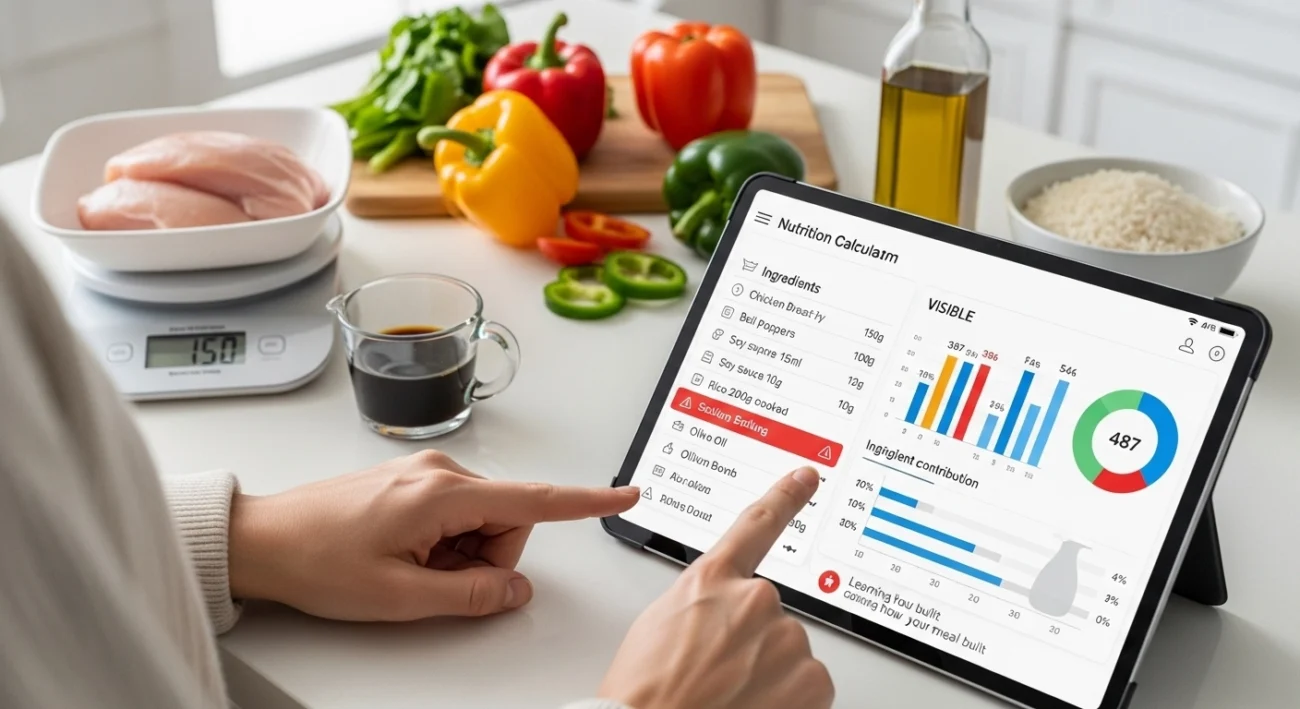
| Ingredient | Amount | Key Contribution | Impact Level | Hidden Insight |
|---|---|---|---|---|
| Chicken Breast | 150g | Protein MVP | Carries 100% of the protein load. Essential for satiety. | |
| Olive Oil | 1 Tbsp (10g) | Calorie Dense | ⚠️ Packs more calories than 2 cups of peppers. Easy to underestimate. | |
| Soy Sauce | 15ml | Sodium Bomb | 🚨 Adds 920mg sodium – more than everything else COMBINED. | |
| Bell Peppers | 100g (2 cups) | Vitamin C Hero | High volume, low calories. Micronutrient powerhouse. | |
| Rice (Cooked) | 200g | Carb Source | Main carb contributor. Adjust portion to control total carbs. |
Final Thoughts
All this will leave you with is the fact that recipe nutrition calculators are not strict scientific tools, but rather up-and-down-the-middle shortcuts, good to have a reality check, and to know what you are eating without turning your kitchen into a laboratory. They will not duplicate all the grams exactly and that is alright. What they do provide you with is the clarity: what is most important in it, where the calories are located, how a couple of simple replacements would transform the whole meal. When you begin to use it in the correct manner, that is, by counting the grams, by cooking and raw, keeping to the true amount served, you will wonder how you used to cook before you began to use it. It is not about perfection, but possessing sufficient knowledge to make more appropriate decisions on a daily basis.