
Blog
4 Loko Calories: What’s in a Can, Exactly?

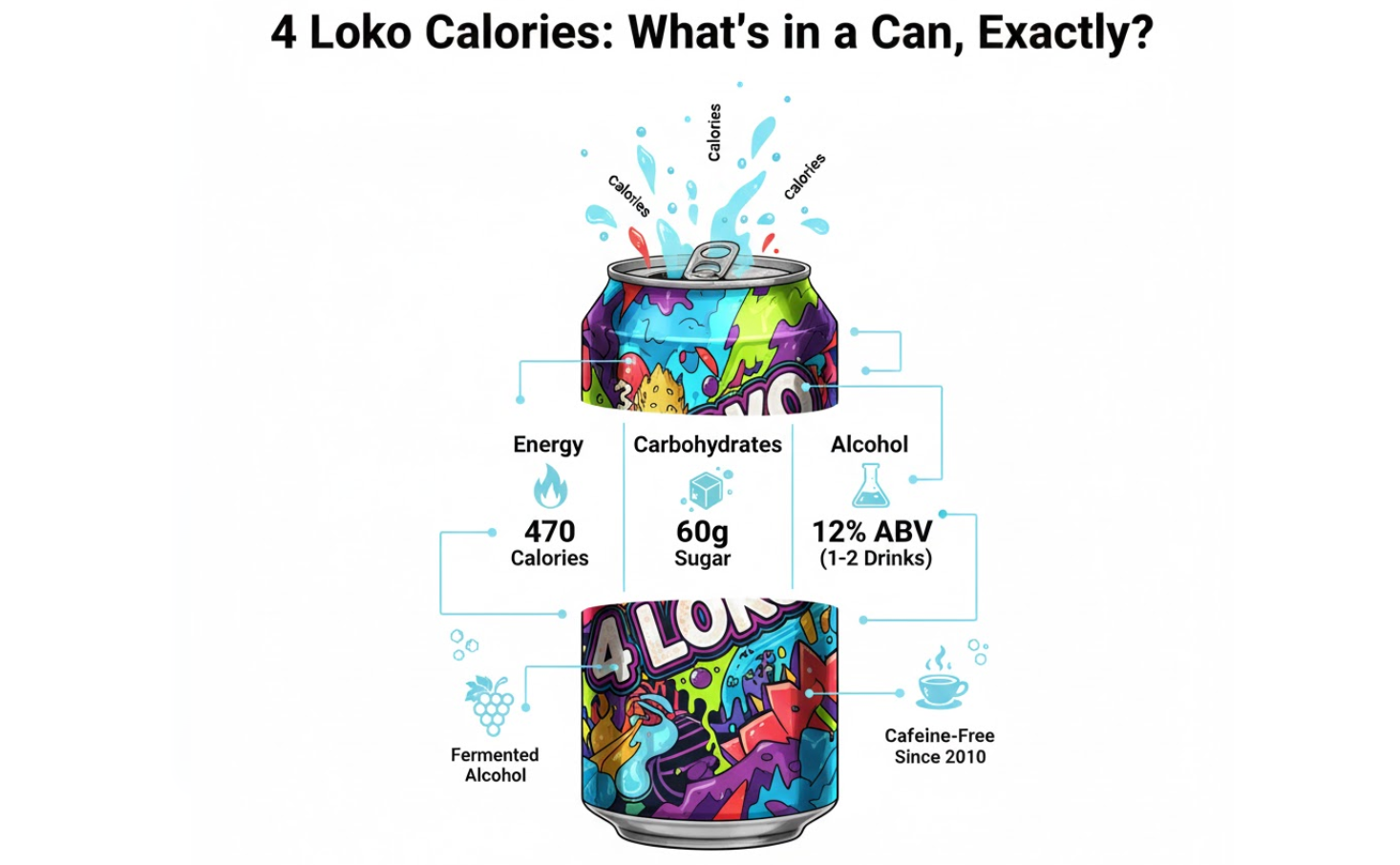
People talk about 4 Loko as if it’s one thing. It isn’t. I’m Dr Pranitas, and what’s inside the can depends on flavor, alcohol level, and how the drink is put together. The calories don’t come from one place either. They come from alcohol itself, added sugars, and a few smaller contributors that usually get ignored. That’s why calorie estimates for 4 Loko are often off or oversimplified.
I break down what’s really in a can, where the calories actually come from, and why this drink feels heavier than it looks. There’s no scare language here and no moral framing. Just clear information, explained in plain terms, with enough context to make sense of it.
What people usually get wrong about 4 Loko calories
A common mistake is treating 4 Loko like beer or like soda. It’s neither. Beer calories mostly come from alcohol and leftover carbs from grains. Soda calories come almost entirely from sugar. 4 Loko sits in between, but closer to the high end of both.
Another mistake is assuming one can equals one serving. A standard can of beer is twelve ounces. A standard can of 4 Loko is twenty-three and a half ounces. That size alone changes everything. Even before alcohol content is considered, volume matters.
People also assume all flavors are the same. They are not. Some flavors use more sugar to balance the alcohol taste. Others rely more on acidity or artificial flavoring. The label doesn’t always make that obvious.
What gets missed most often is how alcohol calories work. Alcohol is not a carb, not a fat, and not a protein. It sits in its own category, with seven calories per gram. That number matters more than most people realize.
The three main calorie sources inside a can
Calories in 4 Loko come from three places. None of them are optional, and none of them disappear just because a label looks short or simple.
Alcohol is the largest contributor. Ethanol carries calories even though it provides no nutrients. These calories are processed first by the body, which changes how other calories are handled.
Added sugars come next. These are there to make the drink tolerable at high alcohol levels. Without sugar, most flavors would taste sharp or bitter.
Minor contributors include trace carbs from flavoring agents and stabilizers. These don’t add much individually, but they still count.
Together, these sources create a drink that delivers energy quickly, without creating fullness. That combination explains why people underestimate intake when drinking it.
Alcohol content and why it changes the math
4 Loko typically sits around twelve percent alcohol by volume. That’s closer to wine than beer. When you multiply that percentage by the can size, you end up consuming the alcohol equivalent of several standard drinks in one container.
Alcohol calories don’t behave like food calories. The body treats alcohol as a priority toxin. While it’s being processed, fat burning slows down. Sugar handling changes. Appetite signals get blurred.
That doesn’t mean alcohol calories are “special” in a good way. It means they’re disruptive. When alcohol calories come bundled with sugar calories, the effect stacks.
People often feel wired but not full after drinking 4 Loko. That’s not an accident. It’s the result of how alcohol and sugar interact inside the body.
Flavor differences that actually matter
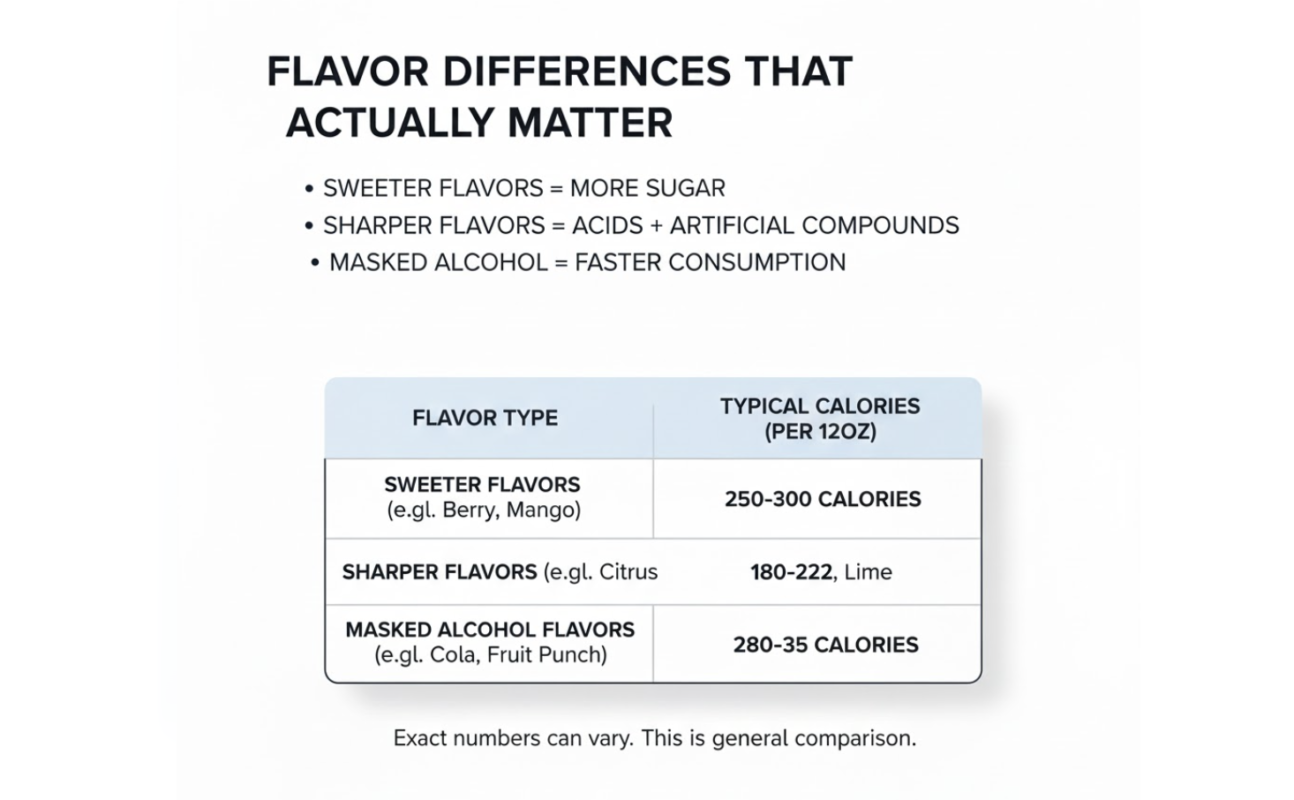
Flavor names don’t tell you much on their own. What matters is how the flavor is built. Sweeter flavors tend to rely more on sugar. Sharper flavors rely more on acids and artificial compounds.
Some flavors mask alcohol better, which can lead to faster consumption. Faster drinking doesn’t change total calories, but it changes how quickly they hit the bloodstream.
Below is a general comparison table showing how calories typically stack up by flavor type. Exact numbers can vary slightly by batch and formulation.
Approximate calorie range by flavor type (23.5 oz can)
| Flavor style | Approximate calories | Main calorie driver |
|---|---|---|
| Fruit-forward sweet | 650–700 | Alcohol + sugar |
| Citrus-heavy | 600–650 | Alcohol |
| Sour/tart profiles | 580–620 | Alcohol |
| Candy-style flavors | 680–720 | Sugar |
These numbers are estimates, not promises. Labels change. Recipes change. What doesn’t change is the pattern: more sweetness usually means more calories.
Why liquid calories feel invisible
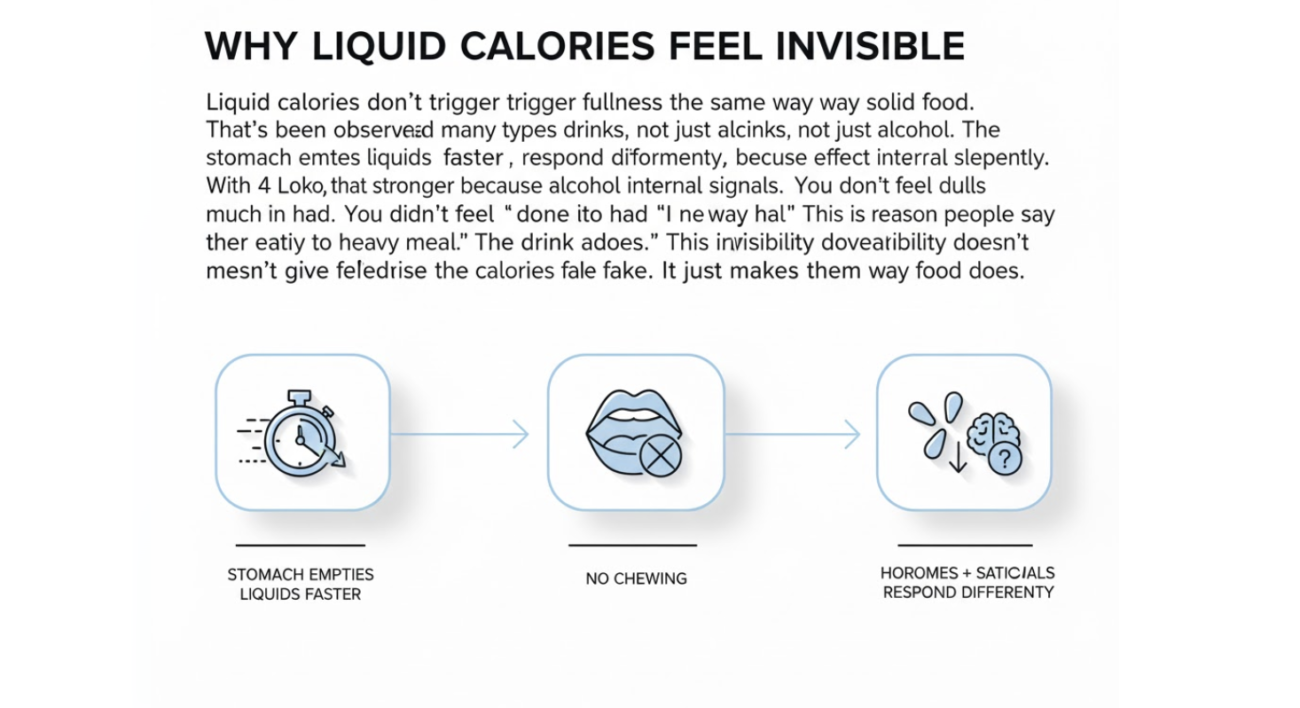
Liquid calories don’t trigger fullness the same way solid food does. That’s been observed across many types of drinks, not just alcohol. The stomach empties liquids faster. Chewing doesn’t happen. Hormones tied to satiety respond differently.
With 4 Loko, that effect is stronger because alcohol dulls internal signals. You don’t feel “done” the way you might after eating a heavy meal.
This is one reason people say things like “I didn’t realize how much I had.” The drink doesn’t give feedback in the way food does.
That invisibility doesn’t make the calories fake. It just makes them easy to miss.
Comparing 4 Loko to other common drinks
People often ask whether 4 Loko is “worse” than other drinks. That depends on what you compare it to and how you define worse.
A single can can contain as many calories as:
- three to four light beers
- two generous glasses of wine
- a full fast-food burger
But unlike food, it doesn’t slow you down. Unlike beer, it doesn’t stretch consumption across time as naturally.
The comparison isn’t meant to shame. It’s meant to ground expectations. When people know what they’re dealing with, choices become clearer.
Sugar content and taste design
Sugar isn’t just added for sweetness. It’s used to balance alcohol heat and acidity. Without it, high-alcohol drinks taste harsh.
Some flavors rely on sugar more heavily because their base notes clash with ethanol. Candy and fruit punch styles fall into this category.
Artificial sweeteners are sometimes used, but rarely alone. They often appear alongside real sugar to smooth aftertaste.
This mix makes calorie counting tricky. Two flavors with similar alcohol content can differ meaningfully in sugar load.
How labels can mislead without lying
Most labels follow regulations. That doesn’t mean they tell the whole story in a way people naturally understand.
Serving size language is one example. A can may technically contain multiple servings, even if it’s sold and consumed as one unit.
Another issue is rounding. Calories are often rounded to neat numbers. Over a full can, small rounding differences add up.
None of this is illegal. It’s just not user-friendly.
What happens metabolically after drinking a full can
Once alcohol enters the system, the liver shifts gears. Alcohol metabolism takes priority. Fat oxidation slows. Sugar handling becomes less predictable.
If food is consumed alongside the drink, those nutrients wait their turn. That’s one reason alcohol is often linked to weight gain even when total intake doesn’t seem extreme.
With 4 Loko, the effect is amplified because alcohol and sugar arrive together, in a large dose.
This doesn’t mean one can changes your body permanently. It does mean frequent use adds up faster than people expect.
Practical ways people manage intake realistically
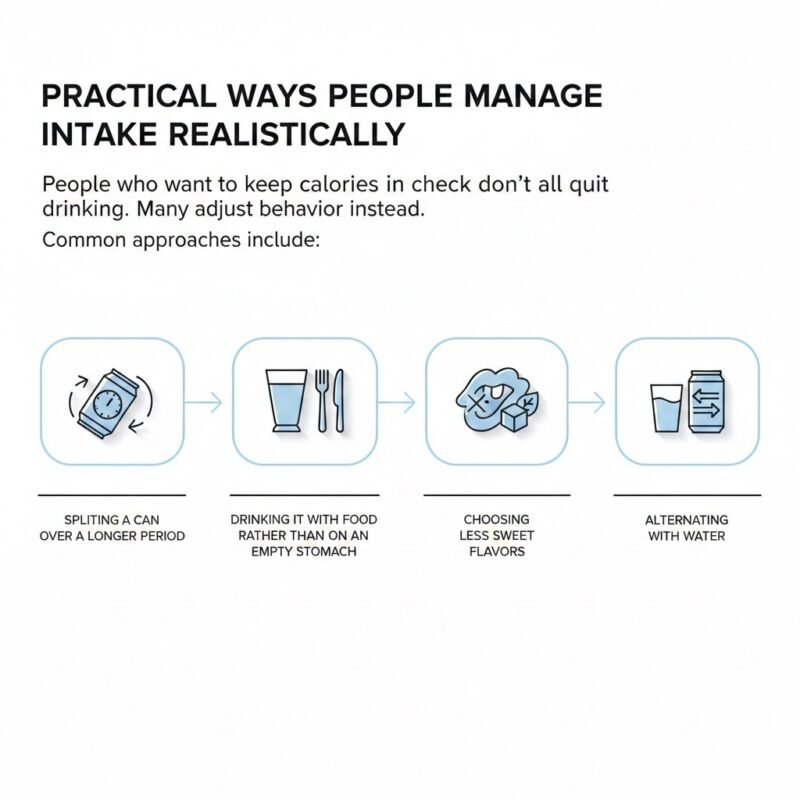
People who want to keep calories in check don’t all quit drinking. Many adjust behavior instead.
Common approaches include:
- splitting a can over a longer period
- drinking it with food rather than on an empty stomach
- choosing less sweet flavors
- alternating with water
These aren’t moral rules. They’re practical habits observed in real life.
Misconceptions worth clearing up
Some believe carbonation cancels calories. It doesn’t.
Some believe sweating or dancing “burns it off.” Movement helps overall balance, but it doesn’t erase intake.
Some think switching flavors resets the count. It doesn’t.
Clarity beats myths every time.
How often matters more than one night
Occasional consumption affects very little in the long run. Regular consumption is where patterns form.
Calories don’t need to be dramatic to matter. Consistency is what changes outcomes.
Understanding what’s in a can helps people decide how often it fits into their routine, if at all.
A clearer calorie comparison across drink types
To ground expectations, here’s a second table comparing approximate calorie totals across common drinks, using realistic portions.
Calorie comparison by drink type
| Drink type | Typical serving | Approximate calories |
|---|---|---|
| 4 Loko (single can) | 23.5 oz | 580–720 |
| Regular beer | 12 oz | 140–180 |
| Wine | 5 oz | 120–130 |
| Sugary cocktail | 10–12 oz | 250–400 |
| Hard seltzer | 12 oz | 90–110 |
This table isn’t about ranking drinks as good or bad. It’s about scale.
Why honesty about calories changes behavior
When people know the real numbers, they tend to self-regulate without being told to. That’s been observed repeatedly in nutrition research and real-world settings.
Surprise is usually the problem, not the drink itself.
Once surprise is gone, choices become intentional.
What’s in a Can, Exactly?
I wrote this to clear up the confusion around 4 Loko calories, because most of the numbers people see online miss important details. A single can isn’t comparable to a standard beer or soda. The size, alcohol content, and added sugars all stack together, which is why the calorie load ends up higher than many expect.
What matters most is understanding where those calories come from. Alcohol itself carries calories and changes how the body handles everything else that follows. Sugar adds another layer, especially in sweeter flavors, and liquid calories don’t register the same way solid food does. None of this makes the drink mysterious or extreme, but it does explain why it feels heavier than it looks.
My goal here wasn’t to tell anyone what to drink or what to avoid. It was to put the information in one place, without shortcuts or hype, so decisions can be made with a clear picture of what’s actually in the can.